Episode 34 · Nov 3, 2026
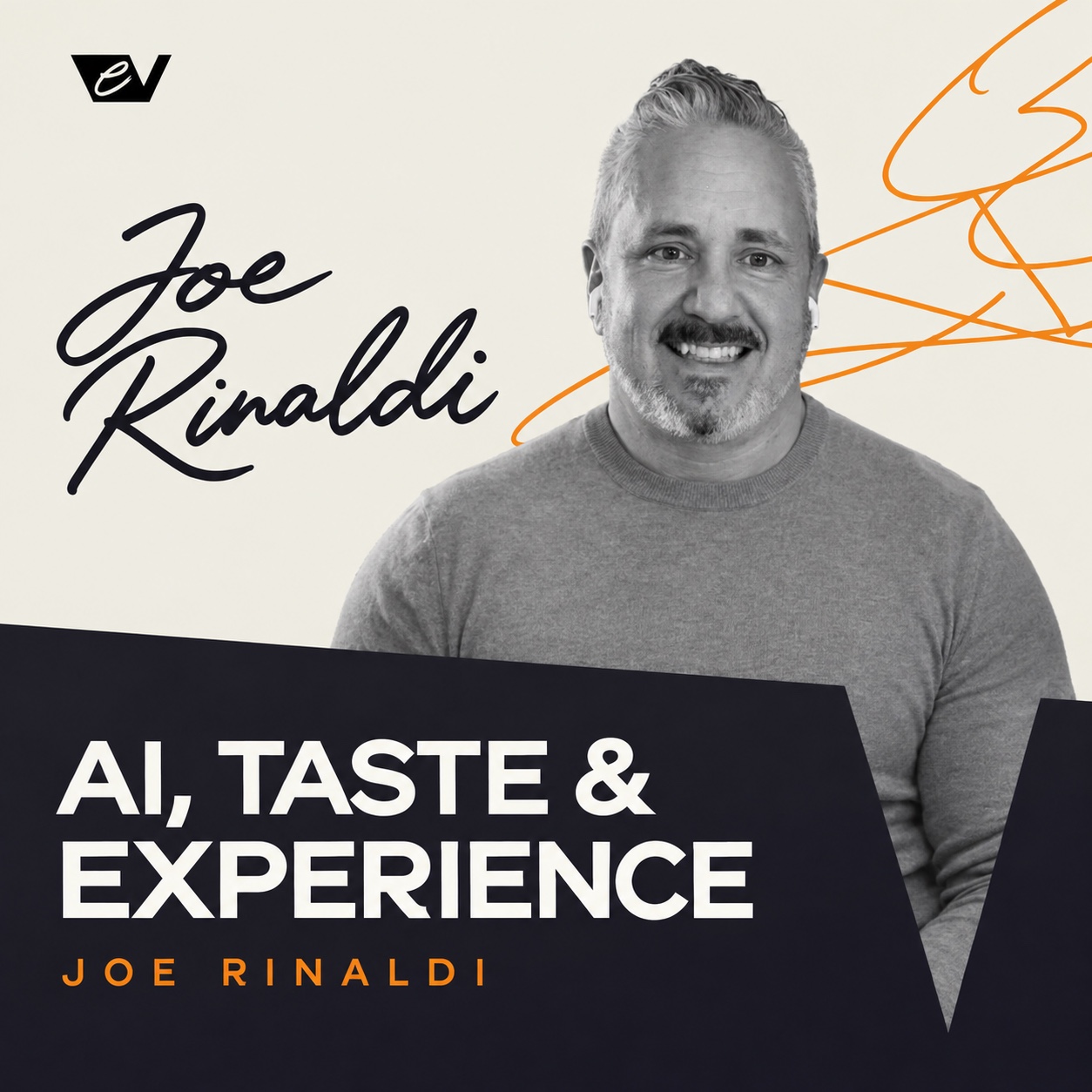
AI, Taste, and the Value of Experience with Joe Rinaldi
Clutch; Strategy Partner, Pine Works
Listen here or watch on Spotify
About this episode
Joe Rinaldi joins Tracey Halvorsen to talk about AI, taste, and the value of experience in agency work. They debate what faster delivery means for pricing, examine practical uses of AI agents and human review, and ask how people develop judgment when the tools let them skip so much of the process.
When AI makes the work faster, what happens to the value of experience? Joe Rinaldi joins me on Escape Velocity to talk about taste, pricing, trust, and how people develop judgment when they can skip so much of the process.
Joe helps agencies with business development through Clutch and is a Strategy Partner at Pine Works. He shares how his team uses AI agents to organize conversations and propose CRM updates. We talk about the mistakes those tools make and the changes he still reviews himself.
We disagree on what faster delivery should mean for fees. We question whether AI could develop something resembling taste. And we worry about how newer practitioners will find their own voice if the tools do the work before they learn it.
We also get into the work that comes before choosing a tool: understanding people, defining the problem, and figuring out what would actually help a client. There are useful examples here, along with questions we haven't answered.
In this conversation
Links from this conversation
Episode transcript
Download transcript · SRT captions · WebVTT captions
Read the full transcript
Transcribed from the episode recording; names and phrasing may contain small transcription errors.
And I think part of it is developing the skill set to know when to use it, how to use it, how much to use, you know, when not to use it, how to basically like making it a a tool in your toolkit, not just some kind of like red button you smash every once in a while. Like AI that like there needs to be a little bit more dexterity.
Hello everyone. This is Tracey Halvorsen with another episode of Escape Velocity. It has been a minute. Life has been crazy, and I'm really excited to be having this conversation today with my friend and colleague Joe Rinaldi. a little bit about Joe. I think I became aware of Joe at least probably 15 years ago when we were competing against
Yeah. Yeah.
each other. In our agency positions. And then we met up at one of the very first Bureau of Digital Events, the original owner camp or whatever it
Mm-hmm. Yep, yep, yep. The OG owner camp.
was called back then, at the OG owner camp. And we became fast friends from
We did.
that point on. And I remember you'd send me messages every now and then, like, God damn it, or like, sorry.
Ha ha ha.
as we continued to compete against each other, but I loved that spirit of camaraderie that we
Uh-huh.
that we established and have maintained all the way through and fast forward to today, we continue to work with each other, not compete against each other, but we do a lot of I you know, we're we're in cahoots in a lot of ways. and so Joe, just d give everybody a a download on you, what you're all about, and we'll take it from there.
Sure. Yeah. So I I would agree with your assessment. We had a real cheers versus Gary's Old Town Tavern kind of vibe back in the day, which is a very dated reference and we'll
Yes.
will explain that I'm 50 years old to everybody. but yeah, now now we're fast, we're best buddies, and we work on a variety of things. And I think actually, Trace, the way you describe it, like because we work in a variety of ways together, that is very like descriptive of the weird role and job that I have, where I have like, Lots of different Lego pieces that I fit into in what I
Yeah.
do these days. so half of my time roughly is spent running what I call Clutch, which is my biz dev consulting company where I work with agencies and small teams and individuals. I basically help them level up their biz dev process. You know, when I was competing with you, I was the biz dev guy, and that's kind of where my background lies. So for the past 10 years, I've worked with nearly a hundred agencies helping them just kind of level up and evolve and change and grow their biz dev process. while doing that, it became very apparent to me that when
I wasn't actually selling the clients while teaching, my knives were getting very dull. Like I was losing the thread of like how challenging it is and how much it changes. And and I worked briefly for about three years with SuperFriendly with Dan Mall and I was his biz dev guy. And that really opened my eyes that like For me to be good at teaching people how to do business, I need to sell directly to clients. Like I need to not be the some kind of like, you know, I don't do it anymore. I just talk about it all the time.
and in service of that, and then as like the stars lined up, past four years, I've now kind of been part of Pine Works, which is a bunch of old happy cog friends back from the days when I used to compete with you. a bunch of those folks getting together and doing projects together again. a little bit more on the software development side with some design. It's, you know. I feel like back in the Happy Cog days it was probably like 70-30 design focus and development. This is probably the opposite. It's probably like 70% focused on software development and 30% focused on design.
Yeah.
but that's how I split my time now. I split my time either working with agencies to help coach them or or, you know, live in the trenches, consult with them and write RFP responses with them and do all the blocking and tackling, or I'm over here and I'm selling a big project to a client for Pine Works or I'm recruiting people into a Pine Works team to be I'm kind of like the the Nick Fury assembling Avengers on the Pine Works side. That's kind of and I and then I get out of the way. And then like I let the the really talented people take over and I go talk
to other people. So yeah that that's
Yeah.
yeah that's my MO. And I I think the other thing that you've hit on that I think is a part of like why you and I are so connected is like you, I've always been very passionate about building community. And kind of building relationships through community. So like way, way, way back in the day, back when I was a recruiter in like the early 2000s, I created PhilaMade, which was a Philadelphia-based creative community. the bureau kind of grew out of that. The and now I do my own events where I try to bring people together and kind
of have like little, you know, two-day kind of unstructured, let's figure out what the world looks like events. and I like to support other people that are doing the same thing, whether that's Our buddy Ashley Budd, or it's Richard, or it's, you know, Revenue Captain Chris Free doing stuff. I love like Jen Derry's got a book signing. Like I love trying to put energy into people staying connected in real life and through real communities. And 'cause like amazing opportunities kind of spring out of that stuff if you if you do it right. So I've I've always that's
Yeah.
like my I guess my secret is, you know, Biz Dev as it as a function of like community has been kind of my my MO.
full disclosure, you know, I worked with you when I was really coming out of my period of non-compete. I'd kind of laid low, you know,
Yeah. Yeah.
licked my wounds, like explored other things.
And you were like sharpening your knives and yeah.
yeah, sitting there and getting
Yeah.
antsy to to get back out there and what that would look like and how that would what that would look like with with adeo. what that would look like for me. And y you were so helpful in cueing that up and framing it and kind of kicking me a few times when I needed a a good kick to,
Thank you, thank you. Yeah. Now once I realized that you were yeah,
you know? Yeah. Just you were like my my get back out there coach.
you were actually string or bell from the wire and all of all of your content strategy should really be wee back up. Yeah, a hundred percent. So good.
Yeah, yeah there it is. You sent me that. We back up. The little plaque yeah,
Love it. But once once I once I figured out that
sits on my sits on my desk.
so good. Yeah, you're stringer bell. Once I figured out you stringer bell, all the advice was easy at that point.
Well, you are you are a great prophet, my man. Great seer. but no, I I think that was, you know, we'd we'd been staying connected over the years, but that experience was really helpful. And and also just working with with you on on trying to leverage the what do you call it, like sort of your surface, like expanding your surface reach,
Area for opportunity. That's that's my yeah.
yeah, area for opportunity, right?
Just just creating more surface area for opportunity. Just finding ways to, you know, catch more strays and and have more conversations and connect
And that does
to more things. Yeah.
and I love that like for you that does not mean networking. You know, it's like we all I hate networking,
Yeah. Yeah, yeah, yeah.
but I like expanding my surface area for opportunity.
Yeah. yeah, yeah. No.
That's a very different way of looking at it, you know?
Yeah, you like a cocktail party, but you're not looking for a cocktail party where like someone's got business cards in their front pocket and they're desperate to hand them out. Like you like a cocktail party
No.
where we start to talk about weird stuff and you know, one person sitting on a table and everybody's having a good time. Like and I think that's a critical difference. I think there is like there's a way to do events that are more buttoned up than networking and yada yada yada. And there's a way to do events where it's like, you know, actually. If you do a smaller event and you're really choosy about who you invite to the event and then you whatever, sprinkle in a little whatever and let them do their thing, I think that there's it's a wholly different thing than than what
you consider like networking.
It is. And I think, you know, I just had to realize about myself, which I've known for a long time, is that I I'm like allergic to sir to superficial conversation. It I can't I can't even do it. Like chit chat I
Right.
I mean I can I can do it a little bit, but I'm I'm I I'm plagued by this like urge to really dig in and
Yeah.
get into get into like go deep mode and you know,
Yeah.
that's that requires a certain platform. that's why I love this podcast, which you encouraged me to to start.
It's the best.
because I have I have long deep conversations with people and and then I, you know, it's really scratching my own itch there.
Yeah. Yeah, yeah. Legit. I totally get it.
Yeah.
It's yeah, it nobody's got time for that. Nobody's got time. You're busy, you got a life, you got, you know, kids and this and that and whatever. Like I I don't have time to mess around. Like I I gotta I gotta find the right spots, plunge into them and you know, be myself real quick and then it's you know, 'cause I got like I got two more things I gotta do after this. Like I gotta I gotta run around.
Yeah.
So yeah, I We're very we're wired very similarly in that kind of impatience about inauthenticity. Like I just don't have time for it.
Yes. And I also think it it requires you to develop a skill for ruthless curation because you do have to prioritize, right? And you you can't do it all.
I like that. I do like
So you do have to be a ruthless curator. And and
Yeah. Yeah.
that's something I've been realizing with all of this stuff going on with AI that I actually have to sharpen that skill again because AI can let
Totally. Totally.
you do so much at the same time.
Totally.
It's it's like, okay, well just 'cause I can does not mean I should, right?
Right. I think I think you're I couldn't agree more. I feel like in the past eighteen months as AI has like rapidly scaled, and now there's this kind of scaling of inauthenticity that floods out of a lot of AI enablement. there is there is in parallel, there's an amazing amount of of value and perceived equity in in person experiences, real life connections. authentic conversations. Like I I don't know that they're like directly linked. It's it's too coincidental not to be, you know, related in some way though, where there is this perception of a lot of inauthenticity kind of dialing up.
And in parallel, you know, people are dying to go to an event that Ashley's hosting. People are dying to go to a Richard event. People are dying, you know, like there's I have a lot more success having a coffee with somebody than I used to because I think there is like a a very parallel value in the IRL stuff while you perceive that there can be so much scaled and authentic stuff at the same time. And I think it's kind of a good thing. Like I think like this the AI enablement stuff's not going away.
I'm glad that we're not retreating into our little turtle shells and hiding from, you know, the AI stuff and and hunkering down. Instead, people are kind of fighting back and they want to like spend time with real people that they know and trust. And and and trusting people means a lot more. than it meant three years ago. Like that and I th there's like a more equity in that now than there was before there was this specter of like did an email come from you or did an email come from like, you know, your little agentic buddy. Like what's going what's going on with this email?
So, you know, I think it's like, you know, you and I text. Like that, like the fact that you and I text is a wholly different form factor of conversation than if I was sending you emails. Like
I don't know, pretty pretty soon I think our agents will be able to text each other text.
Yeah, yeah. Yeah, that's that's yeah,
So yeah, don't don't hold on to that for too long.
yeah, yeah, yeah, yeah. Yeah. That's only right now, I guess, yeah.
But yes, I mean I think for the last six years, I think COVID set us up to be like,
Exactly. Yeah. That was the beginning.
whoa, we're isolated, we're all communicating through screens.
Yeah.
And then we get through that, and then AI is here. And the the timing is I think compounding the impact. And I I think it's pretty universal that I'm hearing from from people of many ages, like I need to be in real life with real humans and nature as much as I
Yeah. Yeah. Yeah.
need to be, you know, on these screens and in these in these tasks and
Yeah, yeah. Yeah.
and having these relationships, you know, and these conversations around thinking with artificial intelligence is, you know, something we don't talk a lot about. But what is that doing to our own cognitive you know,
Yeah, yeah, yeah, yeah. Yeah.
st anything?
Yeah, no, I I I agree. I think that
We talk yeah.
yeah. I I I think that I'm a big believer that, you know, the journey is the thing usually and the outcome is kind
Yeah. Yeah.
of secondary and and we're at risk of like cutting the journey out of a lot of things and skipping to the end of the novel. You know, like what's the you know, I'm skipping the first seven chapters of this book. I want to get to the eighth chapter and just be done. Like there there's a risk of that for sure. I think that there the there it's it's like anything else. Like I think you have to have the right diet as it comes to this stuff and you have to figure out how to, you know, eat your vegetables and also still enjoy dessert and not just feast on,
you know, Twinkies and ho ho's for the rest of your life. Like I
Yes.
think, you know, like AI could do a lot. Like like there's there's it's a slippery slope into how many different ways you can use tools and you can, you know, enable things. I think that there's I think the people that are that are better at it are actually pretty good at curating. Not to overuse the term, but they're curating like this tool for that, not for this, this tool in this way, not in that way. Scale that, but hold on to this. Like I need to like I was just who was I just talking to that was talking about?
Somebody I was talking to was saying that like they had gotten into the habit of letting their ChatGPT buddy do a lot of email writing for them. And now they decided to go on like a a hiatus and write all their own emails again for the next couple of months because they were like getting out of the habit of like being able to write thoughtful emails and they needed to kind of like pace themselves and and you know go back to the gym and get in there and write emails again and you know, get develop that skill again.
And then maybe they'll go back
Yeah.
to working with something again. Maybe they won't, but I think that's like there's like a mindfulness that I think is helpful to resist the slip slippery slope of this winding up in too many aspects of your work or too many aspects of your personality. Like this can really take over like whole parts of your identity if you are all gas and no brakes, you know?
Yeah, no, absolutely. And I think we we're at a stage in our own professional development and life and wisdom and failures that we've experienced along the way to know when that's that that's a risk and to spot it when it starts to happen. But I do worry about people who don't know what what the alternative is. Like what is it to have a real voice in email? What what is it to write in a way that you know is your own your own voice if you're n if you're
Yeah, that's a point. Yep. Yep.
never developing that first. So all the people coming up now and coming through the schools and stuff, you know, I just hope that they learn to appreciate what that is so that they know what to compare it against.
Tal and I think you're I think that that's really a great point. I think that, you know, you spent, you know, twenty years of your professional career figuring out what your voice was and how you sound and how you sound in an email and how you sound in person and and the just, you know, generally I developing your identity. You know, we all
Yeah.
like we all like sharpened our knives on Twitter where we had to have like an identity in so many few characters or less. And I think we kind of like hyper identified. in those days of social media and had to kind of like have a voice that stood out and and build an identity. And then now
Yeah.
like we're the I'm, you know, I'm the beneficiaries of I'm the beneficiary of having 30 years talking like the way I talk and honing that to an identity. You're right. There is like there's a risk if you don't if you're not forced to kind of go through that process, you can cheat code to an identity. but it's fascinating. Like I have so my kids are twenty one, eighteen, and fifteen.
Yeah, talk about what's going on in their worlds.
And yeah, yeah, yeah. I mean, it's so Nina, the youngest, she's very like AI averse. Like when it comes to AI and ads or AI, like she's like, she's constantly trying to spot it because it makes her cranky and she doesn't want it and she's very resistant to it. At the same time, she's also like there's something about that generation that is kind of refreshingly anti social media polish. Like they're like. The fact that I ever used an Instagram filter sends chills down her spine. Like that is the grossest thing ever imaginable.
That's cringe, Joe.
so cringe. And like cropping a photo and like all of that is so gross. you know, she got a digital camera for her birthday that takes crappy pictures and she loves it. Like, ooh, it's a like Gwen's like trying to take homecoming pictures with this digital camera, and she's like, I can't. I was like, that's why we stopped making them. But anyway, so there is like this inherent like anti-inauthenticity instinct that I see in her, more mostly her. Nina's the most like creative and artistic of the three Ronaldi kids. I think the boys would agree with that.
so I think she really is trying to develop her identity and she's really trying
Yeah.
to develop her voice and she feels strongly about that. And then on the other end of the spectrum, Jack is about to graduate from Northeastern and
Yeah.
you know he's like they gave all of them free Claude accounts. Like he's got a free Claude account that the school pays for that's that they're expected to use in certain areas. He has a he has one class that is his least favorite class that he's not allowed to bring even a laptop into. Like you take notes. Like you're the the the professor
Old school.
is very rigid about this. And in ja and it's like the most it's already the most boring class he has. And now he's like fighting to pay attention, to struggle to pay attention to this guy. But he's also, you know, on the precipice of graduating and job hunting. And, you know, he's he's recognized that being good at using these tools is a way to stand out in the job market. It's what employers
Yes.
are employers are looking for fluency, you know, working with this stuff. And they're looking for that kind of acumen walking in the door. And, you know, he's an animal. He is like so, so driven. You know, he's teaching himself and forcing himself to be good at these things so that it can, you know, augment what he's doing. And, you know, he wants to whatever, go get a job at Accenture or McKinsey or something and what you know, use these tools. It that that's like figuring out how to do that in entry level jobs is you know,
preoccupying everything about this kid. When he's not when he's not EDM DJing, which is the other thing this maniac does, he's busy. Like trying to figure out how to, you know, use all these tools and and and get a new job. So yeah, it it's it's it's it it's I wonder a lot, worry a lot. Like I think that we, you and I are of an age where all the AI stuff I were I'll speak for myself, all the AI stuff I work with makes me feel like I have such mastery over so many pedantic things. Like I I feel so quantum in my capability because I have
30 years of like work experience, and then these tools all arrive at this moment. I'm like, holy crap, like I can take like 30 years of stuff I know and I can push it through ChatGPT and I can do this and I can do that and I can do all these amazing things. But it's like arriving at this moment where I have 30 years of experience and now I have all these tools. To your point about like the journey and all that, like if if you have one year of experience and you have all these tools,
you know, does it give you beer muscles? Does it give you like you know, empty calories? Like what is it it does? Do you have to figure out a way to like how how do you go from zero to mastery and then use your mastery with these tools to get really masterful results out of it? Like that's the part that is being figured out the hard way right now, I feel like.
Yeah, I mean I I think, you know, AI's like it's like, you know, picture those Swiss Army knives that have every different kind of attachment, the really big ones. Like I always
Yeah. Yeah.
wanted one of those when I was a little kid and
Yeah yeah yeah yeah.
I I'm sure I I never got one because they were too expensive, but they were also probably weighed like twenty pounds and you're like carting it around. Yeah.
I have one and it weighs it weighs a ton. Yeah. Yeah.
So but that's that's kind of how I look at AI. it's It's a ton of tools to solve solve problems, right? The problems are not it's not solving the the actual problem to the point where the problem goes away. It's giving us tools to address problems and challenges and things. Different kind in different ways, right? Efficiencies or exposure or strategic thinking or tactics or whatever it might be. You know, you're building software to solve problems instead of trying to find a piece of software that will solve your problem amongst
Yeah, yeah.
many others that you don't need solved. So
Mm-hmm.
a lot is getting inversed, but I think you still have to know which tool to to pull out of the Swiss Army knife and how to apply it. And that's where the the skills of learning how to use these tools, that's where this the you know, the human still has to kind of put in the reps. because there are a lot of pointless ways to use these tools where nothing is really accomplished, you know.
yeah. A hundred percent. I agree entirely.
Although it can give it can give the appearance it can give the appearance
There's a there's a hundred per also true.
of good things happening.
Yep. Yep. You can you can have a lot of wasted empty calorie progress that once
Yes.
the dust settles, like there's actually not a lot of there there. Like it looks like there's a lot there and you've done a lot, but then really when you audit what you did, it's like this is this really didn't, you know, whatever. There, there's just mileage varies based on how you're using it. And I think part of it is developing the skill set to know when to use it, how to use it, how much to use, you know, when not to use it, how to basically like making it a a tool in your toolkit, not just some kind of like red button you smash every once
in a while. Like AI that like there needs to be a little bit more
Yeah, and I
dexterity.
I think part of the other problem with AI is that its speed its speed and its power combined, right, is a is something we've never experienced before. So normally you know, big things would happen because maybe software would come around. I'm thinking about Photoshop and all of a sudden
Mm.
it's easy it's easier to work on editing your photos on in software than in the dark room. that's because the tool was able to solve the problem faster and more powerfully than the ways of doing it prior.
Yeah. Yes.
Now we've got tools that can understand and solve the problems incredibly fast at wherever we point them, which which doesn't really give us enough time to absorb what's happening. If we if we try to kind of keep up with the pace,
Mm-hmm.
I think what I'm finding is it's too tempting for people to skim over like the work that's getting done.
Yeah.
And like you said earlier, like focus on the end result without digesting
Yeah. Yeah, yeah, yeah. Yeah.
any of the nutrition of the yeah, the junk food is is a good one, a good comparison.
Yeah, I'm I'm I'm thinking about, I think that makes a ton of sense. And I'm thinking about the the examples of ways I use these tools. What it tends to do is make me better at things I'm already really good at. I think the I think the the there's another way to use it where it falsely makes you appear better than you are at a thing. And that gets sniffed out pretty quickly, and you're basically just like. taking a knife to a gunfight without realizing it because you've used AI to like prop you up into a space or a conversation or or some outcome that
you really don't know enough about and you're unprepared for.
Yeah. Yeah.
Like I I don't tend to use it for that. I don't tend to have it like to stand on AI's shoulders and have it take me to places I haven't earned to be. What I do use it for is like, I'm really good at doing this already. Can you make this faster and do it the way I like to do it. And then help me get more work done the way I like to get work done to the standards I know are important. Because I I think that the this is something that Anthony Calangelo, who I work with, says a lot, and I agree with this a ton.
and I think it's it's kind of what you're saying. In a way, like, taste becomes your superpower. Like, taste and standards and point of view and all that really becomes kind of your perfect superpower and That's how you're able to determine, like, this thing that AI made is crap. This thing that AI made is good. This thing that AI made is okay, but I need to add something to it, like it's not good enough, or it's just slightly
Yeah. Yeah.
off target. Like you have to have taste and experience and all these things to be able to direct this stuff effectively. Otherwise, you become kind of in the backseat and something without taste is driving you forward. You know, something without a point of view is driving you forward.
Right, but let me ask you this. Do you think that's gonna be the case for the next like for do you think AI will eventually be able to develop something that rivals that.
I I think it's possible, for sure. I think that there is a there the you know, the the tools haven't gotten dumber in the last 18 months. Like they're they're getting better at a variety of things. I do think that there's something to be said for, you know, there is like an imperfectness to taste that I think these tools struggle to identify or struggle to reproduce. I think it's our imperfection in some ways. And the rough edges and the shaggy parts that, you know identify to somebody that this person has a point of view and they have their own kind of taste and I think there's a vibe,
you know, that I can perceive with this. I think I Yeah.
Yeah, yeah. I I totally I agree. And yet I just wonder if the AI is gonna get good enough to to
Yeah, yeah, yeah. Yeah.
be able to simulate that and s simulate that in some sort of way where it becomes indistinguishable, which would be t that'll be scary, right? I mean, that would be a scary moment.
I think I think you're absolutely right. I think like in that world, let's let's let's play that game. Let's in that world where
Okay.
there is a decreased ability for AI outputs to feel like idiosyncratic and having a sense of taste and all those things. I think again it comes back to like that increases the value of there being IRL equity baked into certain things so that like Okay, this AI is making things that feel like they have a point of view and they feel like they have taste and all of that. Like, how does that compete with Tracey, who I know personally? Like part of the is gonna be, you know, getting to know people personally and valuing people individually.
And, you know, maybe there's more people going to Broadway shows than to the movies, you know, like maybe there's more live performance than there is recorded. Maybe there is I I think
Yeah.
that that stuff kind of is along that trend line, you know? So this AI has like
So along that
a yeah.
but along that trend line then, let let's just jump right to the the why is everyone freaking out about jobs, including the people that are inside these AI organizations who are also freaking out about just how good they're get how powerful these things are getting. Like what what's your take on that?
I so I heard I wish I could like really, really properly attribute this. If I can find the speaker's name. Shoot, I just traded an email with I'm gonna drop a name. I was just trading an email with Josh Clark about this. He's such a big shot. all right, there's a speaker named Michael Reynolds, and he recently spoke, and I wasn't even there, this was all relayed to me, but he's an economist, and he was talking about how. He doesn't feel he doesn't have any fear that AI is gonna dramatically impact the job market 20, 30 years into the future because COVID
and the United States' obnoxious immigration policies and a variety of things are reducing the size of the workforce so dramatically that there could be fewer people looking for jobs in 10 and 20, 30 years than there were 10 and 20 years ago. Like the the amount of like employable people is just gonna s shrink as a pool because of more people not having kids. Again, this, you know, we're not we have we have a horrible immigration policy, doesn't let people into the country.
Yeah.
COVID had this kind of disruptive effect on the economy and the way that people handle work and think about work. And there may be kind of like a weirdly balancing thing that happens that. AI allows people to scale what they're able to do in jobs, but there are fewer people to be kind of the the the the liver puller kind of person that's using AI tools. So could those things help balance each other out a little bit? Like I take a little solace from that that just there's like a there's like an actuarial table that says if the number of employable people goes down,
you're gonna need AI tools
Yeah. That's interesting.
to to let fewer people do the work that needs to get done.
I like that. I mean I I also just think
It feels a little too coincidental and a little too like isn't that convenient at in some way, but I think there's something there.
Because I think people like to have something to do. even if, you know, like we we need stuff to
sure. Yeah.
do. I do not look forward to a to a civilization where everyone is just has idle time, right? Like I think have having a sense of purpose I
Yeah. Yeah. I think yes. Yeah.
do think is something we are gonna continue to need as a as a species.
Yeah. No.
But so that's good to know that there will be plenty of jobs because there aren't enough people. But but I also think that you know, when people raise this alarm, I'm like, Yeah, but w who really is gonna I mean, we'll find stuff to do. Like we if even if the jobs that we know today go away, we'll we'll do other find
Yeah.
other things to do.
I mean, you have a job today that didn't exist when you were an undergrad.
Yeah.
Like this whole industry of the internet didn't exist when you were in high school. And you're you're living in a future that 17 year old Tracey could have never imagined. Like that that nothing like that doesn't change.
Yeah, no totally.
Like that's that's the world we're gonna live in. I think that shoot, you said something that made me think of some the other thing is this. I think that you and I are Of an industry that is a little bit more AI-pilled because of our proximity to technology. You know, like you work in technology, I work in technology. When you turn around and look at like the 19 normy people behind you that don't work in technology, like they're not in love with this stuff. Like they're not, they're not trying, they're not trying to use AI. Like,
like it's it's kind of shocking when you get out of like We in our little industry bubble and we talk to each other and this person's experimenting with that and this person's playing around with this and we're all kind of like, you know, makers or or curious or whatever and doing things. And then, you know, you turn around and you look at the fifteen people behind you, you know, some of them are using it who are not in the technology role, but there's a an amazing amount of people that have like zero interest in this.
Like it it's like, you know, are w is there still gonna be, you know, is there still gonna be a software development industry if like anybody can make software whenever they want. I'm like, people don't want to do that. Like you assume that people want to do that. Like you want to do that because you're a technologist and you're a software designer or whatever. Like you wanna do that, but most people aren't you. Most people don't want to like, ooh, I can make my own bespoke running app on my phone now. And like, nope.
Right. I mean we could we could all bake our own bread, but most of us buy it. Right? Yeah.
Exactly. That's a that's a much more succinct way to say that. That's very good. Exactly right.
And yeah.
Exactly right. So yeah, I think that that's yeah, I think we have a s in the industry and we're the ones talking about it all the time and we're the ones, you know, working with it a lot. I think we have a skewed perspective on like how this actually sits with Gen Pop.
Totally. Totally.
And yeah. And I I'd like and you know, and like I I made this joke to you before. Like I am I'm not a trained designer. I went to SCAD, but that was for illustration. Like I'm not like a web designer. and I'm not a developer, like I'm not like a technologist. I am I am like a bro. I am that's why I've always been good at bizdev. Like I'm the person who can translate between the agency I work for and the normal people that want to engage the agency.
Normi normally speak.
Yeah, the normies. Like, you know, excuse me, stewardess, I speak normie. Like, like, like, yeah, that that's always been my my translator role. and so, like, you know, but but as a normie, I'm still I I'm more in that like. excited about using the tools and and experimenting with ways to do it, but only because I think I spent so much time in the crucible of our industry and I see how easy it is to make things now. Like I I'm I'm making things when 10 years ago I couldn't make a damn thing. You know, five years ago I couldn't make anything.
But now I, you know, I have enough reps where I know how things could get made and I know what needs to be made. And now the tools I'm using are the bridge between me having an idea And this thing executing and shipping, which is amazing. Like I've really I've been I
It yeah.
I've been on like the eighteen month high of using these different tools in different ways and and really like and enjoying the hell out of it. Like, you know, staying
Same.
up late 'cause I'm working on something. Or, you know, I'm not paying attention to this movie because I have my laptop cracked open and I'm just having fun, you know, farting around with something. Or, you know, I did this on a Saturday morning. Like I think There those are good s those are good symptoms. Like when you're like so excited about working on something that you're kind of like, you know, doing it in your free time, I think that's that means it's fun. So yeah, that that's that's where I've been for the past like year and
a half in that kind of zone.
Yeah, fun is definitely a big part of it. if you start to feel like your brain is gonna melt out your ears, like time to close the laptop, you know, time to like
Yeah, yeah, yeah, yeah. Yeah.
the fun has crossed over into brain damage territory,
Yeah. Yeah. Yeah. A hundred percent.
right? Brain injury will is eminent.
Yeah. Yeah. Yeah.
all right.
It's like it's like it's like the CTE version of like spending too much time on your laptop. It's like I have like,
Yeah.
you know, I have like concussive symptoms because I've been
Yes.
spending too much time on my laptop. Yeah.
I mean, I I I feel the same way and now I definitely like I look at the kids and I'm like, get them off the screens, you know, but
Right.
they're playing games and stuff, you know. I'm sitting here like evaluating three different business opportunities and building three apps and and getting
Yeah. Uh-huh. huh.
updates from my chief of staff agent on things I need to do, and
Yeah, yeah, yeah.
and then I just have to close it and like go find a book and sit outside.
Yeah. Yeah. I I I made an app for like tracking movies, shows, and episodes because there's things for tracking movies like Letterboxd and there's things for tracking TV series, but nothing allows you to track movies, series, and then individual episodes of series. And Nina and I have like a whole Halloween agenda of things to watch. We have a whole Christmas agenda of things to watch. And that includes like the summer ween episode of Gravity Falls is an episode of a show that we want to make sure we watch during Halloween. And then we'll also watch Wednesday,
the series. And then we'll also watch the the Kristen Wig Ghostbusters. So like, but I made an app that allows you to build like these little like watch lists of those. And it it took me, you know, three hours while I was watching T V with Nina to build this thing. it's yeah, it's And that's, you know, like that's just like a useful thing, single server kind of, you know, vanity app that's fun to build. But yeah.
So fun. Yeah. And when I think about work, you know, a lot of the things that I've been doing inside of adeo are building things so that the team can have more collaboration. you
Yeah. Yeah.
know, so it's like where's where's a place we can all go into where we can work together on this one particular creative challenge or
Yeah.
you know, or how can we create some automation around certain things that we do for like we have one particular client where It was like it would make sense to build kind of a an intelligence center for this particular
Yeah. Yep.
client, i so that it's just going and running. And anyway, have to be careful about your
Now we
your your bills, of course, when you create some of these things that yeah.
Yeah, yeah, yeah, yeah. That that's that's that's a consideration for sure. Yeah, I mean we we've so on the Pine Works side we've been doing the same. We've been, you know, kind of building Yeah,
Yeah. Yeah, talk talk to me talk to me about what about
yeah, yeah.
Pine Works because I I will just say I've been fascinated by what you guys are up to ever since I heard Anthony talk about Bruce.
Yeah. Yeah, yeah, yeah, yeah. Yeah.
So and I'm I'm impressed and amazed at what you all have done and so I'd love to hear about that.
Thank you. Yeah. So that that started as like a little internal sandboxy experiment with OpenClaw and
OpenClaw, right.
and trying to mess around with some agentics stuff. I mean, really, like there was like a weekend in February where Codex dropped and the new version of Claw dropped, and Ryan and Anthony both like disappeared for six days and came back and they had done like four months worth of work and were just like wholly transformed in their in their capability. And then when OpenClaw came out, We started to mess around. So we we use Discord for yeah,
And and for just just for for the normies listening,
okay. Yeah.
OpenClaw, just just explain explain what that is,
Yes, yes. I mean right.
because I don't think a lot of people might have caught that when it happened.
So OpenClaw just adds an what's called an agentic layer to using AI tools or using, you know, your your laptop. You know, it it basically creates like a a how to best describe this. It's like a character it creates that can perform work and do tasks that lives on like a Mac mini typically or lives on some piece of machinery and You can just prompt it to do things and it will, on its own, you know, time with its own resources, complete tasks without your constant direction and supervision and guidance. So there's a little bit of a slippery slope to this.
It feels a little scary because these things start to be a little bit more autonomous. And I think that triggers people for sure. so part of it is, you know, the the hygiene of putting it on a server somewhere and and it, you know. Curating its access to things and and really kind of putting infrastructure in place so that's stable and safe and secure. That that's a big part of it. but what's different about
Right. But now now they're rolling out all sorts of I mean, everything's going agentic now,
Yeah. Yeah. Yeah.
so it's sort of like
It's there's a whole like competitive landscape that's exploding now with other agentic things and tools and dot in your ChatGPT and
Yeah.
Meta has its own version of yeah, there's there's news there's yeah,
Muse, yeah. so I think the g you know,
there's a million versions of this.
the goal is the the goal from these companies, right, is that they wanna be the you're all cons they want they wanna be the one to like, I don't know, I like face hugger an alien, like really, you know, like own you.
Yeah, yeah, yeah, yeah. Yes. Yeah. Like there's like a hand gently covering your hand and like taking control of things.
huh. It's just super creepy,
Yeah, yeah, yeah, for sure. Like that is that is and and 'cause you
right?
know, and think about like what Meta wants. Meta wants all your data. Like that's what Meta's always wanted. Meta's wants all of your data, all of your personal understanding so they can pummel you with ads, like whatever the hell they're gonna do with it. So there's there's a lot going on on the commercial side of this. I think the thing that that we found valuable is so basically like Bruce, who you mentioned, Bruce is kind of our agent that lives in our Discord. So we use Discord instead of Slack. I don't know why. Anthony and Ryan like Discord.
I think it's for creeps, but these guys like it. So we use Discord. So in our Discord, Bruce is a person that exists in our Discord. And Anthony set it up that Bruce has like an identity. He has a Pine Works email. He has a GitHub account. Like he functions like a member of the team in a variety of ways. And what we found is like the more. So basically what happened was. Basically, what happened was we realized that rather than go through the drudgery of document everything that we always talk about, we could essentially create an agent called Bruce who could pay attention
to what happens in our Discord channels. And then Bruce, paying attention to what happened in our Discord channels, could update information in our CRM. It could update information in different places in the Pine Works world based on. The observed behavior that Bruce was privy to because he was in our sales channel and he was in our marketing channel and he was in these other places. And then
Okay.
we kind of got carried away in a good way and realized actually, if we all start using Granola and we transcribe all of our calls, and then we connect Granola through an API to Bruce, like Bruce then is essentially a participant in all of our meetings and listening. And he's in our Slack or our Discord paying attention to that stuff. And if we just give him this agentic role of like, listen, you're our biz dev enablement partner. So as you listen to our meetings and as you listen to our con and we, you know, we'll probably turn Granola off in certain cases,
but use Granola most of the time so it captures more. And then we found like he's really, really good at properly documenting and updating everything that's happening on the biz dev side because he's just
Yeah.
paying attention to all of it. And and as the as a biz dev guy. My superpower is not documenting things. Anybody that has ever worked with me, as a biz dev guy, will tell you my strong point is not documenting things. My strong point is being me in space with people. Like that's that's my strong point,
Yeah. Yeah, y I resemble that comment.
is like to go be that guy. Yeah.
Yeah.
So like the more I can go be that guy and not spend time documenting all this stuff, it's a better use of my inherent skills. Then we started to like, there's all these. ancillary benefits where if so so Ryan and Anthony had a call on Monday that I was not a part of. I just asked Bruce what happened on that call. Like what happened on the call with Ted on Monday morning? You know, and then I get a brief is there any you know next steps or anything I need to be aware of or something I need no like he's paying attention to
all of it and allowing me to kind of like dip into or be a part of that meeting without being part of it. So that was that's where Bruce kind of originated from.
So it started, yeah.
Yeah. And now we're building Like sales enablement tools for actual enterprise that's built on a lot of the same attributes and a lot of the same like behaviors and and connections. So basically with one of our clients, we created this thing called Sam. Sam is their sales analysis management tool. and it's again hooked up through Granola. So this is an organization that has like a six person sales team. This person's not great at documenting things. This person documents things but a little bit the wrong way. This person's okay at documenting. So basically Sam sits on their HubSpot and he's connected to the Granola.
And Sam just every day enriches all of their customer data perfectly based on clear directions and guidelines. And that's and that's part of where like I I think part of where the value of an agentic approach this comes from is. Anthony and Ryan are able to design these agents programmatically to always execute the same thing the same way every single time. And it the imagination never wanders off. The model never the model never yeah,
That's important. Yeah. 'Cause drift is real, right?
yeah. No, like it it it insulates you from like if you do this stuff on Claude, you can do versions of this stuff on Claude and ChatGPT, you can do a lot of this stuff already. The risk is if you're kind of Working with the models and the models change. If the model changes, if you whatever, there's a lot of ways that this thing can become shaggy fairly quickly. The cool thing about designing very specific agents is like Sam will properly document this information forever until you tell Sam to stop. Like, and we'll never do it any differently because every time
there's this, you know, there's code. That prompts Sam to do this thing exactly the same way every time. And that's important. If you're trying to create a hygienic environment in HubSpot with a big team, you need to have like good data. Good data in, good data out, bad data in, bad data out. So, you know, just passively connecting all that stuff then allows that sales team to not have to worry about so much documentation burden. Number one. Number two, it then allows the executive view over all of that sales activity. to have a crystal clear idea of what's going on in sales.
Like,
Right.
I don't have to vr I don't have to, you know, trust Susan when she tells me that this one deal feels like it's close to closing. I can go in and see like
Yeah. Or or listen or listen to their listen to their calls, you know, or watch the recordings of their calls.
Exactly. Yeah, or listen to the calls or
Yeah.
all that. Like our buddy Will Reynolds is using this stuff at Sear and he has this like transparency into all this stuff now that he didn't used to have because he's able to just ask these questions. Now he's, you know, it takes a while to get an organization to start to use the right tools to to make this kind of transparency possible. But once you do that, like and reporting is still kind of like the checker's version of the outcome. The chess version of the outcome is like. Okay, well now our our Bruce or our Sam or whatever has been paying attention
to this data for so long and observing these patterns. Like now I want you to like tell me who my sales prospects should be and who should I reach out to. Like based on all this observed behavior, like what should I be saying differently that I'm, you know, some of these calls are successful and some of them are not. Like give me actual like strategy that I could choose or not choose to use. Like that, that to me is like the interesting next step in all this is it's amazing at documenting and reporting all this stuff. It's actually not terrible at it it what it's really
good at is giving you like four B to C plus ideas. And then you, because you're smart, you say, screw that first two, screw the last two. The one in the middle, that one, if you just add
Interesting. Yeah.
this razzle dazzle to it, that's a really good idea. And I am going to like, you know, go prospecting for clients based on this criteria that you've identified that now I can like use to
Right.
find more people to, you know, reach out to. Like I think that's so that that's how our kind of little sandboxy thing has turned into actual client implementation.
Well well that's I mean, wh what are what are you building that on? If you're not if you're not working with a a clot or a codex or or something like that, how are how are you setting that kind of structure up?
In in this particular case, for for Bruce in particular, Bruce is connected to ChatGPT. We d we are using that LLM as as the LLM at the heart of like a lot of the logic that Bruce goes through. We used Claude for a while. Billing
Yeah.
and money became an issue with Claude. There was like a whole like I think that's now course corrected. There like a minute where it became really punitive to use Claude. We were burning too many tokens and and it became too expensive. I think that has kind of like calm down again. But yeah, there is there is like a there is an LLM in the middle of it that allows for that kind of like, you know, growing knowledge base that that but again, even that is like super walled garden and curated and, you know, it's
Yeah.
only being fed Pine Works things. So it's only generating outcomes based on reality, not based on like, you know, Google searches and and whatever the hell else
Right, right. But for a c for for a client,
I'm going to be do. Yeah.
for a client, like so here's the thing. We were just talking about how several of our we've heard stories, maybe it's happened to us,
yeah, yeah, yeah. Yeah.
where our ChatGPTs have our AIs have sent off some
Yeah. Yeah.
email without authority.
Yeah, yeah, yeah.
so there's this notion of high agency, which I understand is is like super intelligence, right? Like it will it will be it will have the smartest answer. it will have it it will have the best solution and it will just go execute that solution and then it will
Yeah, yeah.
also be continuing to make itself better. So the self-improvement and you know, all of that, if that's the goal, like right now, it's terrifying to think that these things could go ahead and just start doing whatever they want.
Yeah. Yeah. Yeah. I agree. And I think I I agree entirely. And I think that I was just talking to our friend Amanda Buck about this. I was talking to Amanda about this. That I think that people still like a user interface. Like there's nothing about these tools that needs a interface. Like it can just be a dialogue box and you could do whatever you want forever. Just by typing stuff into a dialog box and it talking back to you. We have, as an industry, grown up over the last 30 years to like some kind
of graphic user interface, some kind of dashboard, some kind of like thoughtfully designed user experience,
Control panel, yeah.
control panel, you got it. Like some amount of like interface.
Well, right, but yeah, our experience we care about yeah, our experience using this thing has to be considered,
Yeah. Yeah, yeah.
right?
Ex and I think what that does in a good way is it provides like a keyhole that the information has to kind of squeak through. Like, I don't want you to do everything. I want this answer. I want that insight. I want this report. Like if you c if you create those kinds of controls and, you know, bottlenecks in certain places, limitations in others, like just kind of build the guardrails around this stuff, that's how you prevent it from
Totally.
Yeah, getting ambitious and sending emails you didn't expect it to send. You know, like that that that's that's how you set the the guardrails in place that like, you know, again, if you if you build this agentic layer on top of it, it's rigid. There's a there's a structure in a rigidity that I think is powerful when you're gonna use, you know, that this is sensitive information, this is customer data, or this is, you know, what whatever it is. Like you wanna have you wanna build that kind of rigidity around it so that not only is it not hallucinating.
And drawing, you know, crazy conclusions or or kind of losing the thread the more you use it. You also want to kind of limit its capability and its output and have it only through the little keyholes in your dashboard. You know, listen, I just I need you so another example of another project is we're building this. So one of our clients has is a is a VC backed company and they have these monthly board meetings. And every month they have to make a report for the board. And they have and it's stressful thing, they to collect all these assets.
It's always like this like we use like we lose like
yeah.
a week of productivity working with them because they're scrambling to put all this crap together at that point in the week. And you know, Anthony's like, what if like can we stop? Like, what if we stop that? Like what if instead, like what if instead we build you a dashboard that is all the information that might come out of your presentation deck, but we can just feed this information. And there's a little bit of curation too. Like even with Bruce, I should have said this, so forgive me. I should back up. I still don't let Bruce do everything entirely by himself.
So when when Bruce goes through all of our every day, Bruce goes through all of our conversations and all of our dialogue and all these things, and it basically sends me a message with a numbered list of all the changes and updates it proposes to make to our CRM. So as the owner of the CRM, as the person in charge of this. I go through all of Bruce's proposed updates one through 17, and I tell him all are approved except for 13 and you know, 18. Or just 17. So 13 and 14. Like everything's approved for these two.
And and you and there's still things. There's still things where like it's Bruce is like over indexing and thinking there's more signal there than there is, or Bruce is misunderstanding that this person's related. Like there's still some in inefficiency
yeah.
and imperfection in there. So like So again, in that in that example of like the the communicating this information to a board meeting, you know, it's like, so then, all right, instead of finance sending this information to one person and this other team sending this information to another person, and all now instead it's like, listen, we're we're connected to this data. You as the head of finance now look at the data as it's presented in this dashboard and decide if it's accurate or something's missing. Like you're more editing and curating than you are responsible for lugging this water up the hill.
out of the weld of the house. You know, it's like you're not having to do that. It is, it's already here. You just have to like curate it and make sure that it's right. And then rather than poop out a presentation once a month, like this dashboard's alive all the time. If you want to jump in and take a look at it halfway into the month before the next board meeting, it's accurate then. It's accurate three quarters of the way through the month. And it's accurate when the board meeting comes around. And by the way, it can also create a presentation deck
fairly effectively because we've designed a design system and a presentation deck style guide and all of these things that allow it to like stitch together a pretty good looking PDF presentation that's downloadable for the people that still want to print it out and read it on top of their laptop. Like so again, that's a it's it's good data in. It it it it is only valuable built on all the good data that it's hoovering up. And then it's can you take this thing And can you create guardrails so that you curate the output and then design
it in such a way that meets user needs? I think the reason I was talking to Amanda about this is like, I think actually this is going to drive the need for smart UX designers. This is not going to replace UX designers. This is going to give UX designers a million more projects to work on because a million more people are going to be able to build a million more things, but still need. someone who knows what the hell they're talking about to design that interface or design that dashboard or design whatever their love language is.
You know, a lot a lot along those lines,
Yeah.
I was just talking to one of one of the folks that works at adeo, and she wants to get more exposed to UX design and UX strategy. And she was looking at some classes, and I said, you know, one of the things you can do is just start building things, just start building interfaces and then react to them, guide them, curate them, because
Yeah, yeah. Yeah.
that's gonna immediately throw you in and have conversations about them with other people, but like you can get hands-on much
Mm-hmm.
more quickly doing this kind of work too.
Mm-hmm. Mm-hmm.
And and so I think that you know there's you don't have that barrier of like needing to learn all of the skills to to create the user interface,
Yeah, a yes. Yes.
but you do have to really understand how to how to curate. Again,
Well and I and I think that that is, yeah. I have another client who has been a little nervous in the service about, you know, we we design, we make brands and we design marketing websites. You know, is AI gonna gobble up the work we do? You know, is AI gonna get good at making any marketing making marketing websites? And then nobody needs me to make marketing websites anymore. And my stance has always been and remains. It's gonna like if you have a developer building these things in Webflow or making these things in WordPress, in the year of our Lord 2026, that developer's not writing code anymore.
Like that's already done. That developer is working with whatever tools they use to write the code for them, and they're editing and they're overseeing and they're managing like a fictional dev team of coders that are writing lines of code and they're not really writing code anymore. And then similarly. That is coming on the design side, where, like, you know, I'm going to design this brand, I'm going to design this editorial, whatever, the guidelines and all this stuff. If I need to make a component for a website, I mean, I could make the component, or I could just use a tool to create the component based on the
Right.
part that is the important part, that's always been the important part, that is the important part for your person learning UX. The important part is the upfront discovery. definition, user research, stakeholder research, all that soft skill stuff, that's always been, that's always been the secret sauce. Right? Even back to you and I making websites in, you know, 2011.
No, there's no there's no way to leapfrog that. Absolutely.
That's the that is it's your then that's another area where like the journey is the thing. Like you have to go through those conversations. You have to have a workshop. You have to talk to the librarian who's got crazy fucking ideas for what they want the website
I know.
to be. Like, you gotta do all that stuff. Like there's no get so like I think that's where Yeah,
the librarians. Sorry, PTSD,
yeah, totally, man. Like here they come.
yeah.
Here comes the librarian, like over the over the rope. You thought you were done, and then the librarian comes in, like, Jesus Christ. but like, but but That is, that's the part that everyone who's good has always been good at and kind of not really valued it enough. And that's the part that, like, yeah, like you can you can make interfaces and you can make user experience, but like the skill you have to develop and why you need to talk to people about it to your point, is like, what does the user need? What does the user say they need and what do they actually need?
What do they think they need?
Right. Well, I should I should yeah. It's like that's why I've I back to this conversation I had, I I was like, make things that you need. Right. So make tools that you need in your job.
Yeah. Yeah, a hundred percent. Yes. Yes.
And then then you'll have something to respond to because you'll be like,
Yeah. Cause you'll know it's exactly not what you need.
well, this isn't really working for me. Right, right. So it's not like just make,
You will know. Right. Yeah, exactly. Right. Fictional. Right. Yeah,
you know, imaginary things that you have no right.
yeah. Yes.
so I think the I think the process of building our own things right now is really exciting to me because
Mm-hmm. Yeah, for sure.
I think that that's just the best way I think we can learn all of this stuff.
Yeah, there there's there's a really interesting analogy to the cost of aluminum. So at one point the cost of aluminum was incredibly high, and aluminum was not in anything. And then as the turn of the century happened and it became cheaper to find and mine and produce aluminum, the price of aluminum dropped insanely, and then everything was made out of aluminum. Same thing's happening with like software. It's like when the cost to produce software goes down. The demand goes way up. Like if it's easier, faster, like, and that's what has to change too. Like you can't you can't live in this world where like I only do nine month projects
that cost $300,000. It's like, what if you lived in a world where you did 12 projects that cost $30,000 in six months and you made $360,000 in one third less the time? Like, isn't that cool? Like, what do you care? Like, does it have to take nine months? Like, do you have to have one client? Like Wouldn't it be better to have like a variety of things going on with a lot more people that didn't used to be able to hire you? You know, like didn't used to have the resources and the the budget and
all that to actually engage with stuff. Like, no, like now I can now that I'm doing things a little bit faster and I'm doing things a little bit more, you know, efficiently, or whatever that is, and I can then I can afford to bring my price down a little bit. Like, you know, I I can the value is still the value. And there's a whole conversation about like, you know, the value you provide and how much I'm here for that. But at the same time, like there is there is a just changing with the environment such that
I mean you've you've been talking about this on your podcast and you've been talking about this for the past two years. Like there's in in the world of higher ed that you spend a lot of time in, there's a lot of muscle memory where a project is a thing that you do every four or five years and it takes a year to do it and it costs $350,000. Like that's like the muscle
Yeah.
memory of higher ed is like that's that's how this stuff works, right? And
Yeah.
You're out here saying like, not really. Like we could do something amazingly impactful and we can do it in like twelve weeks. And we can do it for like ninety thousand dollars. Like, don't you want to talk about that? Like, don't you want to talk about something that like costs vastly less and is ready much faster and still like advances your business objectives? Like
Yeah. I also think, you know, this is another aspect of the conversation that all the agency people are always having, which is like value-based pricing versus time-based pricing.
Hmm. Yeah.
And the the reality is that you're you still like if if you're gonna be able to accomplish a what should should have been maybe a sixteen-month-long higher ed website dig you know, website project, and let's say that you're like, I think we can do this in six months or five months, that Compression also means kind of like an all in, you know, like team teams are shrinking, you know. So I'm thinking a lot about like,
Yeah, yeah, yeah.
okay, if you've got the A team on your project using AI,
Yeah, yeah. Yeah.
we can accomplish what we would have taken 16 months in five,
Yeah. A hundred percent.
but that doesn't necessarily mean that I think the the cost drops. I think what what drops is the always painful, like thing where you're charging an agency rate for an hour where you're doing intern
Yeah. Yeah.
level work. You know, we can cut all of that out. So I think that
Yes.
makes efficiencies much better and speed much faster and all those things.
Yep. And I I yeah, it
But, you know,
it really comes down to if you have an abundance attitude or a scarcity attitude
Yeah, yeah.
as a human being. Like, how are you wired? I'm spoiled. I grew up in this like, you know, environment of abundance, having worked at Happy Cog when it was like a season to be working at Happy Cog. Like that was a good time
Yeah.
to be learning the ropes at that point. So I'm I'm wired with that kind of inherent attitude. You know, like The way that Pine, the Pine Works team, they're all happy cog people. The way they're all wired is like, I don't know, can we do more for clients now? Like they can pay us the same. We can do a lot more. Like, not not let's not figure out how to like winnow what we do down and and cut hours. No, like pay us what you were gonna pay us, but like look at all the other stuff we can do now too,
besides just the stuff that you wanted to do. And on our end, it's like, what do we care? What do we care if we're we're just doing the work? Like, I'm doing three hours worth
Yeah.
of work. If I got like 12 hours worth of work done in three hours, what am I gonna like withhold nine hours because I'm penny pinching and like looking at a spreadsheet of like hours tracked? Like, I think that generally I think
Yeah, no.
that you know, when you talk about like value pricing, I think you have to establish your value. And you have to decide what your output is worth. I think anybody
Sure.
that tells you, you and I both know some value pricing ding-dongs who like to pretend They can like calculate what a project is like, come on, give me a break. Like, you can't. You can sell a lot of I'm not gonna go there. What you can do. Yeah, good.
Yeah. But I th yeah. I I I think your your point about how much more we can deliver within the parameters
Yeah.
of of what we were doing before is is incrementally has changed and is is exciting. Because when I'm hearing
Yeah. Yeah.
when I'm talking to a client, I'm hearing them talk about the problems they're currently having that might be related to, you know, the specific thing we're supposed to solve. I'm
Yeah.
thinking of like Other things, how else can we help her solve
A hundred percent.
that problem? How else can we make this part of that problem easier for her too?
Yes. And that's why you're special.
Not just
That that's like that's why you'll always have value because you're you're able to kind of be be effective in the context of the problem you're solving. And you have a million other experiences that lead you to a million other conclusions that allow you to like bring a much different, bigger, interesting perspective to this stuff. And yeah, like if we do all this, isn't gonna f in a fun way spill over into here and can't we like, you know. grab some of that too while we're here, or like, doesn't this open the door for this? And shouldn't you be thinking about this if we're able to if we're able
to pull these insights out of this, like to me that's and again, like, and this is back to our previous conference, like you got to the ability to do that because you have 20, 25 years of of time in the gym learning this, thinking like this, you know, building this skill set. and I think that's that's the part that like Really is super special. And that is the part that I think these tools will struggle to approximate for a while. Maybe, maybe in time they will, and and there's that kind of challenge down the road.
But for right now, like the ability for you to like listen to what people need and like be able to see down the block at around the corner. Like I'm like, I'm like 15 minutes smarter than you. I'm not. a thousand times I'm fifteen minutes smarter than you. I can see a little bit further down the road and I can see around the corner because I've done this before or I've have all these reps, like the the the the ability to understand what people need and then the ability to be that kind of like prognosticator.
I think you know ensures that you're always valuable. And I think again like that's that's what you're trying to like that just trying to solve problems. Like that that's You know, what do you care if the solution's a website or the solutions an app or the solutions of whatever? Like you just need this problem solved. So, you know,
Yeah.
consider doing it this way. I I think it's yeah, and I think it's just it's exciting to be a part of the industry when there is this it's like there's a whole extra set of paint colors in your paint set all of a sudden. Like I've been working with like 18 paints and now there's like six more that I've like I didn't know those colors existed.
Yeah. And like and like six
It's it's just a very yeah.
studio assistants to be stretching canvases and priming paper
Yeah, right, exactly right. That's exactly right.
and getting messages out to the buyers and organizing shows and sol you know,
That's exactly right. Right. Yeah, yeah, yeah. Yeah, dog, all that stuff.
submitting port like the amount yeah,
Right. Yeah.
the amount of help that and again for solopreneurs, for in individual artists, you know,
Yeah. Yeah. Yeah yeah.
small teams, it's so powerful. I think
Yes.
For the big enterprises that already have like so much complexity
Yes, yes, yes.
baked into them, it's gonna take a while to
Agreed. I agree. And we and Pine Works would agree with you too. I think like that's
Yeah.
in our limited amount of, you know, we've been doing this for like nine months. So bear with me. But everybody's been doing it for nine months. So that's how much we know. In our experience, if you're an individual person, like one-shotting a cool thing in Claude, one-shotting a cool thing at ChatGPT, it's probably the way to go. Like you're one person. Those kind of tools are pretty appropriate to you having. five administrative assistants that do a variety of things. Like you could do a lot of that just in ChatGPT, just in Claude. If you're in enterprise,
there's a scale and a vastness and there's an enterprise kind of it's Conway's law. Like the the nature of the environment kind of forces itself on the tools and process. Like they're gonna like they'll use AI tools in Salesforce. They'll use AI tools in massive enterprise software because that is how business is done at that kind of level. The agentic stuff that you and I are talking about, we've found like the the right size for that is like a team of five to nine or ten people. Like that's kind of the sweet spot for where these agentic tools become really
interesting and valuable because there's enough complexity that it's not possible for ever for one person to know what the other six people they're working on or to have like a completely clear view of what they're working on. But it's few enough people that you can define that. It's few enough people that you can figure out, like, okay, the Tracey puzzle piece and the Joe puzzle piece and the Amanda puzzle piece and the Jamie puzzle piece, like this is how they all have to interact with one another. And I can map all that out. And then I can start to build systems
or process or whatever that, you know, whatever, make it possible for Tracey to know what Joe is working on, or make it possible for Joe to know that these are the requirements that Tracey has. In a in a small discrete set of people who have related jobs, I think that that's where we're seeing the most traction with these agentic little models and these kinds of things. I think to your point, once
Totally.
you get into enterprise and you're at Comcast or you're someplace like that, I think that there's like there's there is an enterprise solution to this that tends to be more palatable and more the love language of those kinds of larger and now if you're like a team within Comcast, if you're like a six-person team in a big environment. Now we're back talking about this again. Like your team might need the but yeah there is there and and again like this is a strong opinion softly held. I don't
Mm-hmm.
I please don't like take this as like a white paper I'm writing or anything. This is just our observed behavior has been that like
Yeah.
there is kind of an in the middle kind of sweet spot where these kinds of things make sense related to the way that people in a team of seven work together. It's like a human thing. Like the way that like I mean you and I talk about this a million times. The on the agency side, there's these breakpoints of complexity that require you to change the structure of your agency. If you're like a solo person, that's one kind of company. If you're a four person company, that's a different kind of company. When you get to like eight or nine,
that's where you need like a project manager. Because now there's enough people doing different things and kind of operating separately that you need like an observable layer on top of that stuff that you need a PM. Like We're talking about the same thing here. Like if you get greater than I don't know that these kinds of tools are as powerful as they could be, but if you're talking about five,
Well, I I do think
six, seven people, yeah.
yeah. And I think once you get to enterprise, anything that they're doing is gonna be so locked down in terms of talking about it,
Yeah. Yeah, yeah.
right? Because if they're building their own secret sauce using agentic tools, that's a huge competitive advantage that
Yeah, yeah, yeah.
you're not gonna hear about versus the platforms that would come out and be like, well, you better get on it too, because that's what everybody else is using. I think we're
Yeah.
gonna see a shift away from that because you you don't have competitive advantage. If everyone's already using Salesforce and now you are too.
Right. Yeah. Yep.
so I think it'll be it'll be interesting how the how the software development moves internally in enterprises and what that does to the competitive space. But
Mm.
for for what it can unlock for the smaller teams, I agree, it's huge. And I I think so you're seeing people reach out to Pine Works with are you seeing people reach out because they know that they want this kind of solution, or are you kind of identifying the need and then proposing it.
Yeah, the latter. The latter. We're
Yeah.
not at that point yet. We're not at the point yet where people identify that this could be the solve for the problem they have. We we're basically having our traditional, can you come in from a software development perspective and build some tools and help us achieve our goals? You know, and in that conversation, then we're kind of opening the door up to like, I don't know, like maybe this makes sense to build this kind of Agentic approach. It's not every time either. Like we just did a whole project with Topgolf, and the only agentic tools we used was Ryan writing code with like a
you know code assistant. Like that's there's nothing
Right.
agentic in the heart of that work. But I do think but we're hoping. I mean, that's the reason why we're we have the the podcast. that's the reason why we're trying to publish about it more. Like the trick is incepting this possibility into people's brains and they realize, That could work for me. I Anthony, he might have done this when we were together, but like I think he did do this. But Anthony does this thing where he talks about the first agent he ever built. And it was basically like a podcast producer for his podcast.
He has a sp okay,
yeah, I remember that. Yeah.
remember? So he has a space podcast that has this massive following. Everybody, if you like space, you should check out main engine cutoff. It's insane. but Anthony has he's up to episode 935 or something like that. It's crazy how many of these podcasts he's done. But he had a workflow for preparing for the podcast. He had R he had RSS feeds he subscribed to. He had newsletters and emails and all. He would collect all this news and then he would create a rundown and kind of a script for the podcast. And then he would record the podcast.
And he taught his agent, Hayden, to do all this work for him. So then Hayden goes through and does the research, pulls the RSS feeds together, pulls all the information and and creates exactly the same kind of document Anthony used to create. But now Anthony doesn't spend six hours creating this document for every podcast. Hayden does it and has gotten so good at it that it's like not only is it indistinguishable from the ones that Anthony used to make, but now Hayden is like proposing new people to follow and you know scouting things and like bringing novel stuff.
So the the magic of that example that I've seen is most people we talk to doesn't they don't have a podcast. Like none of this makes sense for is germane to what they do. But once
Right.
you describe like the blocking and tackling of what Anthony used to do and now what this thing does and how much time it saves Anthony and how much more opportunity it creates because it's actually pitching guests for the podcast, like you can see the ha that happen in people's lives. Like, well, I don't a podcast, but I do have this other thing that I have to work on that is fairly routine. It's a little time consuming. I have a way I like to do it. If I could teach an agent to do this for me,
my God, that's like two and a half hours every week. I I I would still get what I needed, but I wouldn't have to spend the time doing it anymore. Like that's the challenge is helping give these stories to people where they can identify themselves and then they can say, like, ooh, like I want a version of that for my team because you know, the other thing that we like to say is like if your job has spreadsheets in it, this is for you.
Yeah.
Like, like if if your job involves spreadsheets, baby do we got a solution for you?
Come talk
Because
to us right away. I don't know,
Yeah, 'cause like yeah, th this is this is
some people are some people are attached to their spreadsheets though, Joe.
They're never gonna go away. We're never gonna take your spreadsheets from you. I promise. I promise. And they'll be exactly the way you like them, and you'll have all your columns the way you like them and all that. Like, God forbid. But on top of the spreadsheet,
I don't know. I think some people yeah. I hear ya though. I hear ya. Yeah.
though, once you have the and I think that that's you and I talked about this months ago, I feel like. If you have really interesting data, IP data, something, some some nugget of cool. Then you can make interesting things with it. So you have to have whatever, in this case, years of customer data to build this thing on top of, or you have to have hours of Granola transcripts to build this thing on top of. You have to have this spreadsheet that you spent two years creating that has all of your hopes and dreams in it and all your cool stuff.
Like, if you've taken the time, if you have those kinds of resources, then building these kinds of custom software layers on top of them. It's incredibly powerful because you've done the hard part. You've created the repository of all this information. You've created, you know, eighteen years of of white papers and
Yeah, you you've got
now you're gonna make it like a knowledge center.
a lot of ingredients, a lot of colors to give the palette,
Yeah, exactly. Exactly.
right? But I think one I think what you brought up a good point, which is that a lot of times people just they don't they don't know how it could be applied. And so you
Yeah, exactly.
I think a a great follow-up would just be a conversation. Maybe we could just brainstorm like, hey, well you could you could do this or you could do that. if you have this kind of problem,
Yeah. Yeah. Yeah.
you could solve it this way. Almost just like a like a brainstorm on all the different ways that teams could solve certain problems. So I just don't think that it's automatic yet
agreed. It's 100%. It's not enough,
to look to these tools for a sol f yeah.
it's not observed enough behavior yet. You know, it's not like you haven't
Yeah. Yeah.
seen it enough, you haven't heard of it enough, you haven't peeked over someone's shoulder and seen it. There's there's a novelty to this that is like a barrier to entry where it's kind of hard to imagine, to your point, ways this could apply. I I do think there's a little bit of like telling these stories and sharing these examples, and they're analogous in certain ways, and then there's a little bit of an unlock that can happen. But I think you're right. There is like just a delta between What can be done and what people perceive can be done.
That is, I think that's like, you know, that that's what the next year looks like is kind of, you know, shortening the gap between those two things. And, you know, there'll be a day where someone reaches out to Pine Works for an agentic project expressly, not hey, you've been working like in our cases, everybody we've been doing this with, we've been working with them on a variety of other projects for somewhere between six months and two years. And then we're in there and we've earned trust and we know what they're doing and And we know what needs to be done.
And several months into this, we're able to to your point, we're able to brainstorm and propose like a kind of kooky seeming agentic solution that is the unlock that turns into this other like cool project or product they didn't know they needed, or you know, this this capability they didn't know they could have, frankly. Like I didn't know I could have that.
When when you have been able to present an idea that they hadn't necessarily considered and then deliver on it, do you find that then they're like, Well, what else? Where else? Yeah.
Yeah, 100%. That's exactly the case.
Yeah.
It's so in my in our one client that we built the I mean, I have to be careful about how much I disclose, but I would say yes. I would say that on the one like number one, you know, once a department or team has this kind of capability, there is a FOMO kind of thing that happens. Or there is like a there is kind of like a your thing connects to my thing. Look what your thing looks like and look what my thing looks like. So it does kind of spread like kudzu through an organization when like
One team gets propped up by it, other people want it too. We had a great example. one of our clients, I forget, I forget I Anthony tells the story better than I do because I wasn't in this meeting, but there was effectively this instance where people were talking about how great it would be if they could like just, you know, unlock this customer data and the CEO turned to our client and said, like, is it time? Do you want to show them? And then like he like went off about. how much this like sales enablement stuff has so there is a little bit
of like once you see it, there is like a prairie fire that happens of like, ooh, like I want, you know, my version of that. Or I, you know, there I think that is the case. And and and again, it's like Even I'm thinking there's one project you could argue we started out. We we the first project we did was an agentic project. But even in that case, we had had four false starts on versions of non-agentic projects with this person while they were figuring out funding for their little for their like app they were creating.
And then we kind of earned the right over three or four sales conversations over the past year to then say, like, we can actually do this agentically. And that is gonna be the first project we worked on. But we didn't start there. Like we started with a bunch of other false starts before we got to that being a possible solution. Yeah.
Yeah. Yeah. I think it's it's still it's still new and still evolving.
Yeah. And a little scary. Like not for nothing.
But yeah, yeah,
Yeah. Yeah. Yeah. Yeah.
a little a little scary for sure. but I'm in the same same boat. I'm just like super excited. It's it's like I have more toys than I know what to do with right now. And so that's that's why I have
Yeah yeah. Yeah. Yep.
to be like close the computer, go touch grass, as they say, you know,
Yeah, yeah, yeah. Yeah, yeah, yeah.
like get away from it all.
Yeah. Yeah.
but it's super exciting. Well, listen, thank you for just catching up on all this stuff with me publicly.
My pleasure.
always nice to share. I it's like we should talk about this on the internet, right? The podcast that you guys are doing.
Yeah, yeah, yeah. Yeah. Anytime, any place, man. You you you snap your fingers, I come running.
Well, I appreciate it. As always, I love our conversations and I hope that anyone that listens and made it to the end here has has
Ha ha.
enjoyed it. It's a long one, which they always are.
Yeah.
And I'll post I'll you know, post links to stuff to you on the recap on the website. So anybody who's looking to track down Joe for either the work he's doing at Pine Works or his consulting through clutch, please do. I can't recommend him. more highly for what he
Ha ha.
does. So and I'm a and a I'm a I'm not just a what do I say? I'm not just a what is the character Yeah Yeah
All right. Not a not just a I'm not just a member, I'm the president. Yeah, totally. Thank you, Trace. You're the best. You're the best. Yeah, yeah, yeah.
something something along those lines. all right. Well thanks again, Joe.
Thanks,
Take care.
Trace.