Episode 25 · Dec 29, 2025
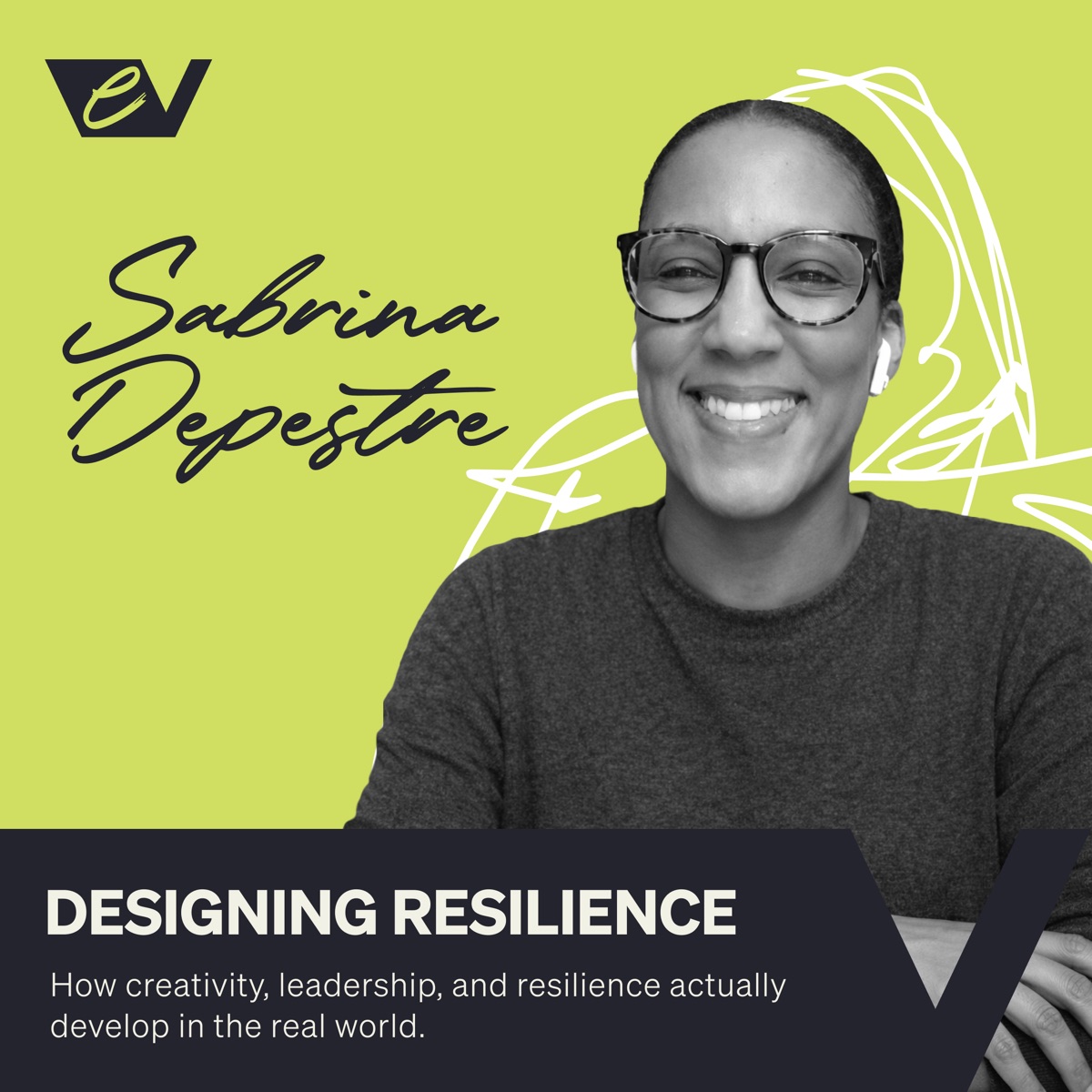
Designing Resilience with Sabrina Depestre
Senior Director of Enrollment Marketing, MICA
Watch or listen right here
About this episode
Tracey sits down with Sabrina Depestre to explore how creativity, leadership, and resilience actually develop in the real world, from shaping fan experiences at the Miami Heat to modernizing marketing inside higher education.
Sabrina reveals how creative strategy works when culture, systems, and human behavior collide. We unpack burnout as a structural issue, not a personal flaw; curiosity as a leadership discipline; and why side projects, portfolio careers, and creative sovereignty matter more than ever in an AI-accelerated world.
In this conversation
- 01From Miami Heat to higher ed
- 02Burnout as a structural issue
- 03Curiosity as a leadership discipline
- 04Side projects and creative sovereignty
- 05Resilience in the AI era
From the blog
Essay The portfolio career, defended 5 min readEpisode transcript
Read the full transcript
Transcribed from the episode recording; names and phrasing may contain small transcription errors.
Welcome, friends, to another episode of Escape Velocity. Today I am joined by Sabrina Depestre. She is currently a Senior Director of Enrollment Marketing at Maryland Institute College of Art, which I'm a fond alum of, and also runs her own consultancy, which I want to make sure I get the name of that right, Buffer and Muse. Sabrina is also the mom of a 14 month old, so we can talk about all the parenting challenges that go along with trying to work and raise a baby. And prior to that, she's been involved in various fellowships and cohorts like future Fortune Connect Fellow, worked at Backroom. in the past and just has had a very interesting history and has been at MICA now, Maryland Institute College of Art, which we'll refer to as MICA for those of you that don't know, has been there for seven years. And we're gonna just dive into all sorts of things. Sabrina, thanks for joining.
Thank so much Tracey for having me. I'm looking forward to this conversation.
Yeah, well, me too. It's always great to sit down and talk to another woman who's, you know, killing it on the creative side and is in a position in higher ed with an art school, which I think is super interesting, especially right now. So I have a lot of questions, but I guess where I want to start is let's go way back. How and when or if did you know that creativity was part of your DNA and something that was going to be an important part of your life going forward.
Yeah, I love that as a first question. So I am from Baltimore, Maryland. My family is Haitian. And if anybody knows anything about Haitian culture, it is full of creativity, artwork, woodwork, metalwork, just vibrant colors all around, as well as music and performance. so growing up, I've always been surrounded by that in my household, from the paintings. on the walls of my parents' house to the music that we listen to at parties or even, you know, eating dinner. So I will say that subconsciously, art and creativity has always been part of my life. I grew up in a household that, you know, very traditional in terms of like, obviously go to school and get good grades. And when I was pursuing, you know, higher education, what college to go to, I
you
didn't really know what to do, but I knew that I wanted to make an impact and be around people that were similar to me with a unique identity, being from the Caribbean. So I decided to actually move to Miami, pursue higher ed. And I will say my intended major, my first major was computer science. And I quickly found out that that was not for me for a host of reasons.
Yeah. Thank
But I played it safe and I pivoted and decided to study business administration and I concentrated in marketing. And it was my third year in college where I really got an eye opening insight into how products and goods and organizations and brands are at the forefront of people's minds and how people consume. I remember taking... classes on brand identity. I did a research project with USAID on how do we import goods from Mexico and all the challenges that that might face into bringing goods into the US and really working with the farmers and customers to understand the economics of that, also like how people perceive goods and imports of that nature. And so yeah, so I will say it was not until later in college that I really was like,
Thank you. which is.
what is marketing? Why do I feel this way when I see the Nike logo? Why do I feel this way when I am super, at the time I was a very big fan of New Balance and Congress and I played sports and stuff. So I was asking myself these questions like, why am I so drawn to these brands? And so I think that was kind of the segue into figuring out like, I like brands, I like organizations that really.
It sounds like my sister.
spark that emotion within me and I kind of just followed that feeling as I've entered various roles and organizations throughout my career.
you have an idea of how you wanted your career path to go once you started or were you just kind of like, I'm gonna just put one foot in front of the other and see where it leads me?
So short answer, no, but I will say that during my final semester at FIU, Florida International University, where I graduated from, I got an internship with the 90 Heat organization. And like I mentioned, I had always played sports. I played soccer, I played basketball, ran track and field. And basketball was, I would say, my second love after soccer. But I interned there and just was completely blown away of just all the ins and outs of what it takes to bring people into an arena, to watch a game. And when I finished that internship and I actually ended up getting an offer to work there, starting as an inside sales representative. And I remember one of our, or one of my managers at the time was like, where do you see yourself? know, actually part of the interview process, like, where do you see yourself? And it like, I want to be a GM of a general manager of a sports team, right? So, you know.
Thank Here.
20 something years old and thinking that I'm into sports and I could, you know, maybe manage and own a team eventually. And so that was, that was kind of like what I thought I was going to do for very early on in my career. and then I just understood the nuances of what that would mean. And when I was working with the Miami Heat, the, the main part of my, my job as I progressed throughout that organization was really creating customer experiences for people. so obviously people come to my heat game to watch the players, but there was so much that happens behind the scenes where we had worked with organizations and nonprofits and lawyers and all sorts of people to really bring their teams and their groups together to build camaraderie, to build collaboration and partner with other people and also deal with fundraising. So there's a lot of experiences that we sold, not just watching the heat game, but know.
Okay. Yeah.
high-fiving the players when they come out to the court or the high school teams playing basketball on the court. And so that really lit me up and seeing people walk into the arena for the first time and just being able to be that catalyst to have a very memorable, to be able to provide a memorable experience for people, that really sold me in the sense of like, okay, I want to continue down this path of like, how do I create an amazing experiences for somebody regardless of the industry, regardless of...
Okay.
the organization. And so that's been my core in terms of what I really enjoy and what I kind of follow in the sense of like where my career will take me and where it has ended or where it has taken me. Just being able to pivot and align with creating impactful experiences for people.
Yeah, what a what an amazing experience to have that, you know, right out of school and with that kind of an organization and energy and with your passion for sports already there. I'm sure that shaped a lot of what continued to drive you going forward. Now let's fast. So did you come back to Baltimore for to work with, what brought you back to Baltimore?
Yeah, yeah. So my journey is definitely a winding experience, but essentially after the Miami Heat, so I was there for six years. I was there when, you know, the big three, so LeBron James, Dwyane Wade, Chris Bosh were there. And I left the season after we won the 2012 championship. And it was actually during that season where there was a lot of blogs and influencers and people talking about do what you love, quit your job, entrepreneurship. And I really wanted to see what else was out there for me. So around that same time, I was heavily into CrossFit and found my tribe there in Miami. And I really wanted to come back to the Northeast. I was traveling pretty often to visit family in New York City and Brooklyn in particular. And like every time I went to Brooklyn, I'm like, I need to be here.
this.
So I did take the leap. I left obviously a very comfortable and amazing job to really pursue what was next. And I didn't want my identity to be tied to the sports person or the Miami Heat person. I really wanted to see what else was out there. So I pursued a passion and did CrossFit coaching and personal training, lived in New York, got completely burnt out in New York after about a year. And that's when I decided to...
Thank Thanks. Okay.
move back home to Baltimore to kind of regroup and just really think about being intentional around what do I actually want to do in my life and my career. you know, very existential questions and, you know, have a safe space back home, moved in with my parents. And that's when I really was trying to, again, be intentional with.
Thanks. Bye. Yeah.
the next thing that I wanted to do. And I knew for sure I did not want to just go into a corporate nine to five, just to have a job. And I recognized the privilege there where a lot of people don't have that choice. But I really wanted to make an effort to curate and craft a life that I really, and to design a life that I really enjoyed. So that's what brought me back to Baltimore. And so I've been in the area. essentially for about, I guess like nine years at this point, 10 years, nine years, yeah.
You mentioned burnout. I mean, I'm sure New York can burn out people for no other reason than New York. Were there other things at play there? Were you missing that creative? I mean, know CrossFit has its own type of creativity, but talk a little bit more about that.
Yeah, so yes, to burn out, know, just being in New York, it's obviously super vibrant and noisy and just constantly people all around. And so I helped open up one of Red Hook Brooklyn's first CrossFit boxes, what they call their gyms. And then at the same time, I was personal training at Equinox in one of the Brooklyn neighborhoods. And I was just commuting. I was riding my bike throughout the New York streets. I was living with friends and family. know, every couple of months I would move to a new place. You know, it's very scrappy working as a personal trainer, a crossword coach. It's not a salary job. So, you know, it's part of selling. You have to get clients in. And so just doing that day in and day out and also not being able to necessarily curate my own schedule, right? I was at the will of my clients who, you know, they have jobs also. So they were they needed to be at work at seven, so they wanted to train at five o'clock in the morning. So it was one of those just coupling of, know, biking everywhere and just not being able to curate my own schedule and just trying to make ends meet, which can cause burnout. And I'm a very committed person. And so I was trying to do everything that I could to make it work. And I had a... what they call a come to Jesus moment where, you know, it just was not good for my health to stay in Baltimore, sorry, to stay in Brooklyn. So, exactly. So that was the prompt of like, okay, I will not survive if I stay here. So let me just take the approach and move back home.
But yeah, you gotta have those come to Jesus moments. Well, let's fast forward to here you are at MICA. It's been seven years. You've had a number of roles there. You're now Senior Director of Enrollment Marketing and also you have sort of a fledgling consultancy that you have started for yourself. You started at MICA shortly before, what about a year before COVID? Was it 2019? Yeah.
Correct. Yeah, I started in January of 2019. Yeah. Yeah. So.
Okay. So, I was just going to say, talk a little bit about sort of your entry. You you started with Micah. Had you had any experience or interactions with Micah prior to the getting the job there? Like just how did that happen?
Yeah, so it's really interesting how I got into MICA. And so I will say, like I mentioned, I'm from Baltimore, from Baltimore County. And I was not familiar with MICA at all until probably a couple of years after college. And I got the job actually through a really good friend of mine who is an alum of one of our dual degree programs, the Mamba program at Johns Hopkins University. And yeah, it was around the time where I was just talking to him and he was like, you know what, there's actually a position open within the open studies area, which is essentially the continuing education arm of the college. And we'll have to put you in touch with the provost of that area. And I was like, sure, why not? And I had some apprehensions because of higher ed and I actually had a pretty... a unique experience in my undergrad time where I just had a lot of negative feelings about higher ed in general. And so it wasn't until I obviously applied for the position and talked to the team who ended up hiring me that I was like, okay, I can actually see where I can make an impact in this area and at the school. And in 2019 at the time, the open studies area, they were launching a lot of channels to promote their online degrees and so online masters of professional study degrees and there wasn't a huge presence on social media at the time. I think my predecessor had a journalism background so there's a lot of like communications and print material but there wasn't any indication of modern marketing that was happening.
Mm-hmm. Thank
not only in open studies, but within the college as a whole. And so I, as I was going through the interview process, and I remember my final interview, I put together a whole marketing plan if I were to get the job and what I would do in the first year. So I'm an overachiever. But yeah, I really did feel like I had some creative ways to elevate the programs that they were launching. And I will just shout out to Kara Redman, who is the
Bye. for.
the founder and CEO of Backroom, which is the brand agency that I worked at prior to that really opened my eyes on how to be creative in the sense of being a marketer, but also being a strategist and how creativity needs to play into both. So I was able to take what I learned at Backroom and really implement that and start off pretty strong in my career and 2019 at Micah. And yeah, I've had a lot of different various marketing roles within that.
Okay.
that unit in particular. And about four years ago, I transitioned from that academic area to the central communications or the central marketing communications department at the college. Again, to really modernize how we do marketing across the institution. How do we elevate the brands? How do we expand into new areas and new areas to attract new students because of the new programs that we are in development and are launching.
Thank I will echo your shout out to Kara. She's a dear friend and a great mentor. I do think that anyone who has a chance to work with her or collaborate with her can learn so much. She's a phenom and so talented. As for Micah, so here you are in higher ed, which is notoriously behind the times when it comes to modern marketing of any kind. It was not too long ago, and it may still be the case where even saying the word marketing in higher ed communities was seen as negative or salesy or not what they're about. And brand and marketing have been ideas that think higher ed has struggled with embracing. as part of their identities because of their sense of being a not-for-profit and they shouldn't need to do these things and they don't want to be disingenuous or be seen as selling. And how did you walk into that kind of environment, even at a place like Micah that is pretty progressive as an art school, still has a lot of the historical anchors or... some of the old outdated models of thinking in place.
Yeah, I love this question. And I love it because, yeah, there are so many different nuances when it comes to higher education. And like you said, art and design colleges in particular, obviously they're very niche, lots of folks. And so I will say it has been challenging to really socialize what marketing is at the institution and really try to align folks whether they're staff, faculty members, community members on what marketing is and what it isn't and what branding is and what it isn't. Obviously in an art and design school, there are lots of graphic designers and people who develop brands and brand identities, but being able to, like I said, socialize marketing in a way that highlights the... efforts of our faculty and the people who actually develop the programs and the curriculum and the products. I will say product is another word that is a dirty word. It's a dirty word. And so, you know, I've learned to really navigate those waters pretty well. You know, it depends on who I'm talking to or who we're talking to in terms of who we're presenting.
Thank Dirty word. It's a dirty word. Don't say it.
communications plan or marketing plan too and being able to speak their language.
Yeah, I was gonna ask, like, did you host, you know, seminars? Were you saying, come and talk to me, I will explain things to you? Because it's true, especially in a art and design school, everyone's got an opinion. Everyone thinks they know what's best. So yeah, you said like, it's case by case, but were there any like...
in. Yeah.
absolute failures where you just had to, and you don't need to name names, but you know, you know what I'm saying, like, did you hit any brick walls?
Yeah. Yeah. Yeah, of course. Yeah, lots of brick walls. I will say in the sense, so no formal sessions per se, but it's just been more of, I'm in a lot of meetings all the time. And so being able to present ideas and concepts and campaign briefs to various people and understanding the questions that they're asking to help inform how we best execute. And in terms of, you know, roadblocks, you know, a lot of people think marketing is just put this on social media. You know, why can't you just post about this? And so it's being able to educate in a way of presenting a strategy or a brief that really outlines like, who are we talking to? What are the goals? What is the outline of the ways in which we are going to talk about this program and what are the channels like the the whole marketing mix, whether it's social media or video that we need to develop. being, again, being able to present the strategies and plans and briefs in a way that addresses people's concerns, but also, you know, I do have to be diplomatic sometimes to really say like, this is what we're going to do. And we can tweak as we see how the campaigns are performing, but
Thanks. Thank
this is our plan and this is what the market is saying. So yeah, it's been, I think there are more people that really understand the direction that my team is going in, in terms of how we're expanding our marketing efforts and being intentional with who we partner with to tell the stories and to talk about the programs. And I think a lot of our faculty in particular are excited because we're
Thank you. Thank you. Thank
there's a whole team that obviously goes through like renewal and a launch process of when we produce and put on new programs and new degrees. And, you know, part of that process when faculty members and area chairs or area heads are proposing new degrees, there is a marketing component that they have to address and they have to be able to answer some questions that really get them to understand, like, again, who's the audience that we're trying to reach? Where are they? So we're bringing them on board our process to help them understand what marketing is through their loans and through how they're proposing their programs.
What are the things that think are just the most obvious ones that you're able to get in purchase? Now, I always think this is such a challenge in marketing in so many aspects, but if you can get it, it's the best kind of ammunition and that's proof, right? That's outcomes. Look, we decided to do this and here's the result and this is better than what we hoped for or it's different than what we hoped for, but we're going to look at what we get back and then we're going to build on that instead of a shotgun kind of approach where, hey, we think this looks good. We're going to put it out, not really worry about the outcomes or the results and then, you know, move on rinse and repeat kind of approach. How did you weave that into your work internally to get support and buy-in? Was there a specific approach to that or was that just a natural process.
Yeah, so I will say it's not just me. There's a whole team behind launching and relaunching and renaming programs to see what sticks. for example, we've had, like I mentioned at the start of the Micah transition, we have a lot of online degree programs, Master of Professional Studies programs. And we've had them for probably, I think our first one was in user experience design and that was about 14 years ago and we've launched several after that. But one of them in particular was called the business of art and design and the students had named it the bad program, right? So for 10 years it was the bad program, which, you know, for, as you can tell, it's not the best way to describe the program. But aside from that, that program in particular,
or your. It is dark.
we were hitting like a ceiling of who we were getting into this program. And so there's a whole team that works through redeveloping the curriculum, even just the way that somebody consumes the MPS degrees now before they were live synchronous courses. And we've pivoted to asynchronous, which has expanded obviously who we can bring into the programs. But the formerly known as Business of Art and Design program has been changed to Business for Creatives. And with very, very little marketing dollars behind that program, when we made that switch last year in 2024, we saw that first fall class of about 17 or 18 students, which is huge for, again, very little marketing effort. And so working with the team and really working through the ways in which the curriculum is being deployed and just something as simple as renaming something to attract a different audience or a wider audience has been something that has been beneficial in terms of how I'm able to now work with our other partners and vendors to really create targeted campaigns based off of the people that we're trying to attract. So yeah, that's one example of kind of working with a whole team behind being intentional on how we're describing this, who we want to bring into the school and trying to let people understand we have to renew things every so often so that way programs don't get stale.
Thank Yeah, well, I mean, it's a great example. And then you've got the proof of the enrollment and the interest expanding to say, OK, we were successful here. This was a good decision. And it's benefiting everyone. And no one can call it the bad program anymore. It's a win for everyone.
Exactly.
I mean, obviously COVID has really impacted, I think, higher ed. And now we are in this very tumultuous time. So we go from COVID into just more craziness and we've got AI and I don't even know where to start. Like what, how do you even block and tackle what's going on right now? People must just be hair on fire kind of reactionary to
You Yeah.
How do you chart a course through what is the current landscape?
political climate and technology advances, all that stuff. Yeah. So I believe it really starts with who's on your team. having people who understand not only the challenges, but who can be nimble in adapting to whatever is being thrown at us. Obviously nobody could have predicted COVID or at the time, or even some technology advances or...
Yeah.
the way in which the political landscape has shaped specifically around higher education. But I truly believe that as marketers and as people in creative fields, you have to be nimble, you have to be open to change. It's obviously not easy and change is very hard. And I think, I've, know, there's been several instances where I'm just like, my gosh, there's just another thing that we have to monitor and-
Thank you.
know, shift and change. And that's hard. it's just, it's hard, right? Like, it's, right, it's never boring and it's hard. If I say hard one more time, yeah. But it's one of those things where I think for people who have, I'll speak for myself, somebody who has been in a lot of different organizations and
Never, it's never boring, never boring.
been able to take leaps of faith without really knowing what's on the other side. I believe I have built that resilience and I come from a very resilient family and culture and all that stuff. But I think you need to go through those experiences in order to be able to adapt to the changes and to adapt to whatever is being thrown at you. So I think it's just a test of time and just longevity in the game that gives you, you know, you're a little bit better at it the next time something is thrown at you. But I think in general, all I to say, you have to be open to change. It's going to happen. And you just have to be able to adapt and know who to bring on your team to help you in those shifts and to figure out where to go next.
Yeah, and I also think having a supportive leadership at any organization, whether it's higher ed or a company, when it comes to feeling like you have the support of the team and the support of leadership to chart the different courses and navigate the change. So talk a little bit about that. How do you feel that impacts what you're able to do or not do?
Yeah, I will say it impacts what I'm able to do and our team tremendously. So at MICA, we have new leadership in place. And I believe our current president, Cecilia McCormick, has been at the institution for about two years. And the leadership, know, the C-suite essentially of MICA is fairly new as well. I will say most of those folks are probably around the two year, one and a half year mark as well. And all of them come with, you know, the drive to make organizational change, but also get things done. I think it's one of the good things about leadership change is that you have fresh eyes and fresh perspective and you don't have that historical context. You don't have that baggage essentially that prevents a lot of people from. making change in the first place. So yeah, leadership 100 % takes or is a huge impact on how I'm able to do the work. And I will say that there is a, yeah, there's definitely, it's pretty inspiring and motivating to work with people who really want to get things done. And I will say just one example. So my, I first started at MICA, My boss at the time, he had been at the institution for probably 20 years at that point. And he would always say, you know, I really wish we had this e-commerce site to, you know, offer our youth and teen programs and our community education programs. And he would say that often. And I had been there for four years and it wasn't until this current year that we finally have this like e-commerce site, but we have a lot of new leadership, a lot of new team members that are able to get this stuff off the ground.
So, if you have any questions, please feel free
in a way that my previous boss couldn't. And I think a lot of that has to do with our current leadership and understanding, again, what needs to shift in order to not only get things done, but to create a great experience for our students, to create a great experience for prospective students, to be able to trust us and to spend their dollars in there and also basically pick us to further their careers and creative pursuits.
So thank Thank you. Let's talk about AI, especially with an art school in the mix here. What has the conversation been like around generative AI? Just tell me about the conversations that are being had at MICA, because I'm genuinely curious.
Yeah, so I will say it's no longer the elephant in the room, right? I know that there obviously are a lot of people, students and faculty and staff even that are against generative AI. know, there's obviously we have a lot of programs that are on illustration and graphic design. So I will say the conversation at MICA a couple years ago, we our previous provost had drafted a policy around AI and the use of AI. And that was a start. I think the conversation, not I think, the conversation is definitely still going. It's not, I don't think it's ever gonna be a finite thing. Like Micah's policy is XYZ because the technology is changing all the time. And I personally believe that we can't limit ourselves to not doing it or...
Thanks. Thank you. Thank you.
you know, not doing it. Like we have to embrace this technology and figure out a way that really can have this tool be that, be a tool to help, whether it's your creative pursuit or, you know, your curriculum development, whatever it is. I, yeah, so I know there's been a couple of subcommittees at the college that were thinking about this. There's been surveys that have been, that have been sent out to students and faculty just around. sentiment around AI and my colleagues at the library actually produce those surveys and it's actually public facing where you can see those results. But yeah, the conversation is still going. And yeah, there's some students that are like, yes, this will make a lot of sense, but then there are those that are like, why would I get this degree if my job is not gonna...
Thank That's.
or if my practice is not going to exist because this tool is going to replace my practice. So I understand both avenues, but I do fully believe that we need to embrace it and figure out a way that it will help all of us.
Yeah, reminds me of when Photoshop and digital cameras came on the scene and everyone was freaking out because especially photographers because they just felt incredibly threatened by the technology and what it and the fact that it felt like it was opening up And it did for a while, right? Everyone was like, I can do that. I've got, can get a digital camera now and use Photoshop and make these amazing images. But without a creative education and background, you know, you're still using tools. You need to know how to use them. And I see AI very similarly at the moment. I don't think that it can be handed the keys to the ideas and the strategy and the creativity.
Exactly.
but it can empower you to do a lot of different kinds of things that prior would require an entire studio or advanced equipment and things like that.
Exactly. Yeah, and I will say that I know for sure the AI in general has been embedded within the curriculum on the graduate side, the online degree side in particular, and we also offer and have offered courses in the past around AI and part of the curriculum of those courses have been around ethics and responsibility. And so We always want to make sure that we have that lens and that framework in place so that way, you know, people are not only educated, but can use it in a way that is responsible. yeah, AI at MICA is being, is part of some curriculum and, you know, we're exploring how people are responding to that.
Thank Yeah, what a ball of yarn. fun times. Let's talk about you personally as a creative. You have your job, you've got a team, you've got all the things to navigate that we all have in work. And you're in higher ed, which has got its own special flavor of challenges. How do you keep yourself from
fun times.
burning out from getting stale or how do you bring that to your team too? Because you've got a lot of people that look to you for how to bring their best creative self to the work. Do you have a practice? you have things that you, tips, recommendations?
Yeah. You Yeah, that is a loaded question, but I will say that first and foremost, I have an incredibly supportive partner. He is my rock and he really helps hold it down at home and just helps with day-to-day things that I don't have to think about. So that's first and foremost, supportive partner. But in terms of how I manage all of it and how to... hopefully not burn out as often. I really try to remind myself that this is an art practice and this is our creative practice rather, and this is my current role. We are selling the ability to feel confident in your creative practice, right? Like I think that there are a lot of... Obviously challenges have been higher ed, but again, I have to remind myself that this is a creative practice and like people get to make amazing art and design work. And especially during this time, which I think lots of feelings and lots of, you know, there's so much happening that people need to process it in a way. And so being able to provide people with that space to process how they're feeling in this current time, I think is a privilege. And then I will say how I, elevate my team or, you know, remind them that this is important work. I had said this the other day and I put this on LinkedIn, but basically we're not selling fax machines. Like it's not like we're selling fax machines. You know, we're selling this experience and we're selling this opportunity for people to really dive deep into who they are and express themselves. And I try to take that when I come home, you know, I'm not a
Thank
formally trained artists. don't paint, I don't draw, but I create strategies and plans and really have to think critically and thoughtfully around the messaging and the story that we're telling. And my own creative practice, I will say, is, you know, I have an iPad and I do a lot of mind mapping and I color code things, right? Like I am a visual learner. And so I try to bring that to my work in a way that...
Thank you.
really helps me not only organize but also like lights me up as well.
Something I noticed just from following you on LinkedIn and getting to know you just brief, you know, not that for not that long, but seeing what I what you share is I'm struck by your constant state of observing and curiosity about not only how you're moving through the world, but how the world is moving around you. And so that leads me to a question about the importance of curiosity. And has that been something that has been part of you? Is it part of your DNA? And how do you foster that in your team? And now that you've got a 14 month old, I'm sure you're thinking about how do I embed this? characteristic into my child because I don't think people necessarily will continue to learn or grow if they don't have curiosity.
Yeah, yeah, I will say I've always been a curious person, right? I think my childhood I was, maybe not the oddball out, but I was like climbing trees and like riding my bike and getting lost in the woods with like, you know, hours at a time. So I've always been curious and just about people, like you said, about the world around me. And I will say this actually aligns with both
place.
how I make sure that my team stays curious and even my son, right? I let them do what they're best at. Like I let them kind of figure out their lane and really see what ideas or what comes out of what they want to pursue. You know, with my team, I give them some ideas. like, I'm seeing this on social media. How can we incorporate this on other channels? What can we tweak?
That's great. people at the center. to the school.
and I let them run with it and see what ideas come out of that. And then with my son, you know, he's only 14 months of everything. He's curious about everything right now. And my partner and I, let him play. We let him, obviously not in dangerous ways, but we let him explore and not try to impose what we would do in a situation if he's rummaging through his toys. I think, again, it's allowing people to have the freedom to really pursue what they're interested in and...
Yes. Thank you.
giving them some gentle nudges of like asking the questions like, oh, why do you think this is the best approach or why do you believe that we should go down this path and giving them the floor to be able to do that, I think sparks that curiosity within them.
Okay. You mentioned a few times taking that leap. You took the leap after when you decided to leave Miami Heat. You said at the time everyone was out there saying, follow your passion and do what really charges you up, lights you up. Sure, there are a lot of people that say that and it is a privilege if you're able to take those leaps. Some people always put that off. Even if they can take the leap, they give themselves a lot of... They move the goalpost constantly. I'll do it when... I'll do it when... When I get this level of security, then I'll take the risk or those sorts of things. How much do you think... And you mentioned resiliency too, but there's got to be some risk tolerance. to both continuing to be curious. mean, I children are naturally curious and then it kind of gets beaten out of them through formal education in the elementary and high school type curriculums. But curiosity is one thing, having the resiliency to take the risks or make the jumps or make the changes, where do you think that, how do you build those muscles with the team, with yourself?
Yeah, good question. Yeah, there's definitely fear that is part of the process. And I think it's being able to know where to place the fear. think for a lot of people, like you said, there's always like, if I make X amount of money, then I'll do this. Or if I have this lifestyle, then I'll be able to do this. And I think what prevents a lot of people, and myself included, I've done this and have experienced this is there's fear that comes in because you don't know what's going to happen and you might not have that safety net. And what I've learned in hindsight, even though I'm very grateful for where my career and where my life has ended up, I will say that in hindsight, I could have been a little bit more strategic around making that leap and aligning things in a way that weren't so drastic or abrupt. So one thing that I think is helpful for people to know is that if you have that inclination or you're thinking about that next move or that next thing that you want to do, test it out before you actually make the leap. Like talk to people, put a project out, start writing about it, get it out in a way that gives you some type of feedback to help you understand maybe when and where you should make that next move. And I will say there's a lot of unlearning that needs to happen to you, Ray, like you mentioned, you get stuck in the process and the systems and the ways in which you've learned about something that there is a lot of internal work that needs to happen to kind of unlearn these patterns that are blocking you from doing XYZ. And so something that I've practiced for a while is yoga, even walking, just being able to sit with your thoughts, which can be scary, right? A lot of people are afraid, again, fear to even sit down and allow themselves to think that they have the ability to do X, Y, Z. that takes a lot of practice. And just, again, coming to terms with...
Hey. Eheh Yeah.
and being honest with yourself in terms of what you want to do and why you want to do it.
Yeah, fear is so interesting. It's a natural emotion. It's baked into our survival instincts. It serves a very important purpose and it certainly did for millions of years. And now I think we can sometimes let fear hijack us or convince ourselves that what we think is a safety net is really a safety net because I think as you go through life, you start to realize anything can change at any moment. Nothing is truly, you know, a sure thing. It's, it's just, it's comforting to tell ourselves like, okay, this is stable and this is good and I'm safe here. Um, and why would we, why would we willingly choose to leave that, that illusion of safety to go out and and try new things, whether that's starting our own thing or... And as an artist, I had to learn to get brave about putting myself out there very early. And I think that's something that you learn as a creative that a lot of people struggle with, which is you do have to put yourself out there. It's vulnerable, it's scary. What if everyone hates it? Well, then you got a really strong reaction. That's better. I always tell people, don't worry, you're probably not going to get any feedback. So whatever you're thinking might happen, it's not really going to be that, but it will hopefully be something. And you will start that practice of putting stuff out, whether it's an idea, a business plan, a piece of art, a strategy, a marketing campaign, whatever it might be, you just have to put it out there and then go from there.
Yeah. Yeah. Yeah. Yeah. Yeah, I will say that there are moments, and I'll speak from my own experience, there are moments where things can radicalize you, right? Like I remember working with Amemi Hi and this was during the first recession in 2008 where I remember HR walking through our offices and like 20 or 30 people got laid off in one day. And that radicalized me. I was like, it doesn't matter what degree you have, how many years you've been at the organization, what skill sets you have, right?
Nobody's safe, yeah?
I mean, that's, yeah, I mean, but at the time I was like, this is crazy. And that radicalized me. that's when I, you know, that was in 2008 and it took me four years to really make that leap. But I always had that in the back of my mind. I'm like, I could get fired at any time, even though they love me. I did a great job, but like, you know, I don't have that, like I'm not in charge, right? And I think that's. Part of the reasons why I took these leaps and for people in general too, there might be those moments and things that radicalize you that force you to take action or force you to think about what to do next because you don't wanna be in X position. So yeah, I always keep that in mind and that's part of the reason why I started Buffer and Muse. I started my marketing podcast just to have other things that...
Thank Yes.
I own, that I control, that light me up and that fulfill me in a way that I don't necessarily need to depend on other people to decide.
That's so great. I'm so glad you brought that up. And yes, your podcast too. For anyone that might want to check that out, I know it's been a little bit of a hiatus because of the new baby, but what is the name of your podcast or how can people find it?
Yeah, so my podcast is called Musings on Marketing. It's available on all platforms. And yeah, I'm hoping to relaunch that in 2026, but there's about 15 episodes. don't even remember. But yeah, there's some good gems and some great people I had conversations with that you should check out.
That's great. I'll include a link in the show notes along to where people can get in touch with you. But I think that you talk about being radicalized and just realizing that that sense of stability is a bit of an illusion and that you... I do think there are a lot of people that think it has to be one or the other. I've got to either have the safe conservative... I just do what I'm told, I'm a cog in a wheel, but I'm safe here. Or they've got to take the leap and completely leave that all behind and start some big endeavor. And what you just talked about was so much more reasonable, right? You started a podcast, you started a consultancy, you started to lay a groundwork that's yours, it's your landscape. Sabrina decides who comes in, what goes out. And that sense of control, think, we see it everywhere now with the gig economy and with what the just general economic shifts have done is they've made people realize that you don't want to have all your eggs in one basket and why not take a little bit of time out and you've got so many tools now to empower you're getting yourself out there in whatever way that you want to, whether it's to try to get clients or to share ideas that you don't need to be one or the other. can sort of spread yourself out a little bit and make them, I mean, if you're doing this with a 14 month old at home too, like, yeah, supportive partner helps, but I think that it doesn't have to be a giant, you don't have to say I'm going to go climb Everest. It's just, how about I just put one pole forward over here and also one pole forward over here that keep your, your spirit going while you're in the midst of things that
Yeah. Exactly.
you know, might feel safe, but you know that it is all a little bit up in the air.
Yeah, exactly. And that's one of the things, again, lessons learned from my Miami Heat days and really, again, just being strategic around, like you said, how do I not put all my ends in one basket? And again, these are fun creative projects for me. So I'm not forced to do them. I can do them on my own time. And there isn't that pressure. But you did mention a thing about control, too, where, yeah, I think anybody
Yeah.
has somewhat of control of their own destiny and have support people that can push them in that lane. So yeah, I think that it's important to, like you said, take things bit by bit and not think you have to do everything all at once.
And reach out and get feedback. Keep those critiques going. It's not as scary as you think it would be. Sabrina's a great example of someone who's remained curious and engaged with your community. That's how we met up. Even though I knew of you, you were like, oh, I'll pop by. right around the corner. It's not so scary. When people have reached out to me, I'm sure people have reached out to you to get
Right, exactly.
maybe some advice or some feedback or even some mentoring, you would, don't be afraid to reach out. If you're curious about something, reach out. Chances are someone doesn't get a lot of inquiries and would be happy to share or help in your own journey. So I'm not gonna offer Sabrina up, but I'm offering myself up, right? I love to be reached, to be contacted and asked any questions if I can be of help. But it is that first step.
you Likewise.
Get out there, test out your ideas, what you're thinking about, ask for good feedback. So that brings us to the conclusion of this episode. Sabrina, thanks for joining me. This was really great. Thanks for sharing your journey and everything that you've gone through and how you're doing such a great job right now at MICA. And I wish you the best of success and MICA the best of success.
Thank you so much Tracey. This was a fun conversation. Appreciate it.
Let's do it again soon.
Thanks.