Episode 26 · Mar 6, 2026
DEEO Returns: Art, AI, and Why Humans Decorate
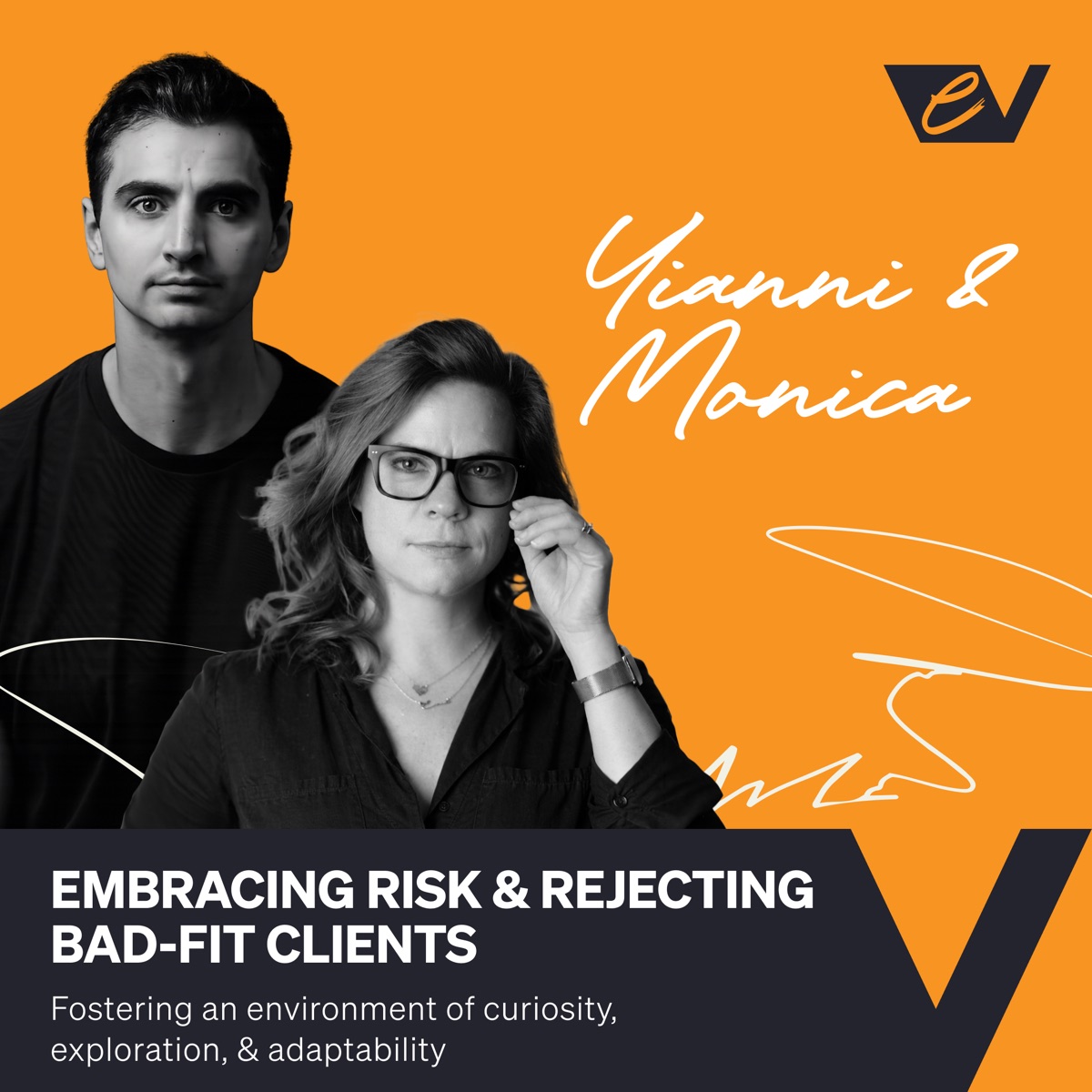
Ft. Monica Sanchez & Yianni Mathioudakis
Co-founders, DEEO Studio
Watch or listen right here
About this episode
Yianni and Monica of DEEO are back for round two. Nearly three years into building their creative studio, they’ve hit a different gear. A conversation about where design, brand, and AI are all headed, and why decoration is a fundamentally human impulse we can’t afford to hand over to machines.
We get into what happens when brands sound the same because everyone’s using the same AI tools. Why the first thing any organization should do right now is ask an AI about their own brand and see what comes back. How website design is swinging back toward creative differentiation. And a riff on decoration and art as a fundamentally human impulse.
In this conversation
- 01Three years in: a different gear
- 02When every brand sounds the same
- 03Ask the AI about your own brand
- 04Websites swing back to differentiation
- 05Decoration as human impulse
- 06Saying no, being upfront about money
From the blog
Essay Why decoration is the last thing we should hand to machines 5 min readEpisode transcript
Read the full transcript
Transcribed from the episode recording; names and phrasing may contain small transcription errors.
Hello everyone. That's my Oprah. That's my Oprah intro to another episode of Escape Velocity. I am here with Yianni Matthew Dacus and Monica Sanchez of Dio. Hello, hello. We are doing kind of a catch up episode. I'm always excited to talk to you all, but it's been a little over a year I think since the last time we talked and
Mm-hmm.
Hello!
How long have you been running Dio now officially? Do even know? Sorry. Pop quiz. Pop quiz. Has it been two years, over two years? Over two, yeah. Yeah.
My ass! I'm kidding!
Over two, yeah, was 2023, like August of 2023, I think we started.
over two years.
like August of 2023. Okay, all right. So coming up on your three year anniversary this year. And yeah, I mean, and just a crazy time in general. So let's dig in. Let's find out what's been going on.
No, it's wild.
crazy.
He he.
My first question is, what was something that you all really believed a year ago or last time that we talked that's completely reversed now or changed in a significant way? Was there anything that you were really like, we think this and then, or we believe this? That's a really good question. That is a great question. I like we always embraced the idea of like,
Hmm
That's a really good question.
That is a great question.
feel like we always embraced the idea of constantly wanting to change and never feeling like we knew the best solution ever. I think that was one of our philosophies. When we started, were like, we never want to do the same thing twice because we knew that there was always opportunity to learn and to grow. And that
constantly wanting to change and like never feeling like we knew the best solution ever. Like I think that was like our whole, one of our philosophies, right? Annie, when we started, we were like, we never want to do the same thing twice because we knew that there was always opportunity to learn and to grow. And that, that approach and that philosophy has sort of been foundational to the work that we do and how we
Mm-hmm. Mm-hmm.
that approach and that philosophy has sort of been foundational to the work that we do and how we think about evolving. And I think because of that, we're always like, to answer your question, I think we're doing that constantly. We're always like, we did that this way, let's do it a different way. We liked how we approached this part of the project and the ideas we did here, but I think we could have done it differently.
think about evolving and I think because of that, we're always like, to answer your question, I think we're doing that constantly. We're always like, we did that this way, let's do it a different way. We liked how we approached this part of the project and the ideas we did here, but I think we could have done it differently. think that question is so foundational to how we approach everything that.
That question is so foundational to how we approach everything that it's literally like everything that we've done has changed and we've never really been like, we're gonna do it the same way over again. And I think we're constantly like questioning, was it the right way? How could we have done it better? What is something that has changed in the industry or how we think about our work that we can apply to the next time? I think.
It's literally like everything that we've done has changed and we've never really been like, we're going to do it the same way over again. And I think we're constantly like questioning. Was it the right way? How could we have done it better? What is something that has changed in the industry or how we think about our work that we can apply to the next time? So I think honestly, the answer to that question is like everything in some way.
Honestly, the answer to that question is like everything in some ways.
Yeah, yeah, I'd agree Oh, go ahead Tracey do your follow-up. Yeah, I mean it's like There's pros and cons to that approach right because I think it's easy for us to You know, maybe lock into a way we a process. We always do our work this way this is kind of the thing that we always do and how we do it and There's efficiencies in that
So you don't... Go ahead go ahead Yianni. No, go ahead. There's pros and cons to that approach, right? Because I think it's easy for us to You know, maybe lock into a way we a process we always do our work this way this is kind of the thing that we always do and how we do it and There's efficiencies in that and you know, you could probably really like dial in the studio and just people know all right if we go with Dio
And you could probably really like dial in the studio and just people know, all right, if we go with Dio, this is their proven process and this is the work they're going to give us. And I think there are pros to that, but also for us creatively and what we set out to do, it's like, if we lock ourselves in too much, I feel like we were going to limit ourselves from the start. like Monica said, it's always been.
this is their proven process and this is the work they're going to give us. And I think they're pros to that, but also for us creatively and what we set out to do, it's like, if we lock ourselves in too much, I feel like we were going to limit ourselves from the start. So like Monica said, it's always been, how do we just stay curious and stay creative and constantly learn, especially with AI and everything changing so fast, stay up on it. And so that we can continue to do better work.
How do we just stay curious and stay creative and constantly learn, especially with AI and everything changing so fast, stay up on it and so that we can continue to do better work. And right now I think that's still holding true, but it's a balancing act for us. I think it's like, can't go too far down doing everything different every single time because then it's a constant learning curve and it will take us a bit longer to get our work done.
And right now I think that's still holding true, but it's a balancing act for us. think it's like, can't go too far down doing everything different every single time because then it's a constant learning curve and it will take us bit longer to get our work done. I think we're trying to find that sweet spot. Somewhere between chaos and order. It's interesting, you mentioned proven process and that's something
So I think we're trying to find that sweet spot.
Yeah. Mm-hmm.
Yes. Yes. Yeah.
many of us have had drilled into our heads as something we all need in an agency or a studio or even as a unique, you know, an individual practitioner. And the reality is, you know, it feels kind of gimmicky in a way, but I do think that clients seek security in understanding, okay, there's a process, it's worked for them and they're... past clients so I have more confidence that it's gonna work well for us. Do you experience that when you're talking to new clients? Are they looking for that process?
Sometimes I think.
Sometimes I think...
haven't really talked about process in a while. think we try to, I think those are questions that we can answer after we have a really good sense of like what you actually want. I think going in to conversations with prospective clients leading with process leaves, can be difficult to sort of like open the door to listening, right? Like I think we are like listening.
think those are questions that we can answer after we have a really good sense of what you actually want. I think going in to conversations with prospective clients leading with process leaves can be difficult to sort of open the door to listening. I think we are listening all the time. We go in, we ask a bunch of questions. We want to hear from them. We want to know what are the challenges?
all the time. Like we go in, we ask a bunch of questions. We want to hear from them. We want to know like, what are the challenges? What's really going on? And like, if we went in saying like, here's our process, here's how we're going to solve your problems, like we're already assigning a solution in some ways. And it can limit, if you go in being like, we have a proven process and we've done this a hundred times.
what's really going on. like, if we went in saying like, here's our process, here's how we're going to solve your problems. Like, we're already assigning a solution in some ways. And it can limit, if you go in being like, we have a proven process, and we've done this 100 times, you're already kind of going in being like, just let me tell you what to do. Right? Like, I already know what your problems are. And I think that that is really not fair to clients in general, because while there are a lot of
you're already kind of going in being like, just let me tell you what to do, right? Like, I already know what your problems are. And I think that that is really not fair to clients in general, because while there are a lot of like shared challenges in the work that we do, to really find the solution for the client, you have to really understand them and get a good sense of what they want and what they need and how they work and what they like and what they don't like and...
shared challenges in the work that we do. To really find the solution for the client, you have to really understand them and get a good sense of what they want and what they need and how they work and what they like and what they don't like. And process doesn't really address those things. think having a process like helps you get to through the project and like keep things streamlined and moving and keeping the momentum going. But
Process doesn't really address those things. think having a process helps you get through the project and keep things streamlined and moving and keeping the momentum going. But process is not solving the problems. The creativity, the thinking, the strategy, you being a good listener, you having experience, you saying, well, tell me what your problem is. Let's talk about it.
Process is not solving the problems. The creativity, the thinking, the strategy, you being a good listener, you having experience, you saying, well, tell me what your problem is, let's talk about it versus like, let me tell you about my process and how you'll fit into that. Yeah, right. It's like you don't expect the doctor to prescribe something until they've diagnosed the issue.
versus like, me tell you about my process and how you'll fit into that, right? Mm-hmm.
I do think process is oftentimes more of an internal need as agencies grow so that their teams know how they fit in and what they're accountable for during the course of a project. But I do think that discovery process, that listening process is critical before you really know what the solution or the process should be. Yeah.
you
Yeah, and I think when we're talking to prospective clients, it's less about us saying this is our process and more a lot of what you both are saying just that we can adapt and we flex and as things are unearthed and we hear a new thing that didn't come up at all in RFP or any of the questions that we were talking about before we met, we always are showcasing our talents of like, listen, we can adapt and we can flex.
Yeah.
And I think when we're talking to prospective clients, it's less about us saying this is our process and more a lot of what you both are saying, just that we can adapt and we flex and as things are unearthed and we hear a new thing that didn't come up at all in RFP or any of the questions that we were talking about before we met, we always are showcasing our talents of like, listen, we can adapt and we can flex and
And we encourage that, depending on what we hear, we'll shift our process around to best solve the client needs. And I think that flexibility and that adaptability is the thing that we talk about with prospective clients.
We encourage that, depending on what we hear, we'll shift our process around to best solve the client needs. And I think that flexibility and that adaptability is the thing that we talk about with prospective clients. Yeah. also feel like even collectively, the three of us, when we have conversations with clients or any sort of work or anything that we're interested in, process comes.
Yeah. Yeah. I also feel like even collectively, the three of us, when we have conversations with clients or any sort of work or anything that we're interested in process comes sort of naturally is secondary, though, because I think what we have in common is when we are working together and when we're not working together in any way like our approach to finding the best way to
sort of naturally is secondary though, because I think what we have in common is we are working together and when we're not working together in any way, like our approach to finding the best way to address a challenge is like finding opportunities for creativity, right? We're more focused on like, what's really interesting? What can we pull out? What is like the opportunity here to really let the client shine? Where are those opportunities?
address a challenge is like finding opportunities for creativity, right? We're more focused on like what's really interesting? What can we pull out? What is like the opportunity here to really let the client shine? Where are those opportunities? Like that is sort of first and foremost in our world when we're like, we're really, that's what really excites us. And we know that that's what excites clients. And
is like that is sort of first and foremost in our world when we're like, that's what really excites us and we know that that's what excites clients. And when the process conversation inevitably inevitably comes up, I think we're more than prepared to have that conversation, right? We know what process is, we know it's important, we know it's valuable. But I think in our work, we're always really interested in like finding
When the process conversation inevitably inevitably comes up, I think we're more than prepared to have that conversation, right? We know what process is, we know it's important, we know it's valuable, but I think in our work, we're always really interested in like finding the sort of the creative opportunities, the unique, something unique, something different that we can really pull through.
the sort of the opportunities, the unique, something unique, something different that we can really pull through. And those conversations generally happen through listening and asking questions, not we're gonna start with the process. Yeah. Well, and I think we all have experienced a lot of performative process where things are being done because it looks productive, but it's
And those conversations generally happen through listening and asking questions, not, we're gonna start with the process. Mm-hmm.
isn't necessarily adding value. And I think that's where process can become problematic for all folks involved. And I think that the same things that we needed to do five years ago are not the things we need to be doing today. But along those lines, I'm curious if you all can pinpoint what you would consider
Mm-hmm. Yeah. Uh-huh.
the most meaningful breakthrough that happened over the past year, not necessarily the most visible thing, but the most meaningful to how you all work or operate as a team. Is that anything that, is there anything that comes to mind there? Any ah-has or breakthroughs?
Yanny, do you have anything?
That's a good one. Yeah, meaningful. Yeah, these are really good questions.
A good question.
Good? Glad you did. These are really good.
meaningful breakthrough.
meaningful breakthrough.
I don't know if this is so much a breakthrough, but I think throughout the past year, the journey of running a studio and starting from zero and in the beginning, trying to hold true to as much as we could with the types of projects we wanted to do and not just taking anything that would come through.
I don't know this is so much a breakthrough, but I think throughout the past year, the journey of running a studio and starting from zero and in the beginning, trying to hold true to as much as we could with the types of projects we wanted to do and not just taking anything that would come through and now getting to a point where...
And now getting to a point where we've established some projects and we've been around for a little bit and we have a portfolio, we have things we can showcase. And then the next stage of, all right, now we really want to get to the projects that we're super excited about and we want more of those to come through. And how do we get those? I think we kind of had a breakthrough with just like...
We've been around for a little bit and we have a portfolio. have things we can showcase. And then the next stage of, all right, now like we really want to get to the projects that we're super excited about and we want more of those to come through. And like, how do we get those? I think we kind of had a breakthrough with just like how Monica and I work together and our marketing aspects and how we promote on social media and the channels we're managing and how Monica's using LinkedIn and how I'm using Instagram.
how Monica and I work together and our marketing aspects and how we promote on social media and the channels we're managing and how Monica's using LinkedIn and how I'm using Instagram, how we balance all of that with client work. I think we kind of, in the first two years, we were just really trying everything. And I think we still experiment and try things, but I think we had a breakthrough with just how we're positioning ourselves and how we're promoting ourselves in different channels.
how we balance all of that with client work. think we kind of, in the first two years, we were just really trying everything. And I think we still experimented, tried things. But I think we had a breakthrough with just how we're positioning ourselves and how we're promoting ourselves in different channels and how we're continuing to do work with just, you know, there's two of us. And we bring on contractors to help us for certain projects. But at the heart of it, we're trying to take on really big projects and we're not a huge team.
and how we're continuing to do work with just, you know, there's two of us. And we bring on contractors to help us for certain projects. But at the heart of it, we're trying to take on really big projects and we're not a huge team. And I think we kind of found a breakthrough in our workflow of how to manage that currently. I say that's probably one, yeah.
And I think we kind of found a breakthrough in our workflow of how to manage that currently. I say that's one. Yeah. Yeah. I can see that. I mean, I can sense that in just the consistent. Let me back up. You all put out a tremendous amount of content for a small team. And it's impressive. it's, Yianni, you're putting out so much of
Yeah. Yeah.
your experiments and the new tools that you're playing with and different effects and Monica you're constantly sharing insights and questions and provocations and Things that have really obviously resonated with you recently and you're sharing that out on LinkedIn How have you found that? by keeping up that level of putting content out
Mm-hmm. Mm-hmm.
How are you?
on both LinkedIn and Instagram, how have you found that to be beneficial or problematic?
Mm-hmm. Mm-hmm. Mm-hmm.
It's a struggle for real. I think...
It's a struggle for real.
Hahaha
just wrote a LinkedIn yesterday. It was like, God, I have to write a LinkedIn post. And like, that's generally how I feel. It's truth. think everything that we do does come from truth, right? Like it is something we're either doing with a client, something we're genuinely feeling or stressed about or whatever. Yianni and I were talking about it yesterday and we came up with this saying that like we're creating content.
wrote a LinkedIn yesterday, LinkedIn post and like that's generally how I feel.
You
I think everything that we do does come from truth, right? Like it is something we're either doing with a client, something we're genuinely feeling or. Yianni and I were talking about it yesterday and we came up with this saying that like we're creating content for connection, not for the algorithm. And like that is a hundred percent true. And I think that that getting to that point, we definitely a hundred percent when we started out, we were making content for the algorithm. Cause we were like, we just got to get out there. I do think, so this has been an incredible journey, right? Like this, where we are now, I think the breakthrough moment has happened like,
for connection, not for the algorithm, and that is 100 % true. And I think that getting to that point, we definitely 100 % when we started out, we were making content for the algorithm, because we were like, we just gotta get out there. I do think, so this has been an incredible journey, right? Where we are now, I think the breakthrough moment has happened piece by piece, right?
piece by piece, right? Like six months, were like, holy shit, we did something amazing. Six months later, we were like, I can't believe we just signed that client. And six months later, we were like, my God, Yianni has like a thousand followers on Instagram and he just like went viral, right? So the breakthroughs have been like many things over the course of this entire period. I will say things feel very,
six months, we were like, holy shit, we did something amazing. Six months later, we were like, I can't believe we just signed that client. And six months later, we were like, my God, Yianni has like a thousand followers on Instagram and he just like went viral, right? So the breakthroughs have been like many things over the course of this entire period. I will say things feel very, we are closer now than we have ever been to.
We are closer now than we have ever been to where we aspire to be when we started this, right? So we're still not there. And like, quite frankly, we're always going to be like chasing that thing because we are gonna evolve and we are gonna like change. What are we like, what are we about now? Like, what's our goal? Like, what do we want to be known for? So I think that evolution will change, but we are really close to.
where we aspired to be when we started this, right? So we're still not there. And like, quite frankly, we're always going to be like chasing that thing because we are gonna evolve and we are gonna like change. What are we even, like, what are we about now? Like, what's our goal? Like, what do we wanna be known for? So I think that evolution will change, but we are really close to checking off a few boxes that when we started this, we were like, this is what we want.
checking off a few boxes that when we started this, were like, this is what we want. And we're really close right now. And it feels really good. So that breakthrough stuff has happened over time. And like, I don't think it ever came really at once. I think a lot of it is just like grit and like doing it every day, networking when you don't want to network, meeting with people that you like don't even know they're going to be important, but like those relationships matter.
And we're really close right now and it feels really good. So that breakthrough stuff has happened over time. Like, I don't think it ever came really at once. And I think a lot of it is just like grit and like doing it every day, networking when you don't want to network, meeting the people that you like don't even know they're going to be important. But like those relationships matter and like nurturing those relationships has been so key to building this.
Yeah. And nurturing those reliefs shifts has been so key to building this thing that we've created. And then for the social media stuff, I really do think that that has become a thing that feels much more natural for us. But that also took a long time. We tried so many different things. I mean, I'm always texting Yianni like, you change this thing for me? Or like, what if I did this? Or what if?
saying that we've created. And then for the social media stuff, I really do think that that has become a thing that feels much more natural for us. But that also took a long time. We tried so many different things. I mean, I'm always texting Yianni like, can you change this thing for me? Or like, what if I did this or whatever? Like it's a constant. We.
Good.
We we have sort of embraced the idea that like just posted and forget it right? Yeah, if it feels good to you or if it's an idea that you're excited about or vulnerability about something like just put it out the world like who cares? We're sort of like in that mode of Our content we want it to to create a connection to show someone who we are like what we're interested in
We have sort of embraced the idea that like just post it and forget it, right? Like if it feels good to you or if it's an idea that you're excited about or vulnerability about something, like just put it out in the world. Like who cares? We're sort of like in that mode of our content. We want it to create a connection, to show someone who we are, like what we're interested in. what Yianni is doing from a design standpoint, like what's exciting him, what we aspire to be, what we've done, where we wanna go, the types of clients we wanna work with, the types of challenges our clients are facing. And like, it's just really at a point now where we're talking and throughout the day, like writing little notes around like, this would be something that could be interesting on social or marketing or whatever.
what Yianni's doing from a design standpoint, like what's exciting him, what we aspire to be, what we've done, where we wanna go, the types of clients we wanna work with, the types of challenges our clients are facing. And like, it's just really at a point now where talking and throughout the day, like writing little notes around like, this would be something that could be interesting on social or marketing or whatever. Yeah. So obviously the clients you work with have a
Mm-hmm. Mm-hmm.
significant impact on the trajectory of where you go because they will dictate a lot about the success of the project, the type of output that will come from it, the creative partnership that will be built through it, and those will be new relationships that will hopefully compound over time. What's the clearest sign now that a client
Mm-hmm.
is gonna be a great partner for you? And is there one red flag that you treat as like the nearly certain red flag that it's not gonna be a good, it's gonna be a painful process, it's not gonna be a good client.
Hmm. Yeah, I'm sure Monica will have a lot with that. I think now, the RFP process, feel like if we're just having to blindly go into RFPs, I already feel like it's not a fit, right? I just feel like they have a task of things listed and it's just such an uphill battle. And I feel like we've learned our lessons kind of early on with that, that it's just so hard to
Yeah, I'm sure Monaco have a little- I think... now. The RFP process, feel like if we're just having to blindly go into RFPs, I already feel like it's not a fit, right? I just feel like they have a task of things listed and it's just such an uphill battle. And I feel like we've learned our lessons kind of early on with that, that it's just so hard to fight through that and get people to really even see who we are. So I think when clients contact us from
fight through that and get people to really even see who we are. So I think when clients contact us from seeing our work or seeing our social and they already have a connection and there's some networking aspect to it or relationship, that always is like a great first start. we have a, if we have a conversation and it's just, we can sense right away, like these are our people. I think they're, they're going to understand us. They understand how we work. They already know a little bit about us. but yeah, I think the
seeing our work or seeing our social and they already have a connection and there's some networking aspect to it or relationship. That always is like a great first start and we have a conversation. We can sense right away like these are our people. I think they're gonna understand us. They understand how we work. They already know a little bit about us. But yeah, think that for me right now the big red flag is if we don't know them at all and they contact us, I think 90 % of those inquiries
For me right now, the big red flag is if we don't know them at all and they contact us, I think 90 % of those inquiries, even just random ones from social media that they contact, they're like, oh, I saw this, I loved it. Can we work? 90 % of the times, those, if we don't have some connection in real life or more than just a post, end up being just a waste of time. But yeah, yeah.
Even just random ones from social media that they counted. They're like, oh, I saw this. I loved it. Can we work 90 % of the time those if we don't have some connection in real life or more than just a post end up being just a waste of time. Yeah. Yeah. feel like the RRT thing has been a challenge. I mean, it's a challenge for everyone, but we started out, we're still not like RRT.
Yeah, I would agree. Yeah, I feel like the RFP thing has been a challenge. mean, it's a challenge for everyone, we starting out, we're still not like our referral network is incredibly huge for us. Like that is what we like build and put a lot of our focus on, because if we're getting an RFP.
referral network is incredibly huge for us. Like that is what we like built and put a lot of our focus on because if we're getting an RFP, there's already a chance that like we're not on the list of approved vendors. And it's like, you know, like already the likelihood of getting that project through an RFP is like incredibly low if we don't have already a connection and
Yeah.
There's already a chance that like we're not on the list of approved vendors. And it's like, you know, like it's just already the likelihood of getting that project through an RFP is like incredibly low if we don't have already a connection. And we've had experiences where we have done the RFP and we still didn't get it. And we've like made the connection. And it was like, I think we're going to get this. It feels really good. And then it didn't work out. So RFPs in general, like totally a great Yianni. I think we are.
We've had experiences where we have done the RFP and we still didn't get it and we've like made the connection and it was like, I think we're going to get this. It feels really good. And then it didn't work out. So RFPs in general, like, holy grainy. I think we are like so much of our studio, the work, the brand deal is so based on like our personalities, like Yianni and I getting in there and talking to people and showing them like, come with us. We're going to have a great time.
Like so much of our studio, the work, the brand, Dio is so based on like our personalities. Like Yianni and I getting in there and talking to people and showing them like, come with us, we're gonna have a great time. We love doing this work. We wanna show you how we can like help you. Like we're invested in this, right? It's really hard to communicate those values through an RFP or through some sort of like,
We love doing this work. We want to show you how we can like help you. Like we're invested in this. Really hard to communicate those values through an RFP. Yeah. of like arbitrary, not arbitrary, but you get what I'm saying. Yeah. And you don't have a chance to ask questions too. mean, know, you. Connection to the people is critical.
arbitrary, not arbitrary, but you get what I'm saying. Yeah, the connection is so key, right? Like the connection to the people is critical. That's I think that's the red flag, right? You don't get that one on one or that face to face time. I think about some of our like collectively our most successful projects were with people that we like just had a 30 minute call with just about like, hey, we're thinking about doing this project. Your name came around. Like, do you have time to chat?
I think that's the red flag, right? You don't get that one-on-one or that face-to-face time. I think about some of our, like collectively, our most successful projects were with people that we like just had a 30 minute call with just about like, hey, we're thinking about doing this project. Your name came around, like, do you have time to chat? Collectively, we've had way more success, like success with that, with a 15 minute intro being like, that was awesome.
Collectively, we've had way more success with that, with a 15-minute intro being like, that was awesome. Let's do it, right? That's what I, I mean, that's where I find most of the success is coming. I don't even know about it.
Yeah, do it. Right? Um, that's what I mean. That's where I find most of the success is coming. Tell me about the scariest no you've had to say. know, and this can go back to the beginning if you want, but what was the scariest no that you said that was scary in the moment, but you know, you look back on it now and think,
Mm.
Thank God we said no.
Yeah, I think of one early on, very early. And the reason I think it was scary for us is just because we didn't have any work or maybe we had one project at the time. So we really could have used the money. And we were talking to this prospective client, we went through pretty far in the process. I mean, we were really, really close to signing. just like the things, we just were catching a lot of red flags.
Yeah, I think of one early. reason I think it was scary for us is just because we didn't have any work or maybe we had one project at the time so we really could have used the money and we were you know talking to this prospective client we went through pretty far in the process I mean we were really really close to signing and just like the things we just were catching a lot of red flags just from our conversations and just I don't think we were seeing eye to eye and you know I think they were almost looking at a
just from our conversations and just I don't think we were seeing eye to eye and you know think they were almost looking at us as like a vendor just to do these tasks and build this system for us and and we were really starting off it was like the first big project for us to take and we're like this is not what we signed up to do and it's a lot of money and we could use the money but we were just like this is just not a fit and we said no and I think that was really scary for us because
like a vendor just to do these tasks and build this system for us. And we were really starting off, it was like the first big project for us to take. And we're like, this is not what we signed up to do. And it's a lot of money and we could use the money, but we were just like, this is just not a fit. And we said, And I think that was really scary for us because like starting a business and not having a ton of fun coming in in the beginning is always tough. Yeah.
Like starting a business and not having a ton of funds coming in in the beginning is always tough, but it's all, you know, it's, worked out because we left ourselves room to either not take that and promote ourselves and really find the clients that we needed. but yeah, having to say no to a big project in the beginning like that was tough.
it's all, it worked out because we left ourselves room to either not take that and promote ourselves and really find the clients that we needed. But having to say no to a big project in the beginning like that was tough. looking, yeah, and looking back, you left room for all the other things. There's so many risks with signing a bad fit client, no matter the money.
You it. Thank you. Yeah.
Hi there. Yes.
Mm-hmm.
Yeah.
because it can take up so much time, so much energy. It can fill your time to the point where you're not promoting and you're not, the space isn't there for you to be engaging in potentially a great fit client. So. Yeah. That's a big thing Monica brings up a lot is just like, if we take those clients in the beginning, it was hard for me too, because I'm like, this is tough. It's a big project. But Monica always had good alignment of just like, that's going to suck up.
Okay, yeah.
Right. Yeah, that's a big thing Monica brings up a lot is just like if we take those clients in the beginning, it was hard for me too, because I'm like, this is tough. It's a big project. But Monica always had good alignment of just like that's going to suck up a lot of time. And, you know, it might trap us in a path that we can't get out of because we're just, you know, maybe constantly fending for these smaller projects that we don't want to do just to stay afloat because we put a lot of resources into it.
a lot of time and it might trap us in a path that we can't get out of because we're just maybe constantly fending for these smaller projects that we don't want to do just to stay afloat because we put a lot of resources into it. Well, congratulations on being brave.
Mm hmm. It's tough. I feel like also like. It wasn't we were saying no, but it was like in hindsight, it probably worked out for the best because we were able to just do a lot of. Introspective, like thinking and really focus on us, we were getting ghosted like. It was.
It was tough.
Yeah wasn't we were saying no but it was like in hindsight it probably worked out for the best because we were able to just do a lot of introspective like thinking and really focus on us we were getting ghosted like it was wild like I was like did we say something like it was wild
my god, the ghosting.
wild. Like I was like, is did we say something like it was wild, like everything we had like at one point we had like eight ghosts. Like it was insane. Like consecutively, like we were like, this is like a. Anyway. Yeah, it was like proactive, so we had a lot of like moments of like, what are we doing wrong? It was a lot of time for reflection, right?
We had like, at one point we had like eight ghosts. Like it was insane. Like consecutively. Like we were like, this was like.
And they weren't even us reaching, like they were reach out to us, like, love your work.
Anyway, they weren't even us like they were moments of like what are we doing wrong? There was a lot of work time for reflection right? And those weren't us saying no those were just like it just fizzled out And that gave us a lot of time to like think about like how do we pivot from this? How do we work with this? We did a lot of like I think
And those weren't us saying no, those were just like, it just fizzled out. And that gave us a lot of time to think about how do we pivot from this, how do we work with this? We did a lot of like, I think, I mean that was like.
I mean, that was like.
the time we did our most, like what vision do we have for ourselves and how do we...
the time we did our most like what what vision do we have for ourselves and yeah how do we
It wasn't just like, we're getting ghosted, but this didn't work out. What reasons could that be, right? From the client perspective, but also from our perspective, like, how do we position ourselves in a better way? If we really wanted this project and we were ghosted, what could we have done differently, right? Some of the ghosting, we were just like, whatever. It was just really weird. But some of them, we were really like...
It wasn't just like, we're getting ghosted, this didn't work out. What reasons could that be, right? From that client perspective, but also from our perspective, like, how do we position ourselves in a better way? If we really wanted this project and we were ghosted, what could we have done differently, right? Some of the ghosting, we were just like, whatever. It was just really weird. But some of them, we were really like,
the heck we really wanted that one, right? And so we did some like that's where I think we changed some of our business, our biz dev approaches. We changed some of the language on our website. We were really, we started being much more straightforward about like, what can you expect from us in an engagement? Like, we changed language on our website, we added an easier way to like get in touch with us. also
What the heck, really wanted that one, right? And so we did some, like that's where I think we changed some of our business, our Biz Dev approaches. We changed some of the language on our website. We were really, we started being much more straightforward about like, what can you expect from us in an engagement? Like we changed language on our website. We added an easier way to like get in touch with us. We also,
started doing like very proactive, like here's what the engagement would look like with you for like timeline and scope, very preliminary, knowing like very little, but like here's where engagements usually start with us, right? Like we realized we had to be really transparent with people to give them a sense before we had like any conversation or before like it was just like our way of saying like, how can we help both of us, like both?
started doing like very proactive, like here's what the engagement would look like with you for like timeline and scope, very preliminary, knowing like very little. Like here's where engagements usually start with us, right? Like we realized we had to be really transparent with people to give them a sense before we had like any conversation or before like it was just like our way of saying like, can we help both of us like both?
Dio and the prospective client even start to realize if this is a right fit, right? Like let's give them as much information proactively as we can. And that has been very successful because after we made those changes, we have seen much more targeted communication from prospective clients and they're more successful. Like not every person that connects with us now, we're like, we're winning the project.
Dio and the prospective client even start to realize that this is a right fit. Let's give them as much information proactively as we can. And that has been very successful because after we made those changes, we have seen much more targeted communication from prospective clients and they're more successful. Not every person that connects with us now, we're like, we're the project.
But I will say we're having longer conversations, we're having more successful, productive conversations in the beginning. And our ability to turn those initial reach outs into actual projects has increased. So the impact of the ghosting was us being like, what are we doing wrong? Why aren't we like, what can we do do this better?
But I will say we're having longer conversations. We're having more successful, productive conversations in the beginning. And our ability to like turn those initial like reach outs into actual projects has increased. So the impact of the ghost thing was like us being like, what are we doing wrong? Why aren't we like, what can we do do this better? And from that, like we've been, we realized like,
And from that, we've realized, hey, what if we're just more transparent?
Hey, what if we're just more transparent? How much of that has to do with helping the client as well? Because I have an intuition that kicks in the first time anyone even reaches out. Where I look at a variety of different things, but I can almost predict whether it's gonna be a ghosting or not. And a lot of times that's because nothing actually moves forward on the client side for reasons that...
Okay.
Mm-hmm.
I can't control, but I can almost say to someone, I'm happy we're talking right now, but it sounds like there's not a lot of structure and stability behind this initiative internally. So I don't want to waste your time or mine. Like, how real is this? And I wonder how many of those ghosts were just, they were embarrassed to call you back and say, well, this was something I really wanted, but we ran it up the ladder and.
Mm-hmm.
Mm-hmm.
Mm-hmm. Yeah. didn't get approval. Yeah.
Yeah, you couldn't get approval or you know, I think people have a lot of things that they say they want to do. But when it comes down to the brass tacks, you know, I know it's such a good point. I sometimes just want to ask point blank early on the things you're saying. how real is this before we all spend a lot of time?
I know it's like yeah, I I know it's such a good point and I Sometimes just want to ask point-blank early on The things you're saying right like how real is this before we all spend a lot of time? Talking and going back off it takes a lot of work, right? like it's like putting proposals together and reading through lots of documents and doing a little bit of discovery and like you hate to do all of that and then in the end they just ghost you because
It's hard to pull the trigger. Mm-hmm.
Talking and going back up. It takes a lot of work, right? Like it's like putting proposals together and reading through lots of documents and doing discovery like You hate to do all of that and then in the end they just goes to you because like you said they maybe they weren't ready for it or whatever the reason is it's just yeah, I mean We've talked about this over the years, you know the signals that you send out initially like
Like you said, maybe they weren't ready for it or whatever the reason is. just, it could save everyone a lot of time.
even asking people to answer some questions in a contact form, right? Like, do you have a budget already set aside for this work? You know, who are the key stakeholders? Like, who's the decision-maker? Is that who you're talking to? Have they done projects like this in the past? Is this a seasoned team versus people that are like, I think this is what we need and I think this is how we go about doing it. So it's...
Mm-hmm.
Mm-hmm.
Yeah, it's really it's challenging because you don't want to be rude and be like before I even talk to you Do you have the money? You know like do and and and are you the one making the decision here or is this you're just excited about something that you like and Meanwhile, there's an incumbent or whatever, you know Yeah, I feel like one question I asked and you probably do this to tracy is around like the
Right, I know that's that's
Yeah. Yeah.
So true.
Yeah. Yeah, I feel like one question I ask and you probably do this too, Tracey, is around like the timeline, right? Like if they don't have the budget locked in and they're not the ultimate decision maker, like just asking them like, when is it? When is this starting and when do you need this launching and when do you need this rolling out? If they can't answer that question, I'm usually like, OK, that gives me a good sense of whether or not like
Timeline right like if they don't have a budget locked in and they're not the ultimate decision-maker like just asking them like When is that? When is this starting and when do you need this launching and when do need this rolling out? If they can't answer that question, I'm usually like, okay, that gives me a good sense of whether or not like this is a hundred percent realistic. Yeah Because if they're like, I'm not really sure I got to talk to the team and you know, blah blah blah like I don't have a budget for you
this is 100 % realistic. Because if they're like, I'm not really sure, I got to talk to the team and you know, blah, blah, blah, like, I don't have a budget for you. That's when I'm like, okay, well, the two things that I try and do in those conversations is like, give me a sense of when you want this launch, because then I have a sense of whether or not it's realistic and like, is there actually a project here? The other one is budget.
That's when I'm like, okay, well, the two things that I try and do in those conversations is like, give me a sense of when you want this launch, because then I have a sense of whether or not it's realistic and like, is there actually a project here? The other one is budget. I always want to know the budget. We can go high or low. Like I can do, we can do like a million different ways, but like, if you can't give me a number, then like, it's really difficult for me to like tell you what this budget is.
always want to know the budget. We can go high or low. We can do a million different ways, but if you can't give me a number, then it's really difficult for me to tell you what this budget is. we'll do an initial... This all depends on hopefully we're talking to the client. At this point, hopefully we're on the call with someone. And generally, sometimes Yianni and I will be slacking each other. Well, this is what I'm hearing. What do you think we go in with?
So we'll do like an initial this all depends on like, hopefully we're talking to the client, right? And generally, like, sometimes, yeah, I I will be like, slacking each other, like, this is what I'm hearing. What do you think we go in with, this estimate range? And it's usually a pretty big range of like, $25,000. I'm like, you know, just to be like, this feel right? Does that shock you?
this estimate range and it's usually a pretty big range of like $25,000 of like, know, just to be like, does this feel right? Does that shock you? Are you like, my God, that's terrifying to me? Or are you like, you know, and then that also gives me a sense of like, this isn't, this isn't going to happen, right? Because if I, we give them a number of like, this is generally what we think these types of projects run and they're like, whoa,
Are you like, oh my God, that's terrifying to me? Or are you like, know? And then that also gives me a sense of like, this isn't, this isn't gonna happen, right? Because if I, give them a number of like, this is generally what we think these types of projects are on. And they're like, whoa, we learned our lesson the hard way. at that though. Like we went around and around a lot of times with people and we gave them a budget and they were like, oh, I thought this was gonna be $5,000, not 25,000.
Yeah.
We learned our lesson the hard way with that though. We went around and around a lot of times with people and then we gave them a budget and they were like, oh, I thought this was gonna be $5,000, not $25,000. And you're like, okay, we probably should have figured that out day one. So I feel like those are where we try and live. Not to be like, this isn't realistic or this isn't gonna happen. It's just like, is this even something we can continue to talk about?
Yeah, yeah at the end Not to be like this isn't realistic or this isn't gonna happen just like is this even something we can continue to talk about yeah, absolutely I think
Yeah, it's fake. Mm-hmm.
I think there's just a lot of people that are uncomfortable talking about money and sharing budgets because they're nervous. So if I share the number, then they'll definitely come in at that number. Yeah, it's such a silly game that everyone plays. I love focusing on the value, sort of like, what's the end? How much revenue?
Mm-hmm.
Mm-hmm. Yeah, nobody wants to be the first one.
could be impacted by this work. So if we're talking about something that could generate another million dollars for your organization, let's say, if it's done successfully and all of these things come to bear, and then back up from that and say, all right, well, if we're looking at it from a value perspective, does spending 10 % make sense to get to that end result?
Bye bye. Mm-hmm. Mm-hmm.
But I also just oftentimes will say, look, I just need to know right now, am I going to give anyone a heart attack if I send in a budget that's in this range? Because we should know this now. And I don't always make the person I'm talking to feel like I'm worried about their heart attack, but they know, and that's a better way to just cut through it right from the start. yeah, I think culturally it's really uncomfortable.
You
This range, yeah.
haha
Mm-hmm.
Yeah.
Mm-hmm.
So let's move on to talking about the state of websites and brand today. Because I think that that has changed and is changing so quickly. We came out of a shared experience of being involved in the web when it was very early and it...
Mm. Mm. Mm-hmm. Mm-mm.
it kind of served the same purpose for a long time and now that's changing. And the role of brand has become so much more important, but I don't think that we're all necessarily having the same conversations and some people are more caught up to where we are today or they're looking at the future and some people are still operating in, you know, 2010 mentality, I think.
Mm-hmm.
Do you find there's a challenge in when you know it's more of a brand issue, but they think it's a website issue or vice versa? They think it's a brand issue, but you're like, it's actually a marketing issue?
Yeah, I mean, anytime we do website work now, inevitably the conversation shifts to like brand messaging. It has to. Like we can, I just feel now website content strategy is so important, but it isn't. And I actually just wrote about this on our sub stack that like brand messaging is the thing now.
Yeah, I mean, anytime we do website work now, inevitably the conversation shifts to like brand messaging. It has to. Like we can, I just feel now website content strategy is so important, but it isn't, I actually just wrote about this on our sub stack that like brand messaging is the thing now.
Right? Like your website used to be sort of like, and we come from that experience of like these huge ecosystem websites, right? Where it's like everything had its place and that I think that's evolving and that depends on like what the organization is. But I feel like from a brand perspective, we are like inevitably always, even if it's just a website project, we are inevitably talking about like consistency in the brand message. Right? Like that and
Right? Like your website used to be sort of like, and we come from that experience of like these huge ecosystem websites, right? Where it's like everything had its place and, and that I think that's evolving and that depends on like what the organization is. But I feel like from a brand perspective, we are like inevitably always, even if it's just a website project, we are inevitably talking about like consistency in the brand message. Right? Like that.
that's where I feel like.
That's where I feel like.
the biggest shift has been happening is it's really hard to get people out of the like, I'm writing for the website now, which is still part of it, right? It's a total mental shift, right? I'm not just writing for the website anymore. Like this is content that's being, that's representing the brand, right? Cause I feel like we do exercises where it's like you should, you do the Google search, right? And you're not getting,
the biggest shift has been happening is it's really hard to get people out of the like, I'm writing for the website now, which is still part of it, right? It's a total mental shift, right? I'm not just writing for the website anymore. Like this is content that's being, that's representing the brand, right? Cause I feel like we do exercises where it's like you do the Google search, right? And you're not getting
the search results anymore, like right away. The first thing you see is whatever the Google AI generates, right? So like your website content is your brand message, right? Like, and it's so critical that that matches and like is so consistent and so like strong and convincing. Like, like anyone can do it, right? Like.
the search results anymore, like right away. The first thing you see is whatever the Google AI generates, right? Your website content is your brand message, right? And it's so critical that that matches and it's so consistent and so strong and convincing. Anyone can do it, right?
That's where I feel like these exercises are really important because if you try to like search whatever, whoever you are, search in Google, the Google result is not the thing anymore that it used to. The weight is not as heavy on the Google search results. It's still important. not saying it's not, but people are looking at that perplexity summary first and like then they're going to click those links, right? Like that's the easy button. And if that, if you
that's where I feel like these exercises are really important because if you try to like search whatever whoever you are searching Google the Google result is not the thing anymore that it used to the weight is not as heavy on the Google search results. It's so important not saying it's not but people are looking at that perplexity summary first like then they're going to click those links right like that's the easy button. Yeah.
Yeah.
type in your brand or your organization or whatever and you read that AI summary and you're like, that's us? That's a lot of work. That's not your website. That's not your website, that's your brand. That's where you show up everywhere.
type in your brand or your organization or whatever and you read that AI summary and you're like, that's us? That's a lot of work. That's not your website. That's your brand. That's where you show up everywhere. Five years ago, you put out a website or you redesigned and relaunch a website with new content, new design and Google index it. and then that will start to impact where you show up in certain search results. And you've got your keywords and whatever, you're doing your content strategy to whatever. But now it's all about where the AI is looking for relationships and connections and value, and it's looking at Reddit, it's looking at...
Mm-hmm.
Hehehe. Mm-hmm.
If you're a higher ed, it's looking at the rate my professors or it's looking at YouTube. And so I do tell everyone the very first thing you need to do right now is start asking an AI about your brand to see where it is looking. Because it's amazing. And I think then the problem also is if you're working on a website,
Mm-hmm. out. Mm-hmm.
Mm-hmm.
Hello.
And you have a client that doesn't understand how important the brand communications are in the brand language and that whole ecosystem that's exploded now. It's not a single source. It's this entire crazy realm of these platforms and it's not all content you can control. But does that mean you stick your head in the sand about it? So I think that it's a very, very different time.
for the grant. I think. That's it. That's the big one. Mm-hmm
And I agree with you, Monica, it's so much more important, the content strategy, the brand strategy, than what the website looks like. I was showing you all about the project I was playing around with in Claude, the Blanding Detector. I was just, I haven't done this in a long time, just going from EDU to EDU.
Yeah.
Mm-hmm.
And a lot of them have clearly redesigned in the recent couple of years, nice looking sites. And I can only imagine how much money and how much time that took. And it's still a bunch of generic shitty content on the primary landing pages. And some of them can't even be indexed by AIs because of how the site is built. So it's just.
Mm-hmm.
Mm-hmm.
Yeah. Mm-hmm.
the code.
crazy to me that I don't know that I feel like a lot of places have gone through a lot of probably painful, long, expensive processes to keep redesigning and have not thought about the content or the accessibility of that content and the ecosystem that content needs to live within, like paying attention to it even. It's just kind of crazy. I feel like we've always said content is king.
Mm-hmm. Yeah.
Yeah.
Yeah. And we, feel like we've always said content is king and I feel like it's even more true now than ever. And before it was just content is king on your website. But now I think it's, it's, it's the content as a repository for everything, right? It's, like pulling it back outside of the website and thinking about the brand messaging and content strategy.
And I feel like it's even more true now than ever. And before it was just content is king on your website. But now I think it's the content as a repository for everything, right? It's like pulling it back outside of the website and thinking about the brand messaging and content strategy, how that applies to your website, how that applies to your socials, your blogs, how other people are writing about you. We're working on a really big branding project right now. And you know, that's where we're starting.
how that applies to your website, how that applies to your socials, your blogs, how other people are writing about you. We're working on a really big branding project right now, and that's where we're starting. We gotta start at the core and get that dialed in and making sure that all the messaging and the approach is correct there so then it can feed AI, it could feed the website, it could feed their social channels, and they have a strategy that is gonna work for them for the future, and not setting them up to just do a website refresh with.
We got to start at the core and get that dialed in and making sure that all the messaging and the approach is correct there so that then it can feed AI, feed the website, can feed the social panels, and they have a strategy because that is going to work for them for the future. And not setting them up to just do a website refresh with terrible content. Yeah. Not do. It takes the wrong time. Right. It's not a flip of the foot.
terrible content that's just gonna not represent them.
Yeah. And it takes a long time. Like, it's not a flip of the switch, right? Like if you're going through a rebrand or redesign, right? Like the...
Right? Like if you're going through a rebrand or redesign, right? Like the
What we're like circling around now is like brand messaging is critical. And if you don't have that locked in, AI and other people, like you are not in control of the only brand message, right? Like Yianni's point, people are writing about it, like other people are talking about it, AI, other entities are applying meaning to your brand, right?
What we're like circling around now is like brand messaging is critical. And if you don't have that locked in, AI and other people, like you are not in control of the only brand message, right? Like, Yarmulke's point, people are writing about it, like other people are talking about it, AI, other entities are applying meaning to your brand, right?
Whereas before the website, to your point, Tracey, it was like, I'm going to structure all my headers the right way. I want to make sure my H1s and my H2s and I get my keywords and this and I'm going to appear in the top 10 search results when someone types in like, what's the biggest EDU in Vermont or whatever, right? Like, you know, like you check those boxes and you're pretty good. But now it's like you have to think about how the content and the brand messaging like applies.
Whereas before the website, your point Tracey, it was like, oh, I'm gonna structure all my headers the right way. I wanna make sure my H1s and my H2s and I get my keywords and I'm gonna appear in the top 10 search results when someone takes in like, what's the biggest EDU in Vermont or whatever, right? Like, know, like you check those boxes and you're pretty good. But now it's like, you have to think about how the content and the brand messaging like applies like.
like more meaningfully and like how it's being interpreted. What does it mean across different channels? And like it's a total shift in how you think. And it doesn't happen overnight. And it's really hard to get to that point of like breaking out of the old sort of like habits and like transitioning into this like I don't know. It's kind of nice, though, because it calls you out on your bullshit. Right. Like
more meaningfully and like how it's being interpreted, what does it mean across different channels and like, it's a total shift in how you think and it doesn't happen overnight. And it's really hard to get to that point of like breaking out of the old sort of like habits and like transitioning into this like, I don't know, it's kind of nice though because it calls you out of your bullshit, right? Like you can't just be like, I'm the best.
You can't just be like, I'm the best. Because someone's going to call you out on that, right? Like whether it's AI or whether it's someone on Reddit or one, it's somewhat social influencer. Like I tried this product and it's actually really bad, right? Like we live in a society now where like content is not just you saying, staking a claim and being like, I am the best, right? Like it doesn't work that way anymore. And I think that that.
because someone's gonna call you out on that, right? Like whether it's AI or whether it's someone on Reddit or when it's someone's social influencer, like I tried this product and it's actually really bad, right? Like we live in a society now where like content is not just you sending, staking a claim and being like, I am the best, right? Like it doesn't work that way anymore. And I think that that requires people to have like...
Mm-hmm.
requires people to have like real brutal honesty and like who they are, what they stand for, what their values are. And once you identify that, that's where your brand messaging is like living and breathing, right? Like that's where you live and breathe, but you got to do the work because like that requires a lot of shift and it takes a long time to get there. And then you're not going to see the changes overnight. Like AI isn't magically just going to be like, they just went through a rebrand and now they're this, right? Like.
real brutal honesty and like who they are, what they stand for, what their values are. Once you identify that, that's where your brand messaging is like living and breathing, right? Like that's where you live and breathe, but you gotta do the work because like that requires a lot of shift and it takes a long time to get there. And then you're not gonna see the changes overnight. Like AI isn't magically just gonna be like, they just went through a rebrand and now they're this, right? Like it takes so much time.
It takes so much time.
You have to show up.
And how important is it? Yeah, and I think even communicating about those changes through a blog or through media is important as well because, your point, Monica, it's not like it just switches overnight.
Mm hmm. Yep.
You mentioned authenticity as sort of the counterpart, the counterweight to this sort of blowing up of the old systems we used to rely on for authority, for prestige, for convincing people that you are what they want to choose, Whoever you are, if you're a product. place, business. In the past, you had different things you could use to help validate that. That might be reviews. Now we know reviews could all be bots. It might be social proof, getting testimonials, showing the results, showing the actual how this work did, in fact, impact something real. And some of those things I think are still valuable, but a lot of them now are just, they don't matter anymore.
different things. Mm-hmm. Thanks, Kati.
So when there aren't those gimmicks or those structures to rely on and you flip to being authentic, which is very hard, but how is that doing the heavy lifting now? How is that resonating, whether it's through the design, the brand, the content, the marketing? What does that mean, authenticity, and why is it important?
Bye. when we talk about this a lot, it really does sort of require you to move past some of the things that you thought you were, right? Like you can't, if it's not, if it doesn't come naturally and it's not a truth, then it's going to be really hard to prove that, right? I feel like it's really coming down to proving yourself and like walking the walk, talking the talk, like the,
We talk about this a lot. It really does sort of require you to move past some of the things that you thought you were, right? Like you can't, if it's not, if it doesn't come naturally and it's not a truth, then it's going to be really hard to prove that, right? I feel like it's really coming down to proving yourself and like walking the walk, talking the talk. Like the, the
showing the impact that you actually have, not just by writing a blog about, this is our impact and this is like what we do internally to make it happen. It's like telling the story of the person that was impacted or having that person tell the story themselves, right?
telling the impact that you actually have, not just by writing a blog about, this is our impact and this is like what we do internally to make it happen. It's like telling the story of the person that was impacted or having that person tell the story themselves, right?
Authenticity now, I feel like, is your core values are like your lived actions, right? Like if you are doing what you say you're doing, then that's who you are, right? It's really hard to be like, I think it's just really hard to say you are some, and we've done this, right? We've all seen, we've been in the room with a client that says, I am this thing, and we're like,
Now I feel like is Your core values are like your lived Your lived actions, right? Like you are doing what you say you're doing then that's who you are, right? Yeah It's really hard to be like I Think it's just really hard to say you are something and we've done this right? We've all seen we've been in the room with a client that says I am this thing and we're like
we're here, we're looking at you and like you are not that thing. And we can have that conversation, right? We can have that conversation and years ago, we could have that conversation when they would be like, well, I'm doubling down on it. It's important. We need that thing. And it's like, okay. It was easier to do that 10 years ago because we could just kind of work around it and be like, here's what you need to say in a certain way. Now,
we're here, we're looking at you and like, you are not that thing. Yeah. And we can have that conversation, right? We can have that conversation. And years ago, we could have that conversation when they would be like, well, I'm doubling down on it. It's important. We need that thing. And it's like, okay. It was easier to do that 10 years ago because we could just kind of work around it and be like, here's what you need to say in a certain way. Now it's really hard to, I also think it not only is it really hard for brands to keep that up, just based off of like user behavior and technology. But I also feel like,
It's really hard to... I also think it not only is it really hard for brands to keep that up just based off of like user behavior and technology, but I also feel like... I don't, like, we're not really, like, I wouldn't wanna, it would be really hard for us to work with someone who's, not honest about themselves because then that impacts the work that we're doing and, you know, like, I, it's, in some ways it's really hard to have those hard truths, like, face those hard truths, but in other ways, like, it's essential to a successful project. It's a success, it's successful to who you are as a business, as an organization, as an institution, like, if,
I like we're not really like I wouldn't want to work it would be really hard for us to work with someone who's like not honest about themselves because then that impacts the work that we're doing you know, like I in Some ways it's really hard to have those hard truths like face those hard truth But in other ways like it's essential to a successful project. It's a success It's successful to you are as a business as an organization as an institution like if
Yeah. Yeah.
These are not your lived values. Like, it's not gonna be easy.
These are not your lived values. Like it's, it's not going to be easy. Yeah. Yeah. And to add to that, I think it's fine to say like, as long as they're honest, right. And they understand that what they're saying is not true. And, but maybe they aspire to be described. Yeah. The word, yeah, the word aspirational came to mind, right? Yeah.
Yeah, yeah. And to add to that, I think it's fine to say like, as long as they're honest, right? And they understand that what they're saying is not true. And but maybe they aspire to be the way they're describing it. Like, that's fine.
Mm-hmm. Yeah.
Yeah, like that helps and let's talk about, all right, what does it mean to be that and what do you need to do? And you really, it's not gonna, like we said, you can't just say it and flip the switch. Like you to put your money where your mouth is and show up every day and live that so that eventually, all right, that's what we plan to do and you got there. But I think Monica nailed it because it's, you have to just really be honest with yourself and you know.
Yeah.
be that and what do you need to do and you really it's not gonna make like we said you can't just say it and flip the switch like if the poke your money where your mouth is and show up every day and live that so that eventually all right that's what you we plan to do and you got there but I think Monica nailed it because it's you have to just really be honest with yourself and you know what you're putting out is who you are well that's a good segue into
what you're putting out is who you are.
talking about AI because one of the things that is happening and I think will only increase is it's flooding the market. It's flooding every space that was available for there to be content or a voice or anything. Anything you can generate with AI right now, it's just flooding these different platforms and it's...
Hehehe. Mm-hmm. Yep. Mm-hmm.
it's hard to spot the authenticity in the flood of that. And I'm just curious, how do you all see it? And how do you advise clients who are saying like, why even bother putting content out in these platforms? They're just flooded with AI and I'm never gonna show up or no one's gonna pay attention. It's not important for me to be.
Yeah.
for us to be here. Just love to hear your thoughts in general about that sort of flooding that's happening.
Yeah.
Yeah. Yeah, I mean, I think it is a challenge and I don't know, a part of me thinks that.
Yeah, I mean, I think it is a challenge and I don't know, part of me thinks that.
We are seeing this flood of AI and agents and.
We are seeing this flood of AI and agents that are hard to decipher what's real, what's not. But I do feel like it's going to swing back the other way where the real footage of the real people putting out real content is going to be so valuable and important. until we can figure out how to really make it clear, like, this is a real person and this is not a real person.
hard to decipher what's real, what's not. But I do feel like it's gonna swing back the other way where the real footage of the real people putting out real content is gonna be so valuable and important. until we can figure out how to really make it clear, like this is a real person and this is not a real person, that's a challenge. I don't know, part of me thinks like just you have to keep showing up and fight through it and just put out.
that's a challenge, I don't know. Part of me thinks like just you have to keep showing up and fight through it and just put out the content from yourself and your team. Yeah, I I'm getting close. I'm getting closer to the mic and the camera because I obviously am like so many thoughts on this because I think it's degrading these platforms tremendously. And you know,
the content from yourself and your team. But I don't know. Yeah, it's tough. Yeah.
Mm-hmm.
talking with Richard and Devin about Second Harvest and what they're seeing that craving for time for connection in real life. Real experiences. Yeah, meeting real people, making friends, getting fresh air, changing your scenery. I think AI and the flood of that coming on top of us all being cooped up for COVID times, it does seem to be
people. Yeah.
real experiences. Yeah. Yeah.
destroying, it's sort of eating itself. Yeah. Yeah. Yeah. It's like, even for me, just thinking about AI and creating, being a creative person and designing, and even Monica, I know when she uses AI for just like research and stuff, like neither of us want, are looking to use AI to do our work for us. And I think like, I would feel like a fraud having
Yeah.
Yeah, yeah. Yeah, it's like even for me just thinking about AI and creating being a creative person and designing and even Monica I know when she uses AI for just like research and stuff like neither of us want are looking to use AI to do our work for us. And I think like, I would feel like a fraud having AI design something for a client and I think Monica would feel the same with just hey AI take all this stuff and write a creative brief for the client.
AI design something for a client. I think Monica would feel the same with just, AI, take all this stuff and create a free for the client. Yeah. I mean, you could have, you could spin up an agent, train that agent and have it putting out content on three different platforms on the hour, every hour. Yeah. Including visuals or video. mean, it's. Yeah. Yeah. You could do it. I just, for me as a person, I just like, that's not what I'm looking for. And I'm sure there will be.
Mm-hmm. Mm-hmm.
Constant. Yeah.
Yeah. Yeah.
Yeah, you can do it. I just for me as a person, I just like, that's not what I'm looking for. And I'm sure there will be studios and agencies that go that route. And it's just like a money grab. And you can put out, you you're just so much faster and you can put out so much more content. But yeah, it's just the AI slop. And yeah, I think for us, like right now, AI is more of an efficiency tool. And just where can we
and agencies that go that route and it's just like a money grab and you can put out, you're just so much faster and you can put out so much more content. Let's just spam again. It's like spam on steroids. Yeah. I think for us right now, AI is more of an efficiency tool and just where can we use it to enhance us so that I can get to designing and doing the things I want to do more.
Mm-hmm. Yeah.
use it to enhance us so that I can get to designing and doing the things I want to do more and get rid of the like, I don't know, for me, like in working in Figma and thinking about design systems and variables and tokens and like manual, just copy this, paste this there. Like just handle that for me. And I'm like, I don't want to do that. So do that. And then I can focus my time on being creative and Monica can focus her time on like writing and thinking about strategy.
and get rid of the like, I don't know, for me, like in working in Figma and thinking about design systems and variables and tokens and like manual, just copy this, paste this there. Like just handle that for me. And I'm like, I don't want to do that. So do that. And then I can focus my time on being creative. And Monica can focus her time on like writing and thinking about strategy and not having to decide transcribe a whole meeting and look for patterns.
and not having to transcribe a whole meeting and look for patterns.
Yeah, I mean I think Michael Pollan, the author, said once that he doesn't have it all figured out in his head when he sits down to start writing about a certain topic or what he thinks about that topic. He writes to think. He writes to think and Blair Ends or maybe David C. Baker just put out some similar posts.
Mm-hmm.
Mm-hmm. Mm hmm. I saw you post about that. Yeah.
Mm.
that writing is how you kind of form your thoughts and develop your thinking is in that process of writing. And to me, I never really inspired to write about something unless I have a point of view. And I feel strongly about it one way or the other. I just think that AI is always going to be looking for that median
Mm-hmm. Mm-hmm.
line where it's like, I'm bringing all this stuff in, I'm gonna throw it in the pot and like come up with something good enough.
Mm-hmm.
Mm-hmm. Mm-hmm.
Mm-hmm.
that it strips away all of the thinking process that a human would go through in writing about something or talking about something, even just conversations are creative because we are sharing thoughts and then forming new thoughts as we talk. So I don't know what it's going to look like two years from now.
don't have it. as we talk.
Yeah.
I know.
But for now, I feel like the AI writing is very obvious to people who are working with AI, but I don't think it's that obvious to people who aren't. so if you're... I think that that's so... That's a big thing. think there's going to be like... I was thinking about it the other day and I have a good analogy for it. Now I can't think of it, but I do... Like the AI...
Well, yeah, I think that that's so that's a big thing. I think there's going to be like I was thinking about it the other day and I had a good analogy for it. Now I can't think of it, but I do like the AI is all.
Yeah.
It could easily do my job, like for sure. I could easily prompt it to do anything I want it and like it will do a create. It could do a brand positioning deck for me if I wanted it to like easily. I'm going to drop the transcripts in and I'm going be like, give me a new brand for this thing. And it could easily do that, right? It will. It will do it. And.
It could easily do my job. Like for sure. I could easily prompt it to do anything I wanted and like it will do a create. It could do a brand positioning deck for me if I wanted it to. Like easily. I'm going to drop the transcripts in and I'm going be like, give me a new brand for this thing. And it could easily do that, right? Well, it will try. I mean, it will do something. It never will say like, no, this isn't enough.
Yeah.
Right, right. But the... How it applies meaning is like where like we introduce like our creative thought and like the pushing and the pulling, right? Like what needs to be emphasized? Like all of these things are true that you said AI, but like, I don't think that this is like, it's never like a surface level. It's never like, I'm gonna take this right away and run with it. And it always wants to give you what you're looking for, right? So even if you're like, hey, can you just like,
meaning is like where like we introduce like our creative thought and like the pushing and the pulling right like what needs to be emphasized what like all of these things are true that you said AI but like I don't think that this is like it's never like a surface level it's never like I'm gonna take this right away and run with it right and it always wants to give you what you're looking for right so even if you're like hey can you just like
review this transcript, I need it for XYZ, can you like, clean it up for me? It's gonna be like, I'm gonna build you a deck off of this now. And I'm like, we're not there yet, right? Like us, we're like constantly like, no, no, no, no, we need to think about this, right? Like it's like, what's the next step? What's the next thing? I'm just gonna give it to you. I'm output, output, output. You're input, I'm output. And that's how like we're...
review this transcript, I need it for x, y, Can you like, clean it up for me? It's gonna be like, I want to build you a deck off of this now. Like, we're not there yet. I know. We need to think about this, right? Like, it's like, what's the next step? What's the next thing? I'm just gonna give it to you. I'm output, output, output your input. And that's how like we're like, people will use it that way. People are using it that right way. I need a LinkedIn post. Just write me a LinkedIn post, right?
like people will use it that way. People are using it that right way, right? Like I need a LinkedIn post, just write me a LinkedIn post, right? Which is fine for them. But we do have a lot of conversations with people that we're working with and that we wanna work with are very tapped into this feeling of like, we wanna feel human. We need to feel human. We need to show up as a person. We are, everyone's using AI, right?
we do have a lot of conversations with people that we're working with and that we want to work with are very tapped into this feeling of like, we want to feel human. We need to feel human. We need to show up as a person. We are, everyone's using AI, right? But how do we use it as a human? How does it impact our human client? How does it impact the human audience like this? And like that application layer is like really important because if you're just asking AI to be like, make this sound human.
but how do we use it as a human? How does it impact our human client? How does it impact the human audience? this and like that application layer is like really important because if you're just asking AI to be like, make this sound human, like you're missing the point, right? Like that's not why they hired us. So, I mean, there's so much going on with AI and I do think...
like you're missing the point. Yeah. Right. That's not why they hired us. And it and it can't. And I do think our lived experiences in the world, like how we define our like reality of the world and how we what is success? What is like important? What is like? Human is being refined as being redefined, right? Like AI is
our lived experiences in the world, like how we define our reality of the world and how we, what is success, what is important, what is human is being refined, is being redefined, right? Like AI is challenging us to be like, what is the most human thing about you? Because I can do a lot of things that you say is, like I have.
challenging us to be like, what is the most human thing about you? Because like, I can do a lot of things that you say is like, like is your value in life because like you have a job and like you have a car and this and the other and it's like, well, I can do a lot of the things that you can do. it's like making us rethink how like our role in this world and like I think as a brand, like we're having those conversations, right? Because that question is coming up.
Like is your value in life because like you have a job and like you have a car and this, that and the other. it's like, well, I can do a lot of the things that you can do. it's like making us rethink how like our role in this world and like I think as a brand, like we're having those conversations, right? Because that question is coming up. They're like, what are we? Who are we? What do we do that AI can't do? And we want to elevate that, right?
They're like, what are we? Who are we? What do we do that AI can't do? We want to elevate that, right? That's the challenge is we want to be more human than we ever have been in our lives and help us to do that. Well, there have been so many conversations lately about taste and curation, right? And it's very hard to be a good curator if you don't have
That's the challenge is we want to be more human than we ever have been in our lives and like help us do that. Mm-hmm.
Mm-hmm.
a wide varied experience yourself and then taste to apply to the decisions you're making when you're curating.
you
As of right now, don't think that's gonna be a bridge that AI is gonna be able to cross. But I do think that right now, if you have no taste and you have no real experience or point of view, AI is gonna supercharge your ability to put out pretty meh stuff, right? But if you have good ideas and you do have the expertise and
Mm-hmm. Yeah. Mm-hmm.
you have lived experience and you have taste and you know what's good and what's not good, then you can amplify that to the same degree. So I think both of these things are gonna be rising at the same time in terms of flooding. But that's such an interesting question. What does that mean to have good taste? It's so much of intuition combined with experience.
Mm-hmm.
All right.
Yes.
Right. And like that directly impacts our work, right? Like curation and taste is so important for like what we do every day because like we apply that in a creative way, right? Like how we use taste to create a new design system based off of what we heard. I feel like the taste thing is.
directly impacts our work, right? Curation and taste is so important for like what we do every day, because like we apply that in a creative way, right? Like how we use taste to create a new design system based off of what we heard. I feel like the taste thing is hard, like for clients that hire us, right? Like they're hiring us because we have taste and we know how to carry it. We know where to push and pull and we know how to like
like for clients that hire us, right? Like they're hiring us because we have taste and we know how to curate and we know where to push and pull and we know how to like translate what we're hearing into something that's really meaningful and feels like them. I feel like for clients, they're struggling with how they represent themselves in that authentic way. What are our true values? What are our like, what is like at the foundation?
Translate what we're hearing into something that's really meaningful and feels like them. I Feel like for clients they're struggling with How they represent themselves in that authentic way, what are our true values? What are like what is like at the foundation? What is our brand because it can't be AI? Yeah and that is really hard right now, yeah because
What is our brand because it can't be AI? And that is really hard right now because everyone has been saying, to your point Tracey, the same things all over, right? The blending is going to, has always been an issue, but now if you are going through a rebrand and you are like, I do not wanna sound like artificial.
Everyone has been saying to your point Tracey the same things all over right the blending is Going to it's always been an issue But now if you are going through a rebranding you are like, I do not want to sound like Artificial artificial intelligence. I don't want to sound like a machine. We have to get to your human side That requires you to like really think about
artificial intelligence. I don't want to sound like a machine. We have to get to your human side. That requires you to like really think about what are those human values? How are we connecting with your audiences? If you're like being human right now is really important to us. Okay. Then let's buckle down. Like let's dig in because that is not an easy conversation. requires a lot of reflection and a lot of honesty.
What are those human values? How are we connecting with your audiences? It's like being human right now is really important to us. Okay. Then let's buckle down. Like let's dig in because that is not an easy conversation. cry requires a lot of reflection and a lot of honesty. and then we apply the taste, we apply the curation. We're like the ones who are pushing it, right? It's up to us to be like, if this is important to you, this is the.
And then we apply the taste, we apply the curation. We're like the ones who are pushing it, right? It's up to us to be like, if this is important to you, this is the road we have to take. And that's a mind shift.
the road we have to take. And that's a mind shift. Let me ask you question about the importance of beautiful design. And the path on which people are going to experience it versus, know, that they go down in their exposure to your brand. let's say, because Yianni, you're doing so many beautiful experiments with the new tools and, you know, video and animation, 3D, it's, and it's, beautiful how you're working with things. And if I was being devil's advocate, I could say like, well, that's just like fancy sparkle.
Thank you.
Mm-hmm.
Mm-hmm.
Because the AI is not gonna, the AI has no taste. It's not gonna go, we're gonna put more value in this website or this post because it's beautifully designed or it has a really beautiful emotional feel to it. That's not necessarily gonna be the first thing that a human experiences with a brand in the future where everything
Mm-hmm. Yeah.
and experience this on crap.
is probably going to get ciphered through these AI searches or whatever. So what role does that play now? What is the importance of that beauty and that emotional connection that people have always had and why we still have redesigns and still have designers and taste still matters, but why?
Yeah. Yeah.
Thanks.
Yeah. Yeah, that's a great question. think it, you know, like we've been talking about, I think the brand messaging still comes first and it's easy to bucket even like a lot of my experiments. I mean, some of these are just personal projects that are just me trying things out and testing things out. And they can be seen as just like decoration or just effects and things like that. But
That's a great question. think it, you know, like we've been talking about, I think the brand messaging still comes first and it's easy to bucket even like a lot of my experiments. I mean, some of these are just personal projects that are just me trying things out and testing things out. And they can be seen as just like decoration or just effects and things like that. it has to have meaning and it's something that Monica and I talk about a lot.
It has to have meaning and it's something that Monica and I talk about a lot is like the visual design has to apply to the brand in the right way. Can't just be a facade or just something like, we think this looks trendy and cool. Let's throw it in and this will elevate them. So I think from the core, their brand, their messaging and their visual identity, they have to come together in the right way that feels right for them. And
that the visual design has to apply to the brand in the right way. can't just be a facade or just something like, oh, we think this looks trendy and cool. Let's throw it in and this will elevate them. So I think from the core, their brand, their messaging and their visual identity, they have to come together in the right way that feels right for them. And yeah, like in the future, I think it's going to be a lot of prompting and getting texts back.
Yeah, like in the future, I think it's going to be a lot of prompting and getting text back, text results. But one thing we're excited about and seeing more of is the idea of like generative UI and generative design. So I think in the future, when we're prompting into these LLMs, like you're going to start seeing more design aspects come up in there. And I think that's where your brand is going to matter more. So if you don't have good taste and you don't have a good visual system, you have good writing.
text results. But one thing we're excited about and seeing more of is the idea of like generative UI and generative design. So I think in the future, when we're prompted into these LLMs, like you're going to start seeing more design aspects come up in there. And I think that's where your brain's going to matter more. So if you don't have good taste and you don't have a good visual system, you have good writing and those two aren't going to match together right. that's, I think really like fall apart. So
Bye. Thank you.
And those two aren't gonna match together right? And it's gonna, I think really like fall apart. for me, yeah, yeah.
Mm hmm.
Yeah, the writing is going to be critical to how and in what ways you show up. then if those decorations are coming along eventually and being part of that picture that is exposing you to the person who's looking, yeah, then there has to be a connection there.
Mm-hmm.
Mm-hmm.
Mm-hmm.
Yeah.
The word decoration made me think about art because one of the things that defines and differentiates us as a species is that we have art, we decorate. Not many other species decorate. think maybe some birds might decorate their nest to try to attract a mate. But our culture, our entire culture, all the buildings could look the same.
Mm-hmm. Right, right.
All the coffee cups could look the same. If everything just needed to serve a purpose, then there would be no art. And yet we're compelled to decorate, we're compelled to differentiate in these ways that don't necessarily have a literal meaning or necessity for the purpose of what the thing is. And I think that that's a human need. And if we start stripping that away,
Yeah. Yeah. Yeah. Yeah.
and giving it all to the AI, then we're really kind of losing our humanity to put it in sort of a... That's what's scary. Yeah. I feel like that's where I was like going with this is right now. And like, I don't know what's going to happen in like 10 years.
Yeah.
Well that's what's scary. Yeah, I feel like that's where I was like going with this is right now and like I don't know what's gonna happen in like 10 years. But user behaviors are gonna completely change. But right now we still are very much craving this like human connection piece. And I do feel like when it comes to design and brand.
Yeah.
user behaviors are gonna completely change. But right now we still are very much craving this like human connection piece. And I do feel like when it comes to design and brand
think it's even more important than it was before, right? Because even if someone's first stop is at an AI asking them to point them in the right direction, we as people, like for me personally, like I have a style, I like certain colors. Like if I'm going shopping, I don't buy like certain colors because of just, I gravitate towards certain things. As individuals, we all have.
think it's even more important than it was before, right? Because even if someone's first stop is at an AI asking them to point them in the right direction, like we as people, like for me personally, like I have a style, I like certain colors. Like if I'm going shopping, I don't buy like certain colors because of just, I gravitate towards certain things. As individuals, we all have.
Yeah.
things we like, just inherently we're like, I like rock, I like rap, I like, you know, like, we all have these things that define us as individuals. And while we use information right now as like reference to help us make decisions and like evaluate what the next step is, ultimately, if I go to a website that ChatGPT sends me, I'm gonna have a visceral reaction to it. I'm either gonna be like,
things we like just inherently we're like, I like rock, I like rap, I like, you know, like, we all have these preferences. And while we use information right now as like reference to help us make decisions and like evaluate what the next step is. Ultimately, if I go to a website that chat CPT sends me, I'm going to have a visceral reaction to it. I'm going to be like, holy shit.
Yeah.
holy shit, that's awesome. Or I'm be like, that's not my thing, right? And so we were actually just talking about this the other day because we're always thinking about, as Dio, how do we wanna show up? And I was telling Yianni, I was like, I love when we add music to any of our social because I think music in a subconscious way is expressing who we are as a brand, right? Like the music we select,
Awesome, we're gonna be like that's not my thing, right? and so we were actually just talking about this the other day because we're always like thinking about as do how do we want to show up and I was telling Yianni I was like I love when we add music to any of our social because I think music in a subconscious way is Expressing who we are as a brand right?
Mm-hmm.
paired with the visual, paired with how we're talking about it, immediately, without even knowing, is sending a signal to that other person, like, this is who we are. This is how we are, this is our vibe, this is our energy. And that's a risk, right? Because sometimes people are like, I don't like that. But that's fine. Then other ones are like, oh, I really like that, right? So I feel like, going back to the taste thing, it's even more important now because
with how we're talking about it immediately without even knowing is sending a signal to that other person like this is who we are this is how we are this is our vibe this is our energy and that's a risk right I just it yeah right yeah it's even more important now because
That's how we as humans are like assigning our own value to that brand, right? We either jive with it or we don't. We're Adidas, we're Nike, you know, like who are you? And I think that that's so relevant right now.
That's how we as humans are like assigning our own value to that brand, right? We wear, jive with it or we don't wear Adidas or Nike, know, like who are you? And I think that that's so relevant right now. Well, I'll be looking forward to seeing the Dio playlist that I'm sure you will share shortly. reminds me, we were working on a branding project for a for a new cannabis product or
Hahaha
We talked about that actually.
Yeah, yeah.
line of flower products and it was kind of a throwback brand and the whole idea really is like this is the cannabis of you your your youth if you're older or your parents youth if you're younger but it's it's like that chill out you're at the concert you're listening to records and you're you're just you're not blasting off to the moon because everything's so high strain these days
Mm-hmm.
And we decided to give a QR code to a playlist. And through that playlist, kind of signal and help, and people could listen to it as well while they're consuming the flower if they want. But it was all like that throwback vibe, know, that Hendrix kind of vibe. And it was such a cool way to use music and even just artists, musicians, as a way to signal.
Yeah.
Yeah.
Yeah.
Mm hmm. Yeah.
more aspects of this brand and hopefully for people to enjoy as part of that experience. it was really fun. mean, that's what we did with you all, right? Like we did the whole Guy Ritchie with the day. yeah. And you're like, want to we want to Guy Ritchie vibe. We want to like, yeah, feel like edgy and smart and kind of like sarcastic and funny and like.
Yeah.
Yeah, yeah. I love it.
I mean, that's what we did with you all, right? Like we did the whole Guy Ritchie with the day. like you all came in and you were like, we want to we want a Guy Ritchie vibe. We want to like feel like edgy and smart and kind of like sarcastic and funny and like we make you think right. Like we're smart, but like we're approachable, but we're cool. Right. Like the whole and we were circling around this thing and then it was like Guy Ritchie came out. We're like.
we make you think right like we're smart but like we're approachable but we're cool right like the whole and we're circling around this thing and then was like guy rich he came out we're like that's it right yeah like visual is yeah yeah yeah and you all sparked ideas in my head too because i think it's so easy right now to say like all the websites if they were
That's it, right? So like the visual is so important. Sorry, Yianni, I know you were gonna say hundo.
Yeah. Yeah. No, and you all sparked ideas in my head too, because I think it's so easy right now to just say like all the websites, if they were built for LLMs, they would be, they would look a certain way, structured a certain way. And I feel like we started getting that way from the early flash days. Every there had a lot of character and, you know, differentiation between these sites. And then we got into web.
built for LLMs, would look a certain way, structured a certain way. And I feel like we started getting that way from the early Flash days. There had a lot of character and differentiation between these sites. And then we got into Web 2.0 and everything got systemized and accessibility. And all that is important. But now I think we're getting back into a world where we can really do some creative things that set itself apart.
you know, 2.0 and everything got systemized and accessibility and all of that is important. But now I think we're like getting back into a world where we can really do some creative things that set itself apart from the pack. And I think that's what we're always looking to do with brands and visual design. So like you said, like when you pull up a website after you do a search and you're like, wow, like this is memorable. This is different. I think that's really important right now.
from the packed. And I think that's what we're always looking to do with brands and visual design. So like you said, like when you pull up a website after you do a search, you're like, wow, like this is memorable. This is different. I think that's really important right now. And you could do so many cool things with sites now compared to what you could in the past. So I think it's exciting. I think it's really important. And I'm going to keep going. to continue to do it until AI takes over, I guess.
And you can do so many cool things with SitesNow compared to what you could in the past. So I think it's exciting. I think it's really important. And I'm going to keep going. I'm going to continue to do it until AI takes over, I guess.
till they pry your cold dead fingers off the keyboard. No, I hear you. I think it's super exciting all of the things that you can do now to contrast kind of the fear and the slopification and the fire hose of fakery that AI is putting out there. But I think about that a lot. Where is someone's first?
It's
Yeah.
Mm-hmm.
Yep. Yep.
exposure to a brand and then how is that relationship being formed? And at some point it is going to be informed by the website experience or an Instagram post or something they watch on YouTube and that might not always be coming from the brand itself. And so there are so many more touch points now that have to be considered.
Mm-hmm.
Mm-hmm.
Yeah.
Curated if possible or empowered. It's like if you know reddit is getting scraped for all of its content or YouTube don't turn a blind eye to what you're putting out or what people are putting out about you on those channels and and Then at some point if they come to the source of truth, which will be your website It's really got to do a lot of heavy lifting to back up or dispute
I don't
you know, depending on where, what the positioning is. But I think that we're going to see an interesting change where
Mm-hmm.
It doesn't make sense to be so strict around website structure and website standards, not around accessibility, but around like, this is the way we've always done it, or this is the way we've always, it should look or should function. It's like anything goes now, I think. There are other things to be worried about.
Yeah. Yeah.
I'm sorry. Mm-hmm.
Yeah. Yeah. Right. Yeah.
Mm-hmm. Yeah.
but your opportunity to kind of delight and surprise and do more than what has typically been done, I think it's a great opportunity for that right now.
Yeah, that's a good. Mm-hmm. Mm-hmm. Yeah, the light's a great word. Yeah, it's just, there's, I don't know. I just, I'm kind of over the boring websites. You know, I just, yeah, just like, all right, it's fine if it's an information-rich site and you just want it to work and you want a Wikipedia and get the text that you want, but I don't know. The things that catch my eye now that I'm excited about really,
Yeah, delight is great word. Yeah, it's just, there's, I don't know, I just, kind of over the boring websites. Aren't we all? Yeah, it's like, all right, it's fine if it's an inf...
Yeah.
I don't know. The things that catch my eye now that I'm excited about really are pushing the envelope of what you can do with a website. And it's not a normal structure that you would expect. It's always something different. like, that's really smart that something there is different. it's just lots in my head. are some things that you've seen recently that have been really exciting? Yeah, I mean, I've seen sites recently that even take on
are pushing the envelope of what you can do with a website and it's not a normal structure that you would expect. It's always something different. like, that's really smart that something there is different and it just locks in my head. Yeah, I mean, I've seen sites recently that even take on like the retro OS feeling to them. Like if you go to the site, it almost feels like your desktop and you're kind of like clicking through files and images and navigating that way. I think that like just the idea of what the interface looks like and it can be different. It doesn't need to be a navigation at the top and content in the middle and a footer at the bottom.
feeling to them. Like if you go to the site, almost feels like your desktop. Kind of like clicking through files and images and navigating that way. I think that like just the idea of what the interface looks like and it can be different. It doesn't need to be a navigation at the top and constant in the middle and a footer at the bottom. So just seeing more of that and more storytelling based narrative sites that kind of walk you through what they're trying to
Good night.
just, so just seeing more of that and more storytelling based narrative sites that kind of walk you through what they're trying to, to say, in an engaging way, those really catch mind. You could do that with a lot of different media types, right? You can do them with WebGL, you could do them with videos and photos. And, it's just like anything is possible from a visual aspect these days. And that's powering and also, you know,
to say in an engaging way, those really catch mind. You can do that with a lot of different media types, right? You can do them with WebGL, you can do them with videos and photos. It's just like anything is possible from the visual aspect these days. And that's powering and also, you you have to be careful, right? That's where the taste comes in, I think. It's like anything can be created, but should you create that?
Mm-hmm.
You have to be careful, right? Because that's where the taste comes in, I think, right? Because it's like anything can be created, but should you create that is the question.
Okay.
is the question. Yeah, and again, when you talk about websites, I think they are going to get easier and more affordable to create.
Yeah.
Yeah.
Yeah. But I do think that. that desire, you know, that urge to make sure that both on your brand side and on your website that you, you know, have a place for everything and you make sure that people can find everything easily and make sure you have your search. And it's like, I don't know that that's the world we're living in anymore where you have to be so concerned about people just being able to figure out how to get to what they need.
Mm-mm. Mm-hmm.
If that ship has failed, if people are going to use Google because they don't trust most of the crappy websites out there that don't show them what they need, so be it. You're not going to retrain them because you did a really good job on your website. They're still going to be using Google, so where is Google going to be sending them? Now, where is the AI going to be sending them? What's it picking up?
Yeah.
And when they arrive there, what's the experience you want them to have in those first couple seconds before they get to their tasks or they get to their, you know, when they're exploring, there's always a few seconds where you're just responding and then you're focused on the task. But, you know, it's just the way we work. It's like when you pick up a book and you turn the first few pages, you're responding to the texture of the paper, the font choice for the book, the...
Mm-hmm.
Mm-hmm. Fuck.
you know, the value, yeah, the cover, but also the tactile things that are there for every page that you read, you're still getting that part of the picture. That experience is still part of your experience. And that's where I think...
like the cover art.
you know, digital, it's gonna be even more important that there's those little trace elements of how your brand feels need to be everywhere where somebody's gonna interact with it. And then what is that feeling? I think it's such a fun line of work, honestly. It really is. The fact that I think the brand and the digital and the web, like,
Mm-hmm. Yeah.
It really is. The fact that I think the brand and the digital and the web, like, I think we all love it because it touches so many aspects. It's as writing, it has strategy, it has design, it has engineering and technical. It's just got a mix of everything and all of that to represent who you are. Not many lines of work that I think encapsulate all of that, all of those different areas.
think we all love it because it touches so many aspects. It has writing, has strategy, it has design, it has engineering and technical. It's got a mix of everything and all of that to represent who you are. Not many lines of work that I think encapsulate all of that, all of those different areas. Yeah, I mean, you're curating an experience for people that they will then have and they will interact with.
Thank Mm-hmm. Mm-hmm.
They're not just users consuming your product. They are having experiences and your job is to curate those to be as great as you want them to be depending on who you are. So I love that it's like digital architecture or space, design, you're designing experiences, not websites. Yeah, that's 100%. That's what I was thinking.
Yeah.
Mm-hmm.
Okay.
Yeah. Yeah.
Yeah, that's so that's 100%. That's what I was thinking is we don't have to have every website like we now we are so focused on like redefining what website is right like right now when we have when we look at websites and it's like the tradition of navigation and footer we're like yeah that's a website we are like what can we change about that and I think the exciting part about this is for the first time
Yeah.
We don't have to have every website. We are so focused on redefining what website is. Right now, we look at websites and it's the traditional navigation, we're like, yeah, that's a website. We are like, what can we change about that? And I think the exciting part about this is for the first time since we've been working in the web industry, we can create.
since we've been working in the web industry, we can create a truly unique branded website that is so truly for that client, but have it operate as the audience needs it to be, right? So like before we were always like, we wanna serve the audience, we want audience navigation or whatever. The experience that you can now have a website that
a truly unique branded website that is so truly for that client, but have it operate as the audience needs it to be. Right. So like, or we were always like, we want to serve the audience. want audience navigation or whatever. Right. The experience that you, you can now have a website that you create the experience you need for any audience you want. Right. Like higher ed.
you create the experience you need for any audience you want, Like higher ed. You can have a different experience for prospective students than you do for prospective parents, for current students, for anything, right? And I think that that's really interesting and where the brand is essential, right? Because if you want that...
Hmm.
you can have a different experience for prospective students than you do for prospective parents, for alumni, for anything. And I think that that's really interesting and where the brand is essential, right? Because if you want that evolution of your brand and that ebb and flow and that personality of your brand to be able to shine and come through.
Yeah.
evolution of your brand and that like ebb and flow and that personality of your brand to be able to shine and like come through. You need to know foundationally what it is because then you apply it differently to each audience, but you're creating and curating a unique experience for your brand. How do you want to show up for prospective students? How do you want to show up for prospective parents, right? And like,
You need to know foundationally what it is because then you apply it differently to each audience, but you're creating and curating a unique experience for your brand. How do you want to show up for prospective students? How do you want to show up for prospective parents? And serving that content up, creating that unique experience, it doesn't have to be a website where you self, almost it put the audience.
serving that content up, creating that unique experience. Like it doesn't have to be a website where you self like almost put the audience in the place of like define who you are as it relates to our internal structure. Like you can have it meet both ways. Like it can kind of meet in the middle now. I just think we're really excited about those experiences. Right. What can a website look like? What do you want your website to do? How do you want it to communicate? Who's important?
in the place of like define who you are as it relates to our internal structure. Right. Like you can have it meet those weight like it can kind of meet in the middle. I just think we're really excited about those experiences. Right. What can a website look like? What do you want your website to do? How do you want it to communicate? Who's important? And like how are we showing up? Well, if the brand is really clear.
And like, how are we showing up?
on who it is to its different audiences. And if generative AI can get to the point where it literally is going to create, it's the brand will create itself for me based on what the system knows about who I am proactively, right? So in the past, we would always joke like you can spend all this time on the parents section, but they're going to look everywhere else. You know, they're going to look at what the students are saying, not necessarily what you're putting out for the parents.
about, yeah, yeah.
And vice versa. So you end up with all these different rabbit holes that you're hoping the right audience finds and goes down. And those can be wildly different in it. It degrades a brand. Honestly, it, becomes very diluted and it's a lot of messages to keep track of and keep up with. But if it's all coming from the core and is able to generate for that person, I think that's a, it's a much more, it's a one-to-one.
Yeah. Yeah.
experience but it has to be so clarified right has to be so clear yeah the brand message has to be locked in and I totally agree the more you dilute it the more you layer on top of like here's who we are in line but here's who we are for here's yeah yeah here's here's who we are for you no and here's who we are for you
Oh, 100%. I think that that's why the brand message bringing it back to the first part of the conversation we were having is like, the brand message has to be locked in. And I totally agree. The more you dilute it, the more you layer on top of like, here's who we are and like layer on top of it, it's harder to right? Who are we, right? But defining who you are as a relief to that audience and really locking that in, that's...
Mm-hmm.
really locking that in, that unlocks any possibility, right? Because then we're like, if this is truly who you are as it relates to this audience or as a brand in general, then let's explore those opportunities creatively. All right. Here's a, we're gonna wrap up with some big ones. Or at least I think this is the biggest one, because we'll check back on this. We'll check back on this in a year.
unlocks any possibility, right? Because then we're like, if this is truly who you are as it relates to this audience or as a brand in general, then like let's explore those opportunities creatively. my god.
Okay, my god.
my
What's your bet, if you had one bet that you're willing to make on how things are going to change in a year from now? What will be different about brand strategy or web or how studios and partners work together, anything? Like, what do you think is gonna be the biggest difference and... Why?
let's see. I mean, the way things are changing so rapidly right now and like within just the past month, what I've seen in just an AI, my guess is that in a year, I think that the idea of like web development and app development, it's going to get very close to
I mean the way things are changing so rapidly right now and like within just the past month what I've seen is just an AI. My guess is that in a year I think the idea of like web development and app development it's gonna get very close to
See. Thanks.
you know, not needing engineers and developers to build out full websites and full products tied to CMSs and databases. Like I think there's like a little bit of a gap right now with some of that stuff and it's still valuable to have developers. I see that gap closing pretty quickly in a year.
not needing engineers and developers to build out full websites and full products tied to PMF and database. Like I think there's like a little bit of a gap right now with some of that stuff and it's still valuable to have developers. I see that gap closing pretty quickly in a year. I still think the brand strategy and the stuff that we're doing, I mean, I guess AI could...
I got to figure out my own
I still think the brand strategy and the stuff that we're doing, I mean, I guess AI could do it, but like we said, I don't think it's gonna do a great job. So my bet is more on the technical engineering side with AI that it's just moving so rapidly that if you have an idea for a website and you design it or you even just prompt it, it's gonna give you a really, really pretty close to finished product.
do it, but like we said, I don't think it's going to do a great job. So my bet is on the technical engineering side with AI that it's just moving so rapidly that if you have an idea for website and you design it or even just prompt it, it's going to give you a really, really pretty close to finished product. Yeah. it's interesting.
Yeah.
without much input.
When I think about even things we were talking about a year ago that are now exponentially more possible and easier to do, I think about the app development. mean, just in the last three weeks, I had two ideas for apps that would have taken months and months and months and hundreds of thousands of dollars and teams of developers to build it and then run it can now be done in days.
Mm-hmm.
I'm
with curation and taste and direction being the only role I've needed to have in getting this thing live. it's, you know, it's not generating the idea, but it's a tool that makes things much more possible.
Mm-hmm.
The other. Yeah.
Mm-hmm.
Right.
Whether that's speed, efficiency, evolution, knowledge, experience, I just think it's going to be a little bit of a... There's going be a period of time where people are just not going to know what to do because they've never been that empowered before. And suddenly you realize, well, sure, can make 10 apps right now or 10 websites that are shit because...
Mm.
Yeah.
my ideas, I don't have any ideas, I don't have any perspectives, I don't have a brand strategy. So yeah, I like that. Monica, do you have anything that you really think is gonna be gone or radically changed?
Right.
Hmm. I think it's happening. I'm feeling the shift already happen in how we define our value, right? So like, it's always been really hard to...
And like, it's always been really hard to.
apply value and meaning to the design and the strategy we do because everything has always equated to like, well, how long is it going to take you and how big is it? Right. That is like we are now actively we have now we have shifted so far beyond that. Like we have shifted beyond like our value is not in how big your website is or how big the brand is or really how complex some of the
apply value and meaning to the design and the strategy we do because everything has always equated to like, how long is it going to take you and how big is it? Right? That is like, we are now actively we have now we have shifted so far beyond that, like we have shifted beyond like our value is not in how big your website is or how big the brand is or really how complex some of the work is gonna require. We have actively over the last few years tried to define, we knew that this was gonna happen in terms of we need to figure out how we define our value to a client that is not in the hours or how long it takes because those are no longer applicable to your point. I can spin up five different websites in a week. You can have your pick for $5,000 each.
the work is gonna require. We have actively over the last few years tried to define, we knew that this was gonna happen in terms of we need to figure out how we define our value to a client that is not in the hours or how long it takes because those are no longer applicable to your point. I can spin up five different websites in a week. You can have your pick. They're $5,000 each. but that's not what we wanna do, right? So like we have to, we've been really trying to work on like how do we explain why you would hire us because that is completely shifted. That I think is going to continue to shift but I think the biggest change I'm noticing is it's not us trying to convince the clients. Clients are now putting two and two together where they're gonna be like, I know AI can build this website, why am I like.
But that's not what we want to do, right? So like we have to, we've been really trying to work on like how do we explain why you would hire us because that is completely shifted. That I think is going to continue to shift. But I think the biggest change I'm noticing is it's not us trying to convince the clients. Clients are now putting two and two together where they're going to be like, I know AI can build this website. Why am I like?
They're not gonna be like, why should I hire you? They're gonna be more interested in like, what is this project gonna look like? It's not gonna be based on process. It's not gonna be based on deliverables. It's not gonna be based on like how many pages are in a website. It's really like, what are your challenges? What are your needs? And like, how do we address those directly with our expertise and what we really love to do, which is strategy and design and curation and taste, right?
They're not gonna be like, why should I hire you? They're gonna be more interested in like, what is this project gonna look like? It's not gonna be based on process. It's not gonna be based on deliverables. It's not gonna be based on like how many pages are in a website. It's really like, what are your challenges? What are your needs? And like, how do we address those directly with our expertise and what we really love to do, which is strategy and design and curation and taste, right?
So that's a gap I feel like we've been seeing happening for us where like that stuff isn't really important anymore, but now people are catching up. We have to really be able to articulate that because I think in a year it's gonna be even more prevalent in the conversations we have with prospective clients.
So that's a gap I feel like we've been seeing happening for us where like that stuff isn't really important anymore, but now people are catching up. We have to really be able to articulate that. Because I think in a year it's going to be even more prevalent in the conversations we have with prospective clients. Yeah, I totally agree with both of your thoughts on that and we'll check back in a year and see what's going on.
Yeah
You'll be talking to my AI. I'm not gonna be available. Don't my avatar.
Yeah. Right, our agents will host the podcast and you won't be able to tell the difference because they'll just look like us and sound like us.
know we should run that experiment actually yeah yeah
Yeah, I'm just gonna be eating in the background for my AI avatar.
Terrifying, right. It is, if we look at the typical trajectory of how things double every however many months with just technological power and access and price and all of those things, it's crazy if I look at where we're at right now and what's just happened in last six weeks.
Yeah. Prove it's you.
with what that will unlock for the future. So it's gonna be interesting. Maybe we should make a six month check-in. And one thing I would love for you to do is I wanna start a tradition of having my guests ask a question that will be answered by the next guest if you don't know who that is. And so do you have a question?
Yeah. I know, should be like a three month check in.
I know.
And it can be any kind of question you want, but for the next guest that I will ask them.
I was thinking about one here. What's something that you're kind of like quietly obsessed about right now? That it could be like a show, a movie, it could be a tool, it could be anything. Yeah, yeah, yeah. Be curious.
thinking about. like what's something that you're kind of like quietly obsessed about right now? It could be like a show, a movie, it could be a tool. A guilty pleasure or a guilty obsession?
Hmm.
I like it.
What's a good one? I kind of want to dig into the human aspect of our thing. So I guess my question would be around, to Yianni's point, what are your secret obsessions? what do you feel is even more authentic as a human? What are you leaning into? Do you walk outside? Are you walking the dog? What feels so critical to you now to define your realness, just as an individual?
I wanna like dig into the human. be around like, to Yianni's point, like, what are your secret obsessions? But like, what do you feel is even more like authentic as a human? Like, what are you leaning into? Do you walk outside? Are you the dog? Like, what feels so critical to you now to like define your realness just as an individual? No, it's like we just plug into these things all the time. Like, how are you real?
No, because like we just plug into these things all the time. Like, how are you? How are you being like your most human?
Yeah.
How are you being like your most human? I love it. All right. I love it. Perfect questions. And right first.
Prove you're a human is the question.
Yeah, this is your, this is your like, your vetting question.
Your vetting question. Good ones. Well, thank you guys for coming back on and talking. It's always a pleasure. Love hearing about the evolution that Dio has and continues to go through and both of you personally as well. And we'll check back in again soon. Until then, everyone who's listened all the way through, thank you for listening and being part of this conversation. I know this did go long.
Awesome.
This is a long one. I feel like it's like a three parter. It's like a three parter.
And what's that?
It's a three-parter.
I know, maybe I'll break it up. Yeah, until then everyone, take care and keep being creative. Keep it up. Thanks. Awesome. Trey. Sure. All right.
Cool. Yeah.
Thanks Tracey. Thanks. Thanks Tracey.
Awesome. Thank you, Tracey.
Alright, bye!