Episode 30 · Apr 29, 2026
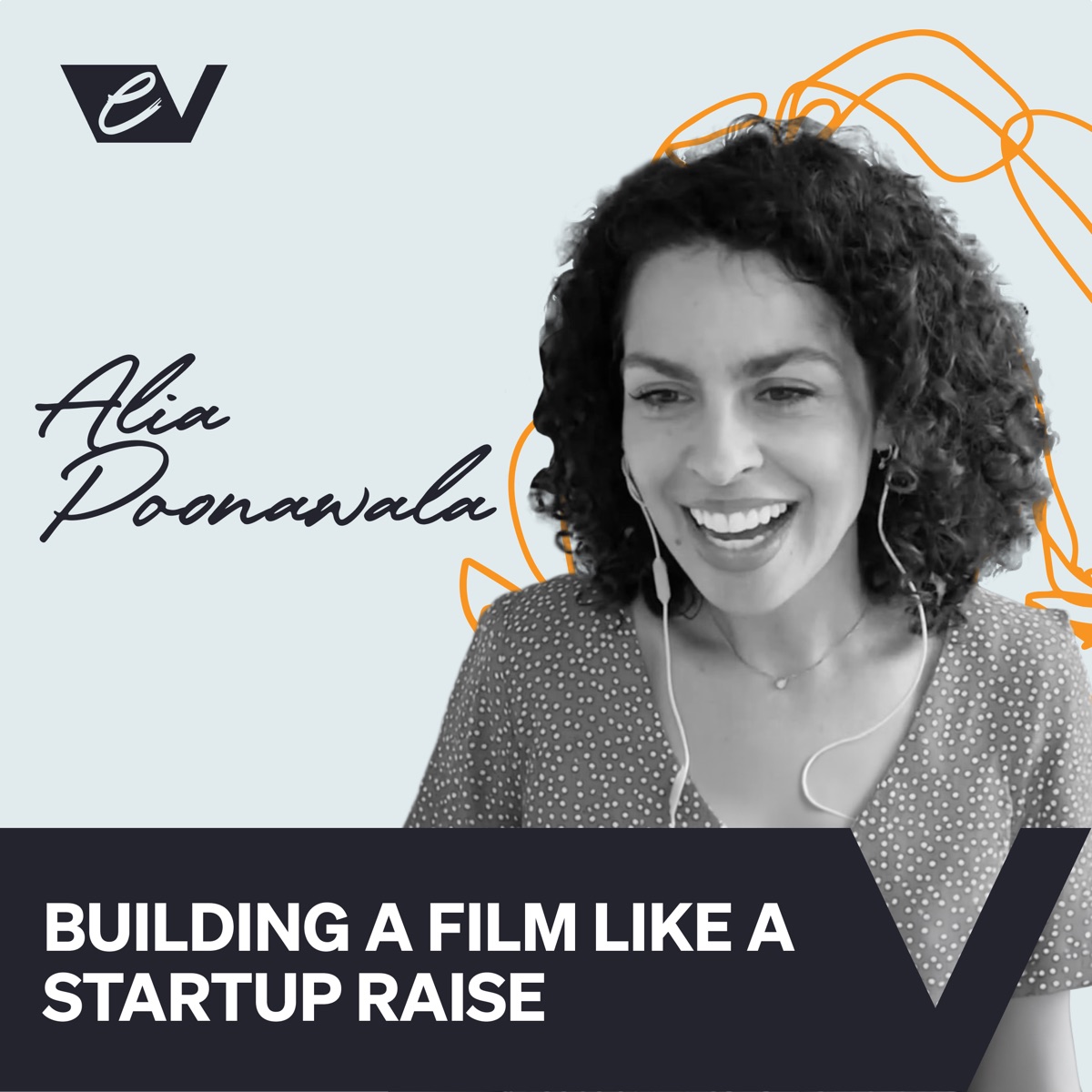
Alia Poonawala: Building a Film Like a Startup Raise
Filmmaker · Institutional Executive
Watch or listen right here
About this episode
When Alia Poonawala needed to fund her film, she didn’t run a bake sale. She treated it like a B2B partnership deal and raised $50K. A filmmaker with an institutional executive’s toolkit, Alia works both sides of the creative-commercial line.
A conversation about applying startup fundraising mechanics to independent film, what institutions can learn from artists (and vice versa), and the discipline of getting ambitious creative work financed and finished.
Links from this conversation
Episode transcript
Read the full transcript
Transcribed from the episode recording; names and phrasing may contain small transcription errors.
Welcome everyone, another episode of Escape Velocity for you. I'm your host, Tracey Halvorsen, and today I am joined by Alia Poonawalla. She is a builder and creative who has spent the last 12 years launching programs, closing unlikely partnerships, and leading teams across startups and institutions. She was the first business hire at Ironhack Miami. where she helped scale the company globally and closed more than $2 million in partnerships with companies like Facebook and Uber. Today, she's the founding executive director of Hire Hopkins at Johns Hopkins, where she has launched outcomes-focused programs using design thinking and earned national innovation awards. She's also a filmmaker and actor with credits that include a Sundance Premiering Short, an Amazon Prime feature, and Bruno. A short film she wrote, produced, funded, and shot in Italy. So Alia, thank you so much for being here today.
Thank you so much for having me.
So I have to just dive right in. What feels most true about you right now? Builder, creative, actor, leader, or someone trying to stop separating all those things?
that last one right there, someone, someone trying to stop separating. I've lived very much in various buckets. And I think about a year ago, I asked myself the question if it could be possible to not to stop bifurcating myself so much. And I'm very much in the process of trying to figure out what that looks like and what that might be.
What came first, the filmmaking and the acting and the interest in that sort creative pursuit or your interest in more in the professional things you got into or did those emerge for you at the same time?
They definitely did not emerge at the same time. I actually fell into acting via an accident. When I was in Montessori school and during recess, they would have these extracurriculars that students could do. And there was a boy in my class named Ali, and they called his name and I heard my name and I went to the acting class during recess. And it was the most fun. I must have had so much fun because the teacher stayed after school and met my mother and said, you need to sign your daughter up. She loves this. I think was preschool or, yeah, it was, yeah. So it just totally happened. And I would say there was always a tension that I was interested in acting because I grew up in an immigrant family. My grandfather and my father,
What grade was this? Wow, okay.
My grandfather lived in extreme, very traumatic poverty. My dad, you know, until he was the age of 10, you know, shared a bed with his grandmother. It was a really tough life. And so my father, when he came to the U.S., really did a lot to set up a life for us. And so the fact that I was interested in acting was just not on the table, in terms of a professional pursuit. Luckily, I didn't get into Harvard, which was my first choice. and where my father really wanted me to go. But I got into Carnegie Mellon as a pre-med because I was convinced that I wanted to be a neurosurgeon at the time. As the eldest daughter, know, good daughter of an immigrant family. And anyway, I saw a play at Carnegie Mellon in my first year and it moved me to tears. It was one of the most beautiful performances I had ever seen. And I thought, my gosh, there's a reason why I'm here. And that reason is so I can do this program. So I secretly applied for it and secretly got in and basically kept it a secret from my parents for maybe two or two and a half years. And when I graduated, so I was very much like, I like this and I like this and we'll just see what happens. And anyway, you asked where my interest in kind of the professional world started was really from survival because
Wow.
Um, and this is one of the reasons why I work in higher ed is because when I graduated from college, the rosy vision I had at the world, which was, I'm curious, I want to explore things. I will learn things for the fun of it. Those didn't hold up in a capitalist economy. And I had to figure out what I was going to do to support myself. So that's kind of how I started to bifurcate even more, even though I think it had started earlier than that.
Yeah, that's fascinating. Thank you for sharing the backstory. So the tension was there from an early point just because your family, you hid this from your family and they were like, go out there, get a job, make money, support yourself, make the family proud. And you're like, I secretly am like a starving actress, actor, whatever, better find something.
Yes.
And yet you landed in what some would say is a pretty perfect spot to embrace that duality because you have in higher education, you have a lot of practitioners of different things that are also coming in to teach. And so I think that's not a foreign idea. Did you ever sort of sort of leak it that you had this other? this other part of your life and career and was it met with like, huh, that's weird. How do you have time for your job kind of stuff?
You're right that I think higher ed is probably the most safe space to have other interests because I know I have colleagues who have studied completely different things and sometimes continue to do that work. I think it's actually more my own fear and my own training. Particularly, you know, I graduated in the economic recession and I just remember learning that I needed to stay focused in the way that I spoke about myself in order to be successful. You know, I must have applied to hundreds of jobs when I graduated. And I learned that the more broad and varied I was, the less people took me seriously. And so when I started just cutting things out of my resume and just creating a very clean, simple story for people, and that's when I saw a lot of success. So then I just learned to really not talk about. the acting directing part of me. I don't think my colleagues would have any qualms. In fact, I think they'd be supportive and every now and then when I'm really vibing with someone, you know, like you, when I met you, you know, I'll tell them. And now I'm trying to center it a little bit more because I'm realizing that they can both exist. But I think prior to now it was more difficult to do that.
I completely understand as an art school grad who found her way into computers and then ended up starting a company when the web was still very new. People were already confused enough about what we were doing. I didn't need to mix in any other facts about myself, but I do remember I...
Yeah.
got one of my first jobs early on in web design because the woman who hired me liked my paintings. I was doing some stuff in HTML and writing code, but I didn't have a traditional design degree at all. That was Kara Brook. Kara Brook, you're listening, thank you for taking that chance on me. That early exposure to that kind of reaction bolstered my confidence that I could be multifaceted and not cause confusion. Along the way though, I think it started to maybe be something that like my employees or my close business associates might look at and be like, are you distracted? How is this? You know, you're going to go paint for a week, you know, like, so I totally get it. Do you think that these different aspects of your life and what you do and what you love doing, do they inform each other or are they really like, you're kind of stepping into different shoes each time?
Yeah. Yeah, they absolutely inform each other. I'm thinking of actually, you know, just having built a career. I think all of those things actually really helped inform me with my film because so much of making a film, artistic creation, depending on what world you're in, at least in the acting industry, the filmmaking industry, the creative part is only a sliver of it. A lot of it is business. I had to raise $50,000 for the film. And I wasn't, I mean, of course I was intimidated by that. because it was for me, right? I've been able to sell millions of dollars, you know, of other people's programs on behalf of companies, but it was for my own vision. But I felt pretty confident I could do it because I've done it before. I've sold before, I've done partnerships before, and that's how I tried to create the structure. You know, I made a pitch deck and I met with high net worth individuals and I sent out email campaigns, right? Those are all things I've done in my working. career, my work world. And then in terms of the acting and forming my professional life, absolutely. I think one of my superpowers or the feedback I get a lot of times from others in my work world is empathy, is that I have a of empathy. And I think it's not just about being someone who's kind to talk to, but I think it's also just really truly being able to step into the shoes of someone else and build something, knowing that the person who you're building for has X number of challenges and does what you're creating actually solve those things. So I think they do inform each other a lot.
think that empathy is such a underrated trait that I don't think I realized until I was much older that some people just don't have it. and run from those people, by the way. If you find out, run from those people.
It's kind of hard to imagine, you know, it's kind of hard to imagine how someone could not, but I suppose. I suppose you're right.
Yeah, well, you know, I mean, the classic examples are like the narcissist, right, who has no empathy or this psychopath, right? And it's part of their personality disorders. A big part is that they cannot imagine, they can't even begin to imagine what someone else might be experiencing. Their world is so insulated.
Yeah.
to just themselves. And that's a scary thing when you realize that that can exist. And it doesn't always have to be psychopaths or narcissists too.
Well, and I think it happens a lot as you grow in an organization. I mean, you see it more and more as people climb. And I'm not saying only in the work world that you see it also with celebrities. see it anyone who's climbed so much to the point where they have a name for themselves. They don't always get real feedback anymore. And they also can be insulated from reality because maybe people aren't telling them what's actually happening. Maybe they're not even seeking to know what's happening. I even I, I feel like I don't remember what it's like to be always pounding the pavement. And sometimes, you know, I was reading a LinkedIn post yesterday. This man had said that he used to just message his intern all the time, like five minute task. And she pulled him aside and she showed him how many times a day he had messaged her on Slack saying like, hey, do you have a quick minute? And it was like 12 times. And basically he learned from that experience by her calling him out that like, yeah, this isn't just 12, five second tasks, they're actually taking up her entire day. And so I think we tend to, as we grow in an organization, we tend to be a little bit more insulated. So like we can start losing empathy very innocently because we just forget what it's like on the other side.
Yeah. True. True. Yeah, we do. we forget. I mean, who's got time to think about everybody else's point of view or perspective because you're so busy just juggling your own. So I think it really is a good reframe going into any conversation is to just take a minute and just say, person I'm going to be talking to, what is their life like right now? What does their day to day feel like? What are their concerns? Because otherwise you just kind of, I think, end up talking from such a narrow perspective. And I also think, you know, power corrupts. You know, I think that people get protective of what they achieve to some extent and come from that point of view of scarcity, right? Like I've got to protect what's mine so nobody else gets any. There are those assholes too. But the empathy thing, you know, just to bring it back to the good stuff. When did you realize that like that was a very helpful thing in being an actor?
Yeah. Well, I don't know if I ever realized it was helpful. I just think it is like it's a requirement. But I did notice that I loved acting very young and I kind of attribute. So I grew up in a family of 10 people. And when I say I grew up in a family of immigrants, the reason is because my grandparents moved in with us when I was three. My uncle moved in with us. Then he got married. His wife moved in with us. And so
Yeah. Yeah.
I always felt like I was between worlds because my mom is white and German ancestry, grew up in Miami and married into a Muslim family and she converted to Islam. And so I always just felt like there were all these facets and I had to code switch all the time, you know, because in our Muslim community, I was like the light skinned, like, you know, and I never really felt part of kind of the rest. then
Mm-hmm.
But like when I was in school, I was like the ethnic girl. it just, I was never quite, which you hear more and more stories of people like this as, you I feel like Trevor Noah is a really good example, you know, in his book, he talks about how many identities he had. Anyway, so I just learned that. there were different kind of things that people wanted to hear or different kind of affects I had to give myself in order to get better responses. And therefore you kind of just start reading and learning how to switch. And I think that's kind of where it began.
Yeah, I can see how your family and background and being in a family of immigrants and all of those different things would make you nervous about adding an additional confusion element in how do you define yourself if someone else is looking at your resume and trying to figure out who you are, like why introduce another, huh? So I get it. It's probably a little PTSD, right, from trying to navigate all of those things.
Yeah, and in a way, I mean, again, I think of them now as a little bit of a superpower, you know, but it's just, there are different things that like during 9-11, it was not cool to be a Muslim. You don't talk about that. And it's, you know, you could say, well, be brave and express, but I was, you know, I just, I think I was like 11 at the time or 12. I don't remember, I was young. I was like, all right, it's fine. We'll just lay low.
No. Yeah, I mean, it's never fun growing up being the underdog or the one that people are saying nasty things about. As a lesbian, can relate. That whole coming out process was real. And depending on where I am in the world or professionally, it can be... a great thing that I'm different and myself, but it can also be seen as a threat. I do have to read the environment. Early on, was like, gosh, how much do I let people know this about me or should I try to fem it up a little bit? I couldn't do it anyway. I was like, well, they're just going to see me and know, so that's fine.
Yeah.
But I get it, right? And it's like, depending on the year, it can be a little easier to be Muslim and a little harder, you know, to be gay, be in the closet. Like it changes all the time. But I mean, I wouldn't change that about my life's experience for the easy, you like you couldn't pay me any amount of money to like have gone through my life as a white cis male, you know, born in New York or something like that. I just, I wouldn't want to be that.
Yeah. Yeah, it's delicious to have like a rich identity and a lot of differences, even if it's maybe not always easy, you know, but when it is easy, when it is safe, it's so satisfying.
Yeah, yeah. I like the complexity. When you're managing these narratives, basically, which you've kind of had to do your whole life, what do you think you lose? If you're spending energy on that, what do you think is the trade-off? What are you losing?
first thing that comes to mind I think is connection. particularly, you know, there's this big part of my life that brings me so much joy and pride. And I think keeping it kind of under wraps prevents people from knowing A, what makes me happy. And so maybe they know me as like a little bit more of a, like a saltine cracker, you know, but I'm like a saltine cracker with pate on it. so I think that's a risk. I think the risk also is that then there's no more proof points of people who are like me, who have something they really love. And they're like, well, everyone else. just presents as one thing and therefore there's no room for me to be multifaceted and it just kind of tends to perpetuate it.
So feel like you're taking up more room if you invite all of these parts of your personality and your loves and your passions into the equation.
Well, I guess what I'm trying to say is if I continue to just say like, I'm a professional and I'm an actor and if I don't say I'm both, then I think I'm also flattening the possibilities for other people who have multiple parts of themselves. Like I'm just perpetuating this idea that you can't be both and you can't be incredible at both and you can't be successful at both. So I think it's kind of limiting.
Do you feel like the same rules apply for women as they do for men in this kind of scenario?
really interesting question because
I mean, like nobody freaked out that George Clooney wasn't gonna be acting anymore when he started his tequila company, right?
Yeah, you know, I think that maybe we as women might be more prone to scrutiny that we're distracted. Whereas maybe a man might, it might be seen as something like he has enough willpower control or it's just additive. Who's that actor who has the phone company? Ryan.
yeah, Ryan Reynolds.
No one says like, Ryan's a bad actor now. He started a phone company, you know? But I would say Jessica Alba started The Honest Company, and I don't think anyone has insulted her either, necessarily. So I don't know if it's just a gender thing. I mean, I think part of it comes down to just being able to own it yourself, you know, and own your story and being confident in yourself and... being able to stand by your work.
I also think there's, know, pursuing a life as a creative and then realizing you've got to pay the bills and figuring that out too. Did you feel sort of like an imposter in your professional life? Or you're like, nobody knows, I'm really just here so I can pay the bills and keep acting or making movies.
Well, I actually left, I stopped acting when I graduated because the economic reality was so strong that I just kind of was like, all right, this isn't gonna work for me. I'm putting this aside. And I actually stopped acting for maybe, I don't know, eight years. So I didn't feel like an imposter really because I had kind of narrowed my life down to figure out your career and...
Wow, what changed?
I couldn't stop thinking about it. You know, it just was taunting me. Like I missed it so much. And every time I saw a beautiful moving piece of art. something happened in me, you know, and.
Tell that story a little bit. How did you crack that book open again? What did you do?
well, okay. So we're gonna get into it. I actually, I found myself when I graduated, I was working all these odd jobs. I sold TimeShare. I was teaching Spanish at a kids immersive Spanish school. These are all different jobs. I worked at the Polaroid store at the mall. I worked at an Irish hair salon for a week. And then they kicked me out. They were like, you do not wanna be here.
Yeah, let's get into it.
get out. And they gave me a haircut. That was nice. But anyway, I fell, eventually I found my way into the startup world. And I actually really loved the startup world because it was very much kind of aligned with the type of person I am, which is boundless potential, learn by doing, you know, a lot of autonomy, figure things out. So was very thrilling to me, and I really enjoyed it. Anyway, so I grew in startups and Basically. kind of all it all started. I was working probably 60 or 70 hours a week when I had like I became the general manager of a startup. So I was the only female general manager. I had an amazing, amazing boss, but he was former Wall Street. So very intense and had a very specific idea of what success looked like. And I got diagnosed during that time with an autoimmune disease. I had these symptoms and I started seeing doctors and doctors and doctors and no one could figure out what was going on. my hair was falling out. was really, my health was really poor. And anyway, was, was when I got diagnosed with the autoimmune disease that I realized that I mean, it wasn't like an overnight thing, right? It wasn't like, my God, everything has to change. But it kind of was an indicator that like maybe things were not. I, you know, maybe this is woo woo, but I feel like our bodies are constantly speaking to us, you know, and I, and I listened. It took me probably five years to kind of heal myself back into a somewhat remission state, but I, and then the pandemic, was right around the pandemic. But my first goal was to get a new job, you know, that allowed me to have some free time, you know, and working 70 hours a week, I just didn't have any free time. So I wanted a job that was around 40 hours a week. I wanted, and that's when I had started taking acting classes again. And, know, in that time you had auditioned in person now everything's online, but, and that the pandemic is thanks to that, but I needed to go to auditions. And so I just needed a job that was going to give me more flexibility. So that was my first big move was from the startup world to higher ed. Anyway, I forgot your question. I'm the imposter.
Well, just, I mean, think you answered it, right? Like what happened to, after you'd closed that book and stopped acting, what got you going again? And I think the answer is you realized you needed to.
Yeah.
for your health and happiness.
Yeah, there were lots of changes that had to be made, but that was that was one of them.
Yeah. I think that's how you kind of know, like when things just don't go away and you realize that it's the cure sometimes to what has, you've done what you thought you were supposed to do and turns out it's making you sick. Working that kind of startup life and neglecting this big part of you that you tapped into from such a young age and had this passion for it and then it was gone and in exchange your killing yourself every week for a startup.
Yeah. Which I think is kind of the pro of being an actor because it's like, just really got into that persona. I was like, I'm a startup person now, you know, like I cares, you know, and I threw myself into it at full force, but you know, there were costs.
It's not the way you want to win your acting awards, right? So it was the pandemic, so not that long ago. Tell me how it transpired. How did one thing lead to another? you more engaged with acting or filmmaking in the last year or two?
I have been doing it kind of gently on the side ever since I started my career in higher ed. And I think it's been very cyclical. Like it just depends on when I have spaciousness. I think this is probably one the pain points. I don't know how you feel about your painting. I imagine, I don't know. I'm curious to know how you create time for that. For me, I think one of the challenges of acting is it's not a solo endeavor.
Mm-hmm.
It's a group endeavor. And as I was telling you earlier, there's the business side and then there's the artistic side and 80 % of your time as an actor is actually on the business side. So you can get those few hours or that one week shoot time of getting to be a creative, which is the most fun, but the rest of it is auditioning and making sure your headshots are good and reaching out to casting agents and you know, doing all of the business stuff. I have to say I'm very much in the middle of trying to figure out how to make that more sustainable, but it's very cyclical for me. you know, I started out by just kind of doing projects, little projects on weekends, auditioning for short films. That's how we got the Sundance credit. I was in a short film that premiered at Sundance, which was just an amazing experience.
Mm-hmm. I'm sure.
And then another short film that I had been in, the creator of that film, she's a famous YouTube influencer. name is Eliana again. And I had been in a short film with her. Then she invited me to do like another series with her that she made. Then it was Christmas time. I was with my in-laws in Chile. And she called me and she said, I'm doing a feature film. I need someone to play my sister. You've played my sister before. I don't like any of these auditions that have come in. Can you fly to Vermont in two weeks and do this film? I was like, hell yeah, I can. So anyway, luckily, you know, at the time I had a team member who was super supportive and she knew this about me. She knew that like, you know, I save all my vacation. basically save all my vacation for acting projects. And I was like, all right, I'm taking my vacation now and I'm going on, you know. So that was the film and that is now on Amazon Prime. And I think then I like, know, concerned myself with other fun artistic endeavors. I lived in Paris for a summer and taught like learned French. that was like the way I was kind of expressing my acting interests was like by immersing myself in a new culture. It wasn't necessarily a project or a film, but after I spent two summers in Paris, after that. second summer, I had an idea for a short film and yes, Bruno, yes, I had never written a piece before. I'd never written a film before. I had a dream that was based on personal experiences. I had a dream and I woke up and I was like, that is a fun idea. I'm gonna, I wanna make it into a short film. And I was really scared because I didn't know what I was doing.
Is that Bruno? Yeah, tell me about Bruno.
But I started going to a friend's writing group that she has every Sunday. And I just kept trying to work on this script. And the script is basically that the seed idea was about a woman who tries to seduce her, like her former lover by being a persona, like trying to seduce her former lover with a new persona. I'll say that, it's short. And... Yeah, so took me a while to write it. And then after I wrote it very beautifully, I found out that I had gotten a grant to go to Italy with my job. And I thought, huh, this would be kind of cool if I could film this in Italy. one of my friends, the one who runs the writing group is the one who gave me the idea. She said, this is a European kind of lush, romantic story. You should do this in Italy. And I was going to Italy for my work. And so I had maybe two months to fundraise. Yeah, it was perfect timing. had two months to fundraise. I called everybody I knew.
Perfect timing.
and made the finish line by raising 50K, got in touch with a production company in Italy, who's been amazing, found a director. The movie plays a lot around like identity and gender. And so our director is a trans woman and I was really happy to find her, her name is Nicole. Anyway, it all, and then there was this actor that I really wanted. that I had seen on Bridgerton. I don't know if I'm allowed to say his name yet. But there was an actor I had found that I had seen on Bridgerton and it was just, I was like, he's perfect. I want him for my film. And ultimately I got him and he was in my film. And so it was just like all of these like little victories that just kept stringing together and 80 % of the time I was like, I don't know what the I'm doing. I have no idea what I'm doing. I was terrified every step of the way.
Wow.
But then like things kept happening and yeah, now the film's ready and I'm starting to submit to festivals and we'll see what happens.
Wow, good luck, that is exciting. I didn't realize that was all like happening right now. You talked about the fear, right? The whole way you're terrified, you have no idea. I wanna dig into that because I think people, they just assume that people who do things like act or make movies or paint paintings,
Yeah.
aren't scared or somehow have some sort of secret confidence. What do you have to say about that?
and I'm so scared. That's the first thing I have to say. I am so scared. Well, I have a couple thoughts. When it comes to performing public speaking, kind of live performance, what I always tell people is that when you're afraid and nervous before a performance, that is your body filling with adrenaline. And adrenaline is a very powerful, powerful thing. It has enabled moms to pick up cars, right, with their babies under it, right? Like it is a powerful drug that is in your body. So use it, right? That adrenaline, you can channel it. Don't fight it. That's my first very tactical thing. And so, yes, I'm afraid every time I go on stage, every time I'm to film, I'm nervous like, just like anybody else. Maybe the degree of fear is a little bit less compared to maybe someone who's never done it, but I'm still shaky and afraid. The other thing that I wanna normalize and my friend, have a friend, she's the one who writes, she's the one who runs the writing group. She's a former Washington Post reporter. She just got laid off in this last round of layoffs, but she was so helpful to me because she's won multiple Emmys. She makes documentaries, she's a video journalist. And she told me, this is part of the process. Like the feeling horrible and the feeling like you don't know what you're doing and the crushing self doubt. That's how you know you're onto something. And she kept telling me that. She was like, this is part of it. And now, yeah, now I think I'm kind of normalized that, okay, I'm just gonna feel not good all the time.
Keep going, yeah. Yeah, I tell people I'm just, I just got used to being terrified. I didn't overcome it. I just now I'm like, there's that feeling again. But like you said, now it's, I can work with that a little bit better. It doesn't go away. Every time I sit down and make a painting, all the inner critic voices are there, all the voices that are
Yeah. Yes. Yeah.
Constantly you you can't do it that last one you made that was good. That was the last one you're ever gonna make I mean just like crazy stuff and When when a painting starts to get challenging it's like it sucks you suck, you know all of those and it's like no this is I had to run towards that stuff Right instead of try to get away from it
That's the Banshee. The Banshees just go crazy. You know, they're so loud.
It is. It's loud. I mean, I still think Nike has the best tagline in existence because it really is just do it. Just at the end of the day, if you're thinking about it, you're, I'm scared, I'm nervous. Well, you know, before you know it, you're going to be dead too. So you might as well do it.
I love that you're saying that because this is a big question that I'm trying to live in to right now, which is kind of art as rigor, creating a practice. Like how do I show up when the world is noisy? How do I show up when I've just had a big fight with my partner? How do I show up when work has been very stressful? How do I show up when the mortgage payments are very high? Like how do I just keep showing up? is the question because something I had this revelation last week, which was I'm going to continue to get sidetracked from the art. Like life is very noisy and loud and art comes off as not survival. Like it feels like it's not necessary. It comes off always as a luxury, but I know it is like iodine for me. Like you think it's not, but you actually need it. And now my question is, well, how do I build it into my life? so that it's not just a luxury, that it's something that I consistently do.
Well, mean, AI is gonna do all our jobs soon, so we'll have plenty of free time to do pursue our passions.
If only. That's what they said in the 1950s when we got, you know, vacuums and dishwashers and all the things, right? We just thought that our lives would get easier, but we just take on more.
No, I know. We were empowered to do more. And I think that's absolutely what AI is doing. But that's a different topic. think you bring up a really good point, which is how do you develop a practice? there are plenty of people out there that will talk about how to have better meetings and how to time box your day and deal with emails and all of that shit. But there is not a lot of guidance around. how you set up a creative practice. And I think everyone's a little different. what works for one, there's not really a sort of standardized approach that I think works for all disciplines or all types of people. So what have you found is the biggest need? it? Is it just keeping active on like having a new project or looking for new auditions? mean, now you're probably getting into marketing mode with Bruno. So where is it that you start to be like, if I'm not careful, that door could close again.
Yeah, all of the above, right? And again, like something that I've been trying to distinguish is the business actions and then the creative work, because a lot that I'm doing right now is the business work, which is working with the music supervisor, sending it out to festivals, making sure that the editing looks good, networking my way in the industry, right? None of those things are really that creatively fulfilling. They're cool and fun and I'm happy to be doing them.
Yeah.
want to be doing them. But to me, that's almost like a separate category than the creative work. And actually, that's something I kind of struggle with because how do you do creative work alone as an actor, right? I don't know. I think it's, I've read, I'm sure you've read The Artist's Way, but she talks about going on artist dates and writing. So.
Yes.
Anyway, I've experimented with lots of things. think accountability is really important to me. So, you know, I have a friend who I meet with every Friday and we talk about what we're going to do the next week creatively. That has been a lifesaver. Then I have a friend who was kind of going through her own creative merging as well. And she created an art room in her house and on the weekends, she just has like a two or three hour, you know, creative session invites.
Yes.
her friends.
Nice.
I'm not, I don't know if you're familiar with body doubling, but I do it a lot, a lot. I use something called Floam, F-L-O-W-N, which is like group body doubling sessions. That's been incredible. Cause you can just go on and like work and you have other people kind of working alongside you. Yeah. I can't, I can't recommend it enough. It helps me do so much.
wow. Okay, well we'll make sure to leave some notes in the show notes about some of these things. That sounds fascinating. I think it is finding that balance of the practice, but also then leaving room for those bits of, know, I wasn't expecting that. Because you're not trying to set up a creative practice that does the same thing day in, day out. You're not setting up like your craft practice.
Yeah.
you're setting up your creative practice. so there has to be some element of non hard and fast rules so that you can break them when you need to and discover new things. So I think it's a more challenging thing to lock in for creatives than it is for professionals, I guess. Since I think we're already keyed up, right, to like look for the new and always be exploring and open instead of like, I'm gonna master how to do this one thing.
Yeah, yeah. Right. Yeah. I mean, I guess it just depends also on your trade and what it is that you like, but
Yeah. You mentioned accountability, which is huge. So you've got a friend that you check in with once a week, you all, what do you do together? How do you keep that going?
Like a little stand up. Yeah. So it's 45 minutes and we both usually do what we need. So usually I just need to say like, all right, these are all the things that are on my brain. These are all the things I need to do. And I, you know, and then we kind of like prioritize like, okay, like this fall thing. So we can't do them all in a week. So let's prioritize. So we usually prioritize out loud. And then she kind of just like helps me figure out. how I'm going to do it, which is what I need. In her case, she just needs to vent usually about whatever's going on in her life. That's how she holds herself accountable. Yes, I need deadlines and structure and to commit to something. So usually that's what I do. And then something interesting in our last call. So I had read this sub stack and it was by this artist. And she basically said that she gets up every morning at 4 AM and does an artist shift before her kid.
Therapy, yeah.
wakes up to take her to school. And I was like, wow, I need to do like morning, early mornings, you know, and I'm not really a morning person, but I was like, I'm going to do this. So I started waking up at 6am. That experiment lasted for like two weeks. I called it Le Bleu and I like hosted a session on flown and I was like, all right, I'm going to get up at 6am and I'm going to, but I just like, I would sit there at 6am and I was like, now what? Like my brain just hadn't started. So in our last call, The new structure I'm experimenting with is Sundays, like three to four, because I learned about myself that like that one hour chunk, because then at seven, I have to go do things, right? Like make breakfast, you know, start preparing for work, getting, you know, getting ready. I need like three or four hours, I need like luxury, luxurious spaciousness to create, and not a lot of pressure and like having to do it like right before work starts felt very tight.
Yeah.
So yeah, so I've been experimenting now with Sundays for three or four hour blocks. And I'm like, you know, there's not that many people, luckily in my life, who are in needing of me on Sundays. So I'll let you know how that goes. It's been so far.
That's great. It is when you're talking, I was thinking too, you you came into all of this when like YouTube is, is enabling people to put on their own shows and channels and produce their own films and release them on that platform. Did you ever grapple with that urge of being more public? out there with your art in the social media space and did some of your professional personas make you stop and go, no, I don't think I'm going to do that. Was that ever a... you know, an internal struggle.
Well, I have a separate acting name. So that has been a real help. Like I have a totally different name. Her name is Lillia. That's my acting name. Yeah, yeah, we're gonna share it. But that's a different persona, you know? It's just a different persona. you know, I have an Instagram, but there's something safe feeling to me about having for SEO purposes, right? You don't want.
Okay. Yeah. Okay, can we share that too when we put the show notes? All right, I'm not going to bleep it out.
someone searching Leah Punawala from my professional world and then seeing me being like sexy as Lillia Actress, right? Like, so I created two separate identities, which has been, I think, blessing. I appreciate that I wanted that. But I think just bringing up social media, I think I actually really struggle with social media in the first place. I know that there's a lot of people who say it's incredibly important to get good at.
Yeah, now it's... Yeah.
I don't know, very much, I feel very much about like the essence of something. Like when I create a project or I act in something, it's very important to me that I feel the essence of it, which is probably why maybe I don't ever want to rely on acting as a career, right? Maybe it will always be something that is just a gift for myself. It's so, yeah, I want to, I mean, not to say that I'm against monetizing it. If I find great projects, I'm happy to have them. But if it's the only thing.
too precious. Yeah, no, I get it.
that is bringing money, I think that would be very stressful for me because I want to be able to pick things that I love, that I believe in, that I care about. And I want to pick things that I think are not making the world more beautiful. And I sometimes feel with social media, it can be very performative. And I think that's a little dangerous. I mean, I know it's a kind of old folk thing for me to say in this world, but I I struggle to contribute to a platform that
Mm-hmm. Yeah.
make so many people so unhappy. So I have a relationship with social media.
Yeah. I mean, I think there's a scenario where aliens visit the Earth way in the future and were long gone and they dig around and they see all the humans, they were here and then, social media. That's what did them in. I mean, I think that could happen, so.
Well, mean, what was recently that studies just came out that like IQ points have gone down. mean, Jonathan hates the anxious generation. I think he says there's this, don't remember exactly what the year was, but he's like, basically the anxiety in young people like is marked by when that generation could have a smartphone or not. So we have evidence.
Yeah, the phones in the social media are, you know, and it's like, I remember reading stories about when Steve Jobs was still alive, he wouldn't let anyone in his family have an iPhone. You know, there's a reason why these people are blocking access to this stuff to their own children. And now the kids just make fun of it like, it's brain rot. I'm like, no, it really is brain rot.
Yeah, and I think similarly, just like the art is rigor, right? Like creating kind of these structures of creative practices. I don't want to be holier than that. I spent too much time on my phone. Similarly, I feel like I have to have very strong boundaries with social media and my phone too, right? I think like the French have this concept that I read in, have you read the book, Bringing Up, Baby?
No.
Okay, well, I went through this period where I loved reading parenting books so that I could apply them to myself, like almost like as a form of self parenting. And this author basically talks about this French concepts or word called Le Cadre, like it's like a framework. And they basically believe that if you have a very specific kind of regimented framework for children, then
Mm-hmm.
they end up being really free and creative and able to express themselves because their survival needs are taken care of. They know they're going to be eating at this time. They know they're going to go to school. Yes. And I think similarly, like this is what I'm thinking about, you know, in creative practice is just like creating boundaries and structures so that the creativity can then just show up rather than me having to figure out if I'm going to eat a sandwich for lunch or not, you know.
They feel safe, yeah. Yeah, there's so much comparison once you start going down the rabbit holes on social media. And I do think comparison is the thief of joy, right? that the same? Yeah. But I'm also just so aware of what a consuming behavior it is. It's not creative at all. You're just consuming. And I argue with my two step kids all the time about it, because they're like, why do we have to get off our tablets? And I'm like, Well, you don't if you're being creative, you could be on your tablets 24 seven, you wouldn't even have to have a bedtime if you were creating, but you're just consuming. You're just getting a little dopamine hit by hitting a button and getting gold coins that mean nothing. And you need to recognize the difference there. And I don't know that they kind of do, they're like, so Minecraft's.
Yeah.
Okay, I'm like, yeah, Minecraft, you're creating. You're building. And so I think that brings me back to before our final question that was left for you by our last guest. You talk about yourself as a builder. And I think that that's a very creative way to think. You're not navigating, you're not... You're building things. How do you come by that word? What does it mean to you? How do you think of it when it's used in terms of an aspect of how you work and how you navigate life?
Yeah, that was a very intentional word when I was thinking about, you know, how to express myself in a non-bifurcated way. And when I was reflecting on
Mm-hmm.
my artistic projects, my professional projects. It's always been having some kind of crazy ambitious idea and then making it happen. And sometimes it started with the headline, like what do I want the headline to be? And I work my way backwards more often than not. Yeah, that was something my Wall Street boss taught me. He just...
I love that.
was like, what's the headline? And then we would work our way backwards. And I really love that practice. And I use it to this day. The other thing that I always, the framework I like to use as well is design thinking, which I, know, when I was working at Ironhack, which was, is a coding and design bootcamp, I got my UX UI certification myself. And I think that that framework, design thinking as a framework, is just brilliant because it is so human. It is iterative, it is thoughtful, it is forgiving. Anyway, so I think that's kind of how I approach almost everything, right? It's like with empathy.
Yeah, that's great. mean, obviously it's working well for you. So congratulations to all your success. I think Hopkins and the people that you are helping and working with, they're so lucky to have you and have you doing the work that you're doing. So on all fronts, keep being terrified. Keep building all of that.
That's right. I'm going to put that on my wall. being terrified. That's beautiful.
Keep being terrified. So I have a tradition this year of asking a guest to leave a question for the next guest. And this is perfect because she had no idea who I was going to be talking to. And this is Diane Query who works, she runs digital brand, I think, for World Wildlife Fund. And she said, do you think women are particularly under pressure to reinvent themselves all the time?
Yeah, because the target's always moving.
Very true. And are they moving that target on purpose? I think so, probably. The patriarchy is moving the target.
Yeah, I mean, it's more it's more wealth producing, right? If like, if the looks change, if the standards of beauty change.
Yeah. Yeah, and that also keeps us focused on other things instead of how much the patriarch is fucking things up. So do you have a question you would like me to ask the mystery guest that I will be talking to next?
Yes, this is a whimsy question, not a soulful question. So I would like you to ask the next guest that if they were packaged and sold as an action figure, what are the five little accessories they would come with? And why? Yeah.
okay. I want that question. All right, well, that's a good one.
Maybe you can answer it too. And I can't take credit for it. It is from this woman I follow on Substack, Sticky Note Labs, and she has an icebreaker every week. And I use those icebreakers with my team every week, but that one is still one of my favorites because it was really fun to hear what people said.
That's a good one. That's a good one. Well, I will look forward to asking it and thinking about what my accessories will be as well. In the meantime, thank you for coming on and taking the time to talk to me and to share your journey. I think anyone who's listening, it's just such a common thing. We end up being our own worst enemies sometimes because we maybe too much empathy. We think we really can tell what other people are feeling and thinking. And we stop worrying about what we need to be. thinking and feeling for ourselves. So sometimes I say shut down the empathy and just focus on what's inside of you and let it all out. Don't wait for somebody to give you approval to, yeah. Well, just keep being terrified.
That's Jerry Rick Rubin of you. Yes, I will make that promise. Thank you so much. It was great.
All right, well thank you again, this was great.