Episode 20 · Oct 8, 2025
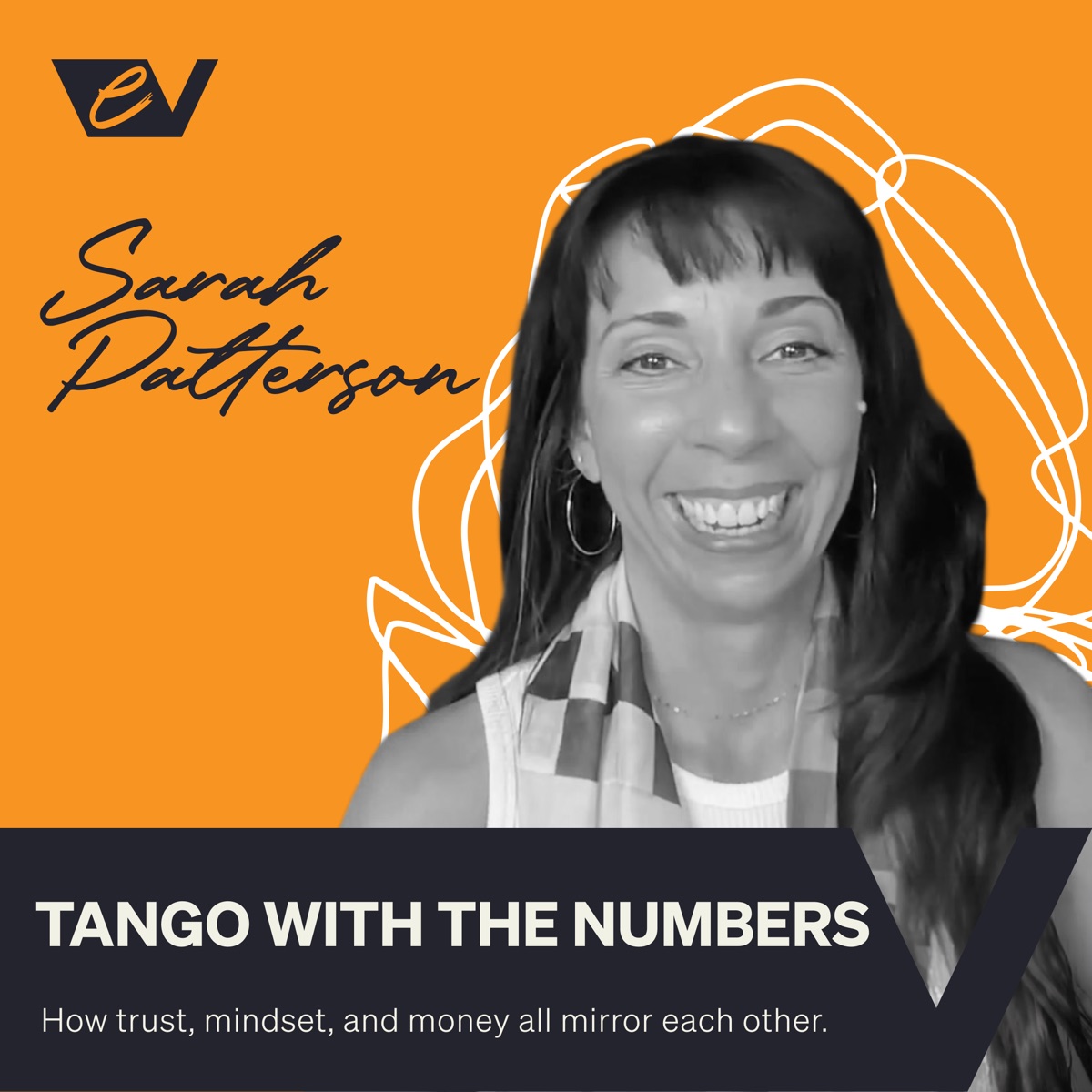
Sarah Patterson: Tango with the Numbers
Fractional CFO · Founder, EssJay
Watch or listen right here
About this episode
Sarah Patterson, who practically invented the Fractional CFO role, has a way of making numbers feel human. We talk about what happens when you stop treating your financials like a necessary evil and start using them as a creative tool.
And then there’s tango. A Buenos Aires-trained dancer, Sarah shares how it transformed her understanding of leadership, connection, and flow.
In this conversation
- 01Numbers that feel human
- 02Financials as a creative tool
- 03Trust, mindset, money
- 04Tango and leadership
Episode transcript
Read the full transcript
Transcribed from the episode recording; names and phrasing may contain small transcription errors.
Hey everybody, it's another episode of Escape Velocity. I'm Tracey Halvorsen, your host, and today I have Sarah Patterson on the podcast with us. Sarah is a fractional CFO who helps mid-sized agencies and professional services firms turn financial fog into clear, confident action. Not easy to do. She blends rigorous analysis with deep listening so leaders can price with conviction, protect margin, and scale without chaos.
you
She has led asset management and finance roles on billion-dollar portfolios, yes, that's B with B, billions, portfolios, and now partners closely with founders to build healthy and resilient companies. Sarah lives in New York's Hudson Valley with her husband and two daughters. and she is a devoted tango dancer, which I hope we will get a chance to talk about a little bit. But Sarah, thank you. Welcome.
Thank you so much for having me. I'm so excited to be here.
I'm excited to have you here. You know, i think finances are one of those things. um It's the cornerstone of business. You know, you can't have a business if you don't have healthy finances. I know for me, I came out of art school. I was an accidental CEO. Uh, I had no idea what I was doing and I, I learned pretty early on. I needed to find people who did have expertise in these areas to help advise me. Um, and you know, asked for help and didn't try to figure it out myself.
Mm-hmm.
I also think that money is a very complicated subject for people. Um, If you are the owner of a company or an agency, you have a complicated relationship with that revenue and you know and how you're using it and how you're building it and how you're protecting it and how you're earning it. So I don't um ah don't imagine your job is very easy. When you are coming in and working with with folks on this, and i I guess one of the things I wanted to start is when when you are contacted by someone who says, hey, i we need some help here. um We need what you do. we need that fractional CFO. Where do you first start to look to even determine if it's possible?
a Yeah. So i ask some questions to figure out if it's a fit, because i don't, you know, I don't work with more than three to five companies at a time. um So I don't, I don't need a huge volume of work. You know, I'm not like trying to, you know, build a huge company and just say yes and figure it out. So for me, I'm going to do really good work with someone if we have a good personality alignment. So that's kind of one of the first things I actually look for is like, do we like each other?
and
You know, and one of my vetting, um, vetting, filters is what I hang out with you. In fact, like I kind of the bottom of my website, I say like, I only, um, take on clients that I would hang out with.
I saw that.
And I,
That's great.
it's it's like the only thing anyone ever says, if they read my website, it's like the one thing that they'll pull out and be like, I really liked when you, how you said that and like holding that. And the reason is because, you know, I, back in my corporate days, I worked with people that I didn't like and i had no choice, but to, you know, work with them and have this sort of like friction and they're like, life is too short to be, you know, Work is just a way of hanging out, really. like you know we're And so so I feel like that's a huge thing.
Yeah.
It's just, you know do we like each other? um and then there's other things that I listen for about how they tell, ask them questions about, you know tell me the history of your company. Tell me how you've gotten here. And um when I hear them talk about things, you know i I'm listening to sort of for mindset. So um I'm looking for a founder who wants to grow and who sees growth as, you know, um part of their vision. Because reality is like, if they're just trying to sort of keep things going the same way that they are, they probably don't need me. They probably don't need somebody who's, who's going to like come in and help them optimize and help them, you know, figure out how to scale in the right ways. So I'm look, I'm like listening for sort of a growth orientation, Um, whether that's growth through acquisition or growth through, you know, just organic growth. Um, that's where there's going to be more of a need for me. It's like, I, okay, I don't, I know how I've gotten where I am, but to get to where I'm going, I need something more.
Right.
That's like, I'm the something more because otherwise it's, they'll probably, they you know, can probably keep the thing going the way it is without me. Right.
Well, what if they're in a, I would imagine you sometimes are working with companies that have gone through maybe some disruption, maybe they're new and they they don't even have the basics down yet.
man
are there Are there things that you look at to kind of evaluate the maturity of the of the company beyond just their desire to to grow and and make improvements?
ah Yeah. So, and so one thing would be, you know, a lot of times if there's like new ownership where, you know, somebody has bought an agency, sometimes it's like, ah you know, uh, an employee that's bought the agency and now they're a new owner of so of an agency that's existed for a while. that's another great opportunity because then now there's like fresh eyes. There's a desire sort of like, how do we optimize this? How do we think, how do I think about different revenue streams? Oh, I feel like there's some opportunities here. How do we build this out? Right. So that, that can be another, but it's sort of like, usually there's some sort of a change factor.
Yeah.
um Like i I, I started working with a company that was a web design and development and software, like an app development company where the two founders were basically fighting all the time. And one of them was the more technical person. And then the other one was doing sales and finance, but more by like, it defaulted to him more than because he really, he he didn't really like the finance aspect, but he did love the sales. So I started working with them and by taking over the financial aspects, I freed him up to sell. And then that kind of unlocked a whole growth trajectory for them where he, it wasn't just the time he was spending looking at the financials or trying to figure it all out. It was the emotional drain that was the real cost. So there was like almost an ah emotional ah ah ROI on investing and working with me Because then he was like, now not having to kind of plow through all of this, like, I don't really know if I know what I'm doing and how should I be looking at this? It was just like, oh, this base is covered. Now I'm freed up. Now I'm like energetically able to make the magic that I need to make with, you know, with ah new clients and new projects and things like that.
Yeah.
So and be it that can be another place where there's just like, there's, fri ah it can honestly be friction between two business partners. And then like, I kind of come in and like balance the stool, you know, I'm like the third of the stool.
know
So that can be another real opening.
What, um, how important is trust?
Everything. Honestly, it's one of the biggest barriers to someone hiring me because they don't want, they, they mean, They don't want somebody who's going to come in and like um
ruin their party.
sabotage. Yeah. I mean, there's so many things, so many ways that this relationship with a fractional CFO can go wrong. Like they don't want to be held hostage to having to like do certain things or be held ah accountable for a plan that they don't believe in anymore. So a lot of times like CFOs or financial people can be very rigid so they can come in and say, okay, this is what has to happen for you to grow your profitability And then the owner is like, that's not how I want to run this thing. That's not what I want to do. That's not. And then they're sort of like fighting with their CFO because that they're like, this is not how I, you know, this is not how I want to run this, or this is not my vision.
Right.
So trust and alignment is super important. And just having that ability to like, know that they're partnered and that they're not going to get like backed into playing the business out a particular way.
I think I'm curious. This is a question, but it's also an observation that I've observed and I've seen that owners get very nervous about sharing too much because if they've done well, um there may be a little bit of a ah bit of imposter syndrome in there. Like, Oh God, you know, I've been taking owner distributions. I'm doing really well, but I'm, I don't, I'm making so much money now, ah you know, maybe I should be giving more to the team or maybe I should be making better decisions with it.
Mm-hmm. Mm-hmm. Mm-hmm.
um I don't want to like have to put all my cards on the table because i don't want to be embarrassed. I don't want to feel any shame about, you know, and maybe it's the reverse. Maybe I've been, I've been severely underpaying myself. That's, that's another common thing I see with, with owners is that they pay themselves last. You know, they fall on the sword for, the employees and the perks and all the stuff that they think matters. um What's your experience with those two kind of opposite ends of the dysfunction
Yeah. Well, what I find is that a business is just an extension of the founder. So however they see themselves and what they deserve is what plays out with their company and their financials in the company. So if they have shame around money or they feel like, oh, I don't deserve to make a lot of money. um it's ah It's really hard to make money or we you know really struggle to get projects. Definitely you look at those financials and it's like, you're gonna see barely break even kind of situation.
Mm-hmm. Is that like a, is it a, it is a, is it a manifestation thing too?
Yes, yes.
i mean, what do you think the attitude kind of reflects the outcome?
yeah hundred person 100%. And then I've got other clients who are like, let's get rich together. And they're like, you know, they put out, they're just like, ready to kind of take on the world. And they feel really confident with what they're offering. They've, a lot of times, it's people who have always had a lot of money or had like a lot of financial abundance. So they're sort of like, blind to the scarcity thing. And I feel like a lot of times, like,
Yeah.
it there's some sort of like financial DNA that people grow up with that ends up playing out, right? So there's the there's the scarcity DNA that like plays out in their business scenario. And then there's the abundance DNA. And then that plays out as well, where then they they run a really profitable business and they just believe that this is what they deserve and they deserve to be paid well. And they just, they deserve, you know, their people deserve to be paid well and everything's so sort of flowing. And it really like is such an extension of their personality. When, you know, i work with companies, some, some companies who are like local to my area. So these people are part of my community. We go to each other's parties and things like that. and you just even see from the way they live, there is a different whole way of, you know, we throw big parties and everybody's welcome. And it's, you know, there's always enough to go around. And then there's the, like the other thing where it's like, you know, we're just getting by. And it's just so interesting to see the amplification
Yeah.
in the business financials of whatever the person is personally bringing into it.
Yeah. I think, uh, you know, all the numbers and nitty gritty aside, I do think attitude is a huge thing. And, you know, I do think that they, they're cyclical, right? Like,
Mm
If you shift your attitude, that will ah that will shift your actions. And when you and start to shift your actions, that will reinforce the shift in the attitude.
hmm.
And you can build on that and the same you know in either direction.
Yeah.
So I think that's fascinating. And I'm sure you get a front row seat to all sorts of different
Yeah. And I do. i am I'm like behind the curtain with them, you know, which is why a lot of times it's like I have to overcome some of those trust barriers because people are like, oh, do I really want to bring this new person into, you know, the this the scary dark closet of my the reality? Because like, you know, there is the there's an image of what the business looks like. And oh, every, you know, this idea that like, ah if you're a business owner, oh, you must be wealthy. And course, the reality is quite not that at all. You don't even know like what kind of debt is happening and other things, right?
Yep.
It's hard for someone to kind of like be willing to trust and bring a new person in and say like, oh, here it is. Like, ah this is, you know, messy. And like, there's a lot of like shame tied up in it. um So that's something I'm really sensitive to, you know, and i'm um I'm sensitive to like the kind of the language I use that I don't try to use like judgment words around like, oh, wow, we've really been struggling for years now.
yeah
It's like, oh, okay, I can see, you know, you've made up you've made it work with not a lot. And like a lot of companies would have folded by now in these conditions and stuff.
Yeah.
Like i really feel like if a business owner has been around, For a number of years, like they've got a certain amount of grit, right, that it takes to figure out like the world changes all the time and there's cycles and you're having to kind of keep learning and growing and figuring out how to keep it.
yeah
keep it alive despite new unexpected things. You know, I think that like founders and owners are just doing a lot of like troubleshooting and problem solving. It's not like a, you know, Oh, I'm going to just, this thing is going to run itself or it's, I'm going to coast. Once I get it to a certain size, I'm going to coast. It's like, Nope, there's always another thing around the corner. That's going to like upset this thing that you're trying to balance, you know?
Yeah. I found it to be true um that when even when you get your business to a place where it's it's really, op you don't need to be in the day-to-day, you know, you've got people doing a lot of the key functions.
yeah
um There is some history, some sense of stability. You know, in the back of your mind that like shit could hit the fan at any moment and you have to
yep
live with that knowledge, but also can, you know, convey the confidence and the calm to keep leading the team. And the only things that will continue to be the things that will land on your plate, no matter what point you get to are going to be the big, ugly things.
Hard things. Yeah.
The hard things are the only things that nobody else can do at that point.
Yes, that's right.
And so the more successful that you get in a way, the harder it can get two
Yes.
Um, and again, it's just like the paradox is real and you have to be okay with it.
Yeah. You're in the problem solving business at that point. You know, yeah yeahre everybody else knows how to do all of the things that are like known and expected.
Yeah. Yeah.
and so they're just bringing you the things that are like, Nobody else knows what to do with this. And then, so you're constantly looking at new challenges and solving new problems all the time.
right
So like that's takes us, takes a fortitude, you know, ah kind of be, be willing to like, have that be your day to day.
ah
Your day to day is solving hard challenges and problems.
Yeah.
And if that's what, you know, drives you and you love that, then great. You're in the right role.
Yeah.
If you're looking for something where, you know, you just want everything to work, that might not be the best role, you know?
Yeah. I mean, I think a lot of people, like having a job because they don't want that pressure and that stress anymore. And i think, you know, right now we see so many people have been laid off, had their companies have closed or restructured, their roles have been, you know, eliminated. And so I think everyone right now, I mean, a lot more people than normal are out there kind of in the like, what am I going to do next? How do I solve this big problem? um I think it's kind of a collective ah state of sort of panic that is out there.
Yeah.
And it's tough.
who
It's really tough.
It is. It is tough. Yeah. I think that everyone is sort of in this feeling of like, how am I reinventing myself in this time of being in between worlds where security doesn't exist anymore? You know, and that's this, you know, both of my parents worked for companies where they had jobs for decades.
Yeah, probably pensions and things like that to look forward to.
and
ah yeah retirement.
Yes.
Yeah.
Right. So that's something that, you know, ah In my 20s, I was like, okay, that's what I'm going to do. I'm going to get a job and I'm going to do well and I'm going to meet expectations. And then I'm going to just, you know, keep riding that wave and climbing that ladder and getting more and more rich and everything. And then you know, I don't know if this was a thing of the times or, or just me, but I realized that like, that was an illusion, this the security of the job. So now this is in the 2000s, because i I left the corporate world in 2009.
yeah
um And in that time, i don't know, I just had this feeling of like, I'm disposable. ah And so you know this feeling of having a job and the security is just an ah illusion, which is why in doing the work that I do, I feel almost like I have more security because I have eggs in multiple baskets. And I am ah kind of the one that's in control of finding my work and getting clients who want to work with me and and kind of picking my, like, my,
yeah
my my partners who are, you know, we're going to add value and like that I'm always on the hook for adding value because if I'm not, I'm going to get, I'm going to get cut off. Right. So like that keeps me feeling good about knowing that like I'm engaged in this process of being responsible for my own job security versus I'm going to collect a paycheck and just like hope for the best. Right. Well, let's see how that, how well that's gone.
Yeah.
Lots of people have had quote secure jobs and lost them. So it's hard.
Yeah. Yeah. It is an illusion. And I think, you know, the things that worked in the past do, do not work anymore. um You know, when I talk about escape velocity, it is like, it takes velocity
Mm-hmm.
to get out of that gravitational pull, to get away from that habitual way of thinking about your life, about your work. Um, it's not an easy thing to just flip a switch and do it. Um, but what I think is so interesting about being on the consultant side or the fractional CFO side or the, you know, for me, it's being on the agency side and working with clients. I have a perspective that's very unique. um And when people are inside of a company or a team or whatever it might be, their perspective is very limited. and it's very, um it's based on a a limited set of ingredients and factors. And when you bring in someone with outside multiple perspectives and experiences to pull from, you're, it's, it's a gift, you know, it's, it's a, it's not like just adding one to two, you know, it's, you're not just making it three by brick.
Yes.
Yeah. By you coming in, it's, you're bringing in all that perspective.
That's right.
So I think it can be a real, um, amplifier.
Yeah, yeah. An outside perspective can be a game changer for someone who's kind of head down and like, let me just keep processing the thing that I'm processing. You know, what do not know?
Yeah. Yeah. Yeah.
What are my blind spots? You know?
Well, let's dig in on that, right? um What are the common blind spots that you see? If you had to connect some dots here, like where where, when you see something, you know, in someone's spreadsheet or in how they're talking about their finances or how they're operating and you go, oh, there that is again, is are there things like that that you recognize now and it's it's kind of a trend?
um Yeah. So I would say, you know, one of the things is like, is a um not being sure what exactly is the the right metrics to be looking at every month or every week, or there's like a certain cadence of, you know, what are the drivers of the financial success of this business? then No, there's drivers of other types of success of the business, right? That should be looked at like client retention, staff retention, you know, things like that.
Right.
But what are the things that are showing the financial success of the business? And so I think that a lot of times, um owners aren't sure what that is You know, hopefully they're looking at their P&Ls every month. They might not be looking at their balance sheet. They might not be looking at their statement of cash flows. They, you know, might not be looking at historicals and trends. They might not be doing forecast, like, you know, forecasting out into the future. So i think that like, depending on owner, the size, the maturity, all of these things, you know, there are certain best practices that they're hopefully doing, like looking at their, you know, looking at their P&Ls or kind of looking at like, what's the snapshot of the business. But I think that the thing that is um not as common is like a a constant forward look. So I feel like a 12-month rolling re-forecast is critical to be always
Yeah. Mm-hmm.
ah kind of exercising this muscle of prediction, right? And if you're not thinking analytically about the trends that have gotten your business to where they are and what do you see happening and how is that going to impact your next 12 months, that big picture thinking, being able to step away from the day-to-day and look at that trailing 12 and that future 12, To me, that's something I don't see happening um a lot of the times, which is why that's really good point for me to start where you know saying, let's get this into place because I want you to always have that kind of two-year window in your mind about what where have you been and where do you want to be going and what has to happen for that to come true.
Yeah. Right.
So if you're always forecasting your financials,
right
That means that you are really clued into the things that are happening prior to hitting your financials. So one of the things that a lot of times business owners complain about is like, oh you know, my financial person, whoever that may be, they're always giving me stuff that's backwards looking. Like I know what happened. I know what what the numbers are in the past. I need to know what's going to happen. And like your financial person can't tell you that on their own. They need your perspective as the owner. And sometimes depending on the size of the company, it can be the whole leadership team that needs to be involved in the conversation of that future forecast.
Yeah.
But um To me, having that like, okay, how about metrics around the pipeline? What is the sales cycle? What's the sales cycle for type of work a for type of work B? It may be different for different size ah projects or different types of work or whatever. Well, let's put some real rigor and metrics around measuring your pipeline because that's the step before revenue.
yeah
And if you're going predict revenue, then you need metrics around your pipeline and have some sense of, what so um what is what should the pipeline look like in order for us to keep churning out the revenue that we need in order to support the size company that we are, and what are the early indicators of trouble, right? So if you're measuring the pipeline and tracking that every two weeks or every four weeks and putting charting that out on a line, the mentally when sales are good,
Right. Mm-hmm.
business owners are like, cash is flowing, everyone's busy, things are great. So they're starting to feel pretty relaxed. But if you're looking at your pipeline trends and going, well, all that pipeline converted into clients and revenue, but now it's very low. And it's been low for a while.
huh
It's been low for too long. We're headed for trouble. Right? So that to me is like, putting those pieces together of that help you get ah prediction machine going so that it becomes more much more second nature. or You just know exactly what your metrics that you should be looking at to know that you can continue to support the size business that you are or need to make some hard choices as early as possible, right?
yeah Yeah. um I have so many questions. ah it yeah So i remember, you know, I've always worked in professional services and ah agency work, right? So um and tradition so typically you've got your biggest overhead is your is your team, your salaries.
Yeah.
And You're usually working on projects. So there's a beginning, middle, end. It's not like ah you know you just become the agency of record and it's a monthly retainer. i mean Those are great when you can get those, I think.
Yeah.
But um I remember an early accountant I was working with said, your hours are your inventory. Yeah.
Yeah.
Because we were talking about time tracking and everyone hates time tracking. And generally we don't bill the client based on the time, but we are still paying for the time.
yeah Yeah.
So I'm curious what your thoughts are on on how we think about inventory and time as business owners.
yeah Totally. It's I've, you know, said the same thing and, and essentially, you know, any, you know, you're it's, it's inventory that disappears every week. Right.
Yeah.
So it doesn't stay on a shelf and eventually you might sell it. It disappears, disappearing asset.
Right.
Right. So If you don't sell this week's inventory, you're net you've lost that opportunity. So it's so important to put some standards around how much of this inventory should we expect to be able to sell every given week or month?
Yeah.
And if we're not, we've got a problem, right? So that how that gets into like utilization targets and tracking um and tracking.
Right.
there's two pieces. So people doing client work is one thing that, you know, you can call that utilization because they're doing, it's the amount of time they're doing spending on clients versus other internal stuff, which is there's always a certain amount of that and that's fine.
Right.
But then out of the amount of client work they're doing, how much is actually billable? Okay. Now you got to like lower that bar a little bit because inevitably there's work happening on client, you know, client work that is not actually getting billed to the client. There is different reasons for that. It could be that, you know, it got priced too low. It could be that there's scope creep. There could be a bunch of stuff going on. But if you're putting some metrics around, like what's your utilization versus your target, how much is getting billed versus your target or, and what you need to bill in order to be profitable, then you can start to hone the all of the pieces from pricing, because now you're looking at going, oh, shoot, we're underpricing consistently. We're, you know, we're chronically underpricing. And you're not going to know that unless you're measuring it, unless you're really looking at the actual data. So that's one that's one piece to correct.
Yeah.
And then the other piece to correct is like, you know, what parameters do we need to put around scopes so that every client hour is actually a billable hour versus, you know, we're just being nice and we just want to make the client happy. And like, that's a killer for, for professional services businesses. So you have to get everybody aligned. Like the the client services person is really going to want to make the client happy. So they're just going to give them the moon. If there are no expectations for them around how should you, know how much time is your, your cap?
yeah
Right. And so, um so yeah, putting all those metrics, that's what allows you to really hone in on the profitability and how to grow profitability.
Yeah. Yeah. I think one of the hardest questions, and I think this is a partly a contract issue, partly a tracking issue, and then big time a communication issue, um, is around when the scope shifts.
Mm hmm.
And I think that, um, You know, I've gone through home renovation projects before, and and I've been told, you know, by the contractor, here's the estimate, but things will inevitably change.
Hmm.
um There's something that ah my friend Carl Smith, who runs the Bureau, referred to as the drywall clause. Like, we can only see so much right now.
Hmm. Hmm.
We're giving you a price, but if we tear the drywall down and we find out that you know all your piping is bad or the entire electrical needs to be replaced, we can't anticipate that. But we're including the clause to let you know that we may come back and say this is more complicated than we could see early on.
Yeah. Yeah.
And you know when I've asked for changes or when I know that a team has discovered something that was unexpected that none of us could have anticipated, I'm not like, how dare you tell me it's going to be more money? um
yeah
If I say, you know what, actually, I've changed my mind. Instead of doing that, can we do that? I don't expect them to just be like, sure, we'll just tear that out and put in the new and it won't be any you know cost to you. i'm a But I'm also not going to say like, oh, and here's how much money im you know I need you to tell me.
Yeah.
How much is this change going to cost me as part of my decision-making process? And it's funny how in the agency world, um That conversation becomes so stressful to have, when to have it, who's having it with who, how do you prep people to you know anticipate and then have those conversations productively throughout the course of the partnership.
Oh yeah. and Totally. And it's the thing is like, has as tight as you think those scopes are written, there's always some squishiness because we're humans trying to provide a service with not all of the information.
yeah
And so unless you build in a huge buffer into your scope for like all these unknowns that you can't possibly guess, and what if if you do that, you're probably going to get priced out of the work, you know, by your competitors. So like,
Yeah.
Ability to put a bunch of buffer in there is usually not realistic. um And the ability to like write a scope where you're kind of saying, you know, this scope is based on X, Y, Z parameters. And if it goes beyond that, then it's going to be more. There's a lot of gray. in the, what is the X, Y, and Z?
yeah
And wait, oh no, wait, now it's more? why did Why didn't you anticipate that? Is this so unusual and non-standard? Like, so, oh, it's hard. Those conversations are really hard. And that's why it's there's that sniff test of like, would I hang out with you? And that part that is like, I want to be in a relationship with someone who's reasonable, who's not going to be in this like, gotcha mode where like,
Yeah. yeah
you know, oh, I'm not paying that. That's, you know, it's like, you've got to have this trust. You got to establish this trust and say like, hey, I'm a professional. You're a professional. We're all here trying to make this value proposition right. And these are things I didn't expect. And this is it's hard. It's hard.
Yeah. Yeah. I think it's one of the hardest things.
But yeah.
um When you talk about financials too, I mean, there's only, if if I think about it like a dashboard on a car or, you know, an old fashioned stereo, you know, with an equalizer, there's only so many levers you can move or dials you can turn, right?
That's right. Yeah.
What do you think the most, I mean, you mentioned, you know, P&L and predictions and forecasting and, and you know, comparisons.
Mm-hmm.
What are the other dials that that need to be, that that can have an impact, that that can be changed?
yeah Yeah. Well, that's the thing. you know it's When you're talking about profitability, like there's two levers you can pull, increase revenue or decrease expense. So at the end of the day, there's only so much control you have, but then now, all right, look at what are the drivers, peel back the onion.
Thank you.
What are the drivers of revenue? Okay. It's number of clients. It's the value of a given contract. It's you know maybe you have um a productized service or a certain add on or some sort of value add piece or something. So great. maybe you know Diversify your revenue streams. Do something adjacent. if you If you serve a particular vertical, like what's the most adjacent near near to that vertical that you can expand into? So how can you expand either what you do or who you do it for?
her
so now you're talking about levers you can pull to increase revenue. And then on the expense side, um obviously, you know, your people are your biggest expense in this type of business. um You're not going to get very far if you're trying to decrease salaries. Right.
yeah
And so the, you know, name of the game is really how do you increase productivity? Now, right. Everyone's talking about AI in the agency space and how do we deal with this and you know? um So what that means is like, hopefully people are going to become more productive because they've got productivity tools that they can leverage. So that's actually a great thing if you, you know, embrace it, right.
Right. Yeah. Yeah.
And allow it to be something that you integrate and you, do it soon, do it early. Cause guess what? Everybody's jumping on that train and you don't want to be left behind.
yeah
Right. So what that means hopefully is that you don't, you got to pop in the background.
Yeah, I've got the doorbell, the canine doorbell.
oh
we can
yes. So what that means hopefully is that you don't, you know listen, layoffs, cuts, like that's all reality and that all may have to happen if revenue is going down. But ideally, what when you talk about growth, you can talk about growing your top line without having to add staff because you're adding productivity to your existing toolbox. And that way you can help you know help preserve or grow your margins um whether it's, you know, there's downturn in revenue and like you're, you know, you're trying to stave off layoffs or there's opportunities in revenue and you're trying to grow your margin. But like either way, you know, AI is obviously one way to kind of help increase productivity and increase your margins. And then there's like the other stuff that's obvious. It's like, well, how do you cut expenses? um
Thank you.
Now, keep in mind, The more you grow revenue and cut expenses, the more your profit is, which is great, you more taxes you're going to pay. So then now, okay, there's sort some reality things like, okay, more profit is better. Yes, but we don't want to have to pay all this out to the government. So then you want to think strategically about how can i use some of this profit to reinvest in my business into building a better boat, into, you know, mitigating certain risks that are happening in the market. um So that's another thing that like, you know, you want to be strategic about rather than just say like more money is better, more distributions, more cash, more everything.
Yeah.
Yes. um But you don't want to under invest in the business because these are changing times and you've got to stay ahead and figure out like, what are the most, you know, valuable investments you can make that have the highest ROI for your business.
Do you you, know, we talked earlier about, um, growth and, and, you know, you looked to, um potential clients and partners as are they, do they have a growth mindset or are they just trying to like, you know, grease the wheels and hang on a little bit, um, or make some more sense out of it.
Hang on. Mm-hmm.
It seems like, uh, You know, I, I, I am a big believer that stagnation is a and real risk factor in any business.
Mm-hmm. Mm-hmm.
Where do you see stagnation set in when it comes to finances where you might say like, this is a canary in the coal mine, but the business owners might not even have any idea.
a um I mean, I think anything where you're gonna you're continuing to do the same thing for the same audience and price it the same way and deliver it the same way, is a canary in the coal mine because there's just too much change going on in the world, in the market environment. So um I want to be looking, I want to see innovation. I want to see there being, you know, new offerings, new pricing models, new delivery models, you know, there needs to be always like thought to how to stay current. And so, to yeah, it's like, the canary in the coal mine is keeping on doing the same thing and hoping to that everything's going to be okay. Like this is not a time.
Yeah, kind of stick your head in the sand a little bit.
Yeah. Yeah. Yes.
um I mean, I know that's why I feel like the community... that whatever community I can tap into of other business owners um is so important because, you know, this is not stuff that you can typically sit around and talk to your friends about unless all your friends are other business owners um or your family or anyone else.
yes
You're really kind of on an island. And,
Yes.
So I think it's very hard to have a finger on the pulse of like, where are things starting to shift?
Yeah.
Where are other people seeing some success or failure?
Mm-hmm. Yeah.
and certainly why i I value any community where there is a lot of open sharing and kind of that that coming from abundance. Like I'm not giving away my secrets at the detriment of you know myself.
Yes. Yes.
i can I can share and share. You know, the rising tide will lift all the boats.
Yes. Yeah.
um But I think when it comes to money, that gets even harder. People don't like to be transparent about what's working and not working and really tied to the numbers. um
yeah
how much do you How much do you think people just avoid looking at things because they know they they have to make hard decisions and they don't want to have to do that?
So much.
yeah
So much. Yeah. And I always feel like even if we get down and we look under the hood and it's not good, that's actually better than not knowing because the clarity is empowering.
Right.
If you don't have that clarity, you can't make choices that are going to
right
pull through the situation. So like the more you kind of like, you know, close your eyes and ears and hope for the best, you're on a really fast path to the bottom. In fact, I worked, I, you know, worked with a client who was sort of like, I just, I get so blocked around money. I don't really understand it. And I don't know what I should be looking at. And I, don't know if, you know, I really don't really read my P&Ls because I don't really understand them and things like that. So I get in there and I start like looking around and evaluating and I'm going, your business is losing money every month. You're very, and of course, I'm not saying this in a shaming way at all, but I'm basically kind of looking at this going like,
Right. right
What's happening? And then seeing that, oh, well, she's paying, she's drawing up on her line of credit. She's maxing out her business credit cards, and then she's paying herself through ah distributions. So like, she's basically paying herself through business debt while the business goes into the ground, but like, you're like, what how did, what how did you think that this ship was, you know, holding water? And, and she sort of said, well, because I, you know, I charge out less than I, than I, um whatever her business with her business model, she had like subcontractors.
yeah
So she was like, well, I just just assume that if I pay my subcontractors less than what I'm charging for on an hourly basis, that I should be profitable.
Mm-hmm.
You might be profitable on a given hour of a subcontractor, but that piece, that margin isn't carrying the rest of your overhead. You've got admin people, you've got all this. So that is like, that is an unprofitable business that you just made this assumption that it was profitable because of you ah looking at this. this basic metric ah right of ah of a unit costing.
yeah
And so that um that's dangerous because she didn't understand the financials well enough to really look at them and connect the different dots. um And by the way, like the P&L looked profitable.
Yeah.
But she was funding like the expenses that said, oh, you're expense so and you're spending this much every month. Well, that was going on credit cards. So you're racking up debt that looks like it's, and you know she just expected it was timing.
wow
It'll come back. And you're like, no, you need to make decisions ASAP about, you know otherwise this is this is going in ah in an you know ah direction that you can't recover from. So that's like, yeah, I think that's, That ah fear of looking directly at the beast is ah recipe for disaster. And that can happen at a small scale, at a big scale, really.
Yeah.
it
Oh yeah
and ah and people can grow a business to a fairly large scale on like gut and luck, right? And at some point, you know, you got to pay the piper.
yeah. Yeah. And with agencies, I do feel like it's, you know, you're always two months away from disaster. ah
Right?
not ah There's not a long runway to course correct on. Yeah. what do you The other thing I'm always curious about is that i mean we live in a world where everything has gotten more expensive.
Mm-hmm.
Inflation, ah the economy, everything costs more. But when I talk to business owners about, well, have you raised your rates?
Mm-hmm.
There's always such a reluctance like, oh, but they've always paid this and they're going to be like, and what if they decide they don't want to work with us anymore because we become too expensive or we we overbid the job and we don't get it? How do you advise people through that kind of struggle um around the fact that rates deep do need to go up, but also budgets are shrinking in a lot of sectors and some business is better than no business.
Right.
Yeah.
Yeah. Yeah. Well, right. And that's the thing. It's like, well, I've got, you know, I've got ah a given a level of overhead. So if I sell this job at a loss, it's still revenue.
Mm-hmm.
It's still revenue that's covering this expense that I have to pay anyway. So like, I get that if that can be a short-term solution to get through a gap, right? Where if you're seeing in, like I said, the pipeline tracking, if you're seeing that, oh, there's some good stuff in the pipeline and I think it's going to close within three to six months. All right, we'll just take a couple of these jobs to kind of carry us, you know, that can work and that can be okay. But ultimately, You know, you have to, ah yeah you have to get creative. I think that just like increasing rates over time to do the same thing is not going to work. So you have to shift the value proposition. You have to find ways to add more value that justify a higher price tag, you know? oh okay. that You know, you're paying, you know, hundred thousand this year. And you paid 80,000 last year, but look at these new things that we're going to do. So then it's not as easy for the client to go, oh, wait, now you're just increasing your prices. No, we're doing something different. We have a different approach. We have a different model, you know, and so you're having a different kind of conversation around value.
yeah
ah And then I think the other thing that's happening in the agency world, of course, is use of contractors and use of offshore resources.
Mm-hmm.
And that's just a trend that I've seen across all different types of agencies is like, this is not really a luxury. This isn't like something that you're doing so that you can increase your margins anymore. It's something that you're doing to stay competitive. So that is the the stat staffing model shift is something that I've been seeing you know as a trend. And I hate to say it, honestly, because I want people to have jobs and I want people in this country to have jobs. So I feel always a little bit um strange in terms of my own personal values when i talk about this, because
yeah
ah You know, this isn't really good for culture to to have to make these choices.
yeah
So and what like what is what happens in the grand scheme of things if the 90,000 agencies that are across the United States shift half of their staff from W-2 domestic staff to offshore and contract? Not good. right? and And we're not the only industry that's having to do that. So I don't, this is the stuff that keeps me up at night, honestly.
Yeah.
And then when you add AI into the mix, then I get really like into a tizzy.
yeah
ah But I, and I don't know what the answer is. You know, I know a lot of people that talk about AI and the revolution is like, well, it it may not net out to be a reduced workforce. It may just be that the workforce itself is more productive. I don't know where it's all going to shake out. You know,
Yeah, I think, you know, we are we are in a big what the F, right?
Yeah.
um We're in the middle of of all of that. I don't know where it's going to shake out either. And honestly, you know, this idea that, oh, AI will will allow everyone to be more efficient, more more productive. So they'll get more free time. They'll be freed up to do the work they really enjoy doing, be more creative, spend more time with their families. I'm like, or just work harder, just do more and spend even more time because you're like, look at all this work I can get done.
yeah
And, um, and,
Right. And now I got to figure out how to integrate this new technology, which is changing every day and every month. There's new tools to evaluate. Like, you know, so it's not just like, oh, I'm going to adopt this new AI workflow or integrate this agent or something. It's like, oh, no, you have to keep figuring this out.
Yeah. Yeah. It's certainly not plug and play. And people talk about like, oh, you've got to be training your your team on how to use AI. And I'm like, but I'm still figuring out how to use AI. So, you know, the best i could do is say, look, everyone's got ah subscriptions. If you there's a thing you want to try, we'll pay for it.
Mm-hmm.
share what you're doing. If you get a big win or a big flop, like share it, let's keep, you know, we just have a whole channel.
Yep. Mm-hmm.
That's just like things people are doing and experimenting with, um, and trying out because again, you know, things are coming online and then going away or getting absorbed faster than you didn't even keep track of.
Yes. Yes. Mm-hmm.
But, uh, what I, you know, don't see is, um, the the complete you know replacement of jobs. I think that I see it very much as a skill set that everyone needs to be comfortable with using it. um i worry for people who who are so dogmatic about it and for various reasons are just like, it's bad, I'm not going to use it, it's bad for the environment, it's bad for the future of humanity, and i want nothing to do with it.
in right
um I think, you know, you're everybody's entitled to have their opinion and their perspective on it. But to me, I find it incredibly exciting. It reminds me of when the internet was was new, when websites were new, and it was like, what can we do with this?
Yeah.
So i love the opportunity for innovation and discovery.
Yeah.
um But I understand, you know, that you've got a ah lot of young people coming into the workforce who their role is not needed in the same way that it was to do some of this manual kind of grunt work that you just need a pair of hands to do.
Yeah. yeah
And that's how they learn by just proximity, proximity to the bigger work.
Yeah. Yes. Yes. Yes, exactly. That's, you know, that's kind of how like early career always used to look is like you come in and you kind of, you do the grunt work while you're watching what other people do, how they talk, you know, what they say, what are the protocols. And that's, you know, just by by being in the environment, you pick it up and then you get more responsibility. And then that's kind of how you grow. And like, how do you just come in, in like the sort of mid-career skillset with like having AI take over all of those so those lower level tasks? That's, that I don't, you know, I don't know how that works or how that looks. And I think that, you know, new college grads are In a tough, you know, there's the job apocalypse that's already happening in that sector of the workforce.
Yeah. When I'm hiring now, you know i'm i'm definitely looking for a different skill set than I would have seven, eight years ago, um even three years ago. what What I really do look for right now is um adaptability and the willingness to experiment and
Mm-hmm. Mm-hmm. Mm-hmm. right.
And not a rigid, like, this is the way I do it. This is the way I do my job. And you you, you know, you need someone to do this job. This is the way I'm going to do it. It's like, everything's changing. So I love finding those people that think differently, that can bring, um, ideas from very different perspectives together, And then use that way of thinking to to, sure, leverage AI, but it's the thinking that starts before you start talking to the AI or or generating things or building things that um seems to be a ah skill set that lends itself to this particular time.
It's interesting because though the prior sort of type of worker you might have been looking for was like more of like, you know, can you take orders? Can you follow instructions? Can you work hard? That's not the type of worker that you just described. You just described a much more kind of innovation oriented type of creative person who's like going to think of new solutions and, you know, think of things differently.
Yeah.
That is what reminds me of like an entrepreneurial personality type. So then how, how well does that person function in a company environment where like, you know,
yeah
I feel like those types of people are more likely to be like, after a couple of years, think i'm going to go start my own thing. Right?
Maybe so. Yeah.
so So then how do you create a culture where it's like, oh, this is actually much more enjoyable than going out and doing this thing on your own or building your own thing?
yeah
No, like we we have a whole you know team that's going to be a lot more fun, lot more enjoyable, a lot more growth opportunity and everything. Right. And then that as a leader is going to challenge you to make but the there be growth paths for that type of new worker. Right.
Yeah. Yeah. Um, but I guess, you know, again, coming out of a creative background, you know, I remember the last job I had, um, before I started my own company and I've probably always had an entrepreneurial, I have, I've always been like, uh, I'm going to do it myself or I want to do this. I'm going to do it. Um, But I think that most people have a little bit of that urge to do it, but but doing it together in a supportive group is better than doing it all by yourself.
Right. Yes.
And so I've been um very thoughtful about how do we structure the the time and and develop our culture at Adeo around some of those things opportunities to learn or to innovate or to be expressive in the midst of, you know, cranking stuff out for a client.
yeah
Right.
Yep, that's right.
Um, and doing that really well too. And, um, again, I think it's a, it's a tough, it's a tough combo to balance.
It is a tough balance because, you know, as somebody who looks at the metrics that are driving profitability, I'm going to be the one saying to you, higher your utilization is, the more profit you're going to make. But then i also understand that that is not necessarily a recipe for longevity ah
Yeah.
staff culture, a place people want to work? Are they happy enough to make, have good relationships with the clients and make them happy? Like you've got to make room for that type of growth and sharing and cross-pollination. um so how do you do that while knowing that like, well, I can't just have them spend half of every day playing with tools, you know, that's, trick that's tricky.
Yeah. yeah Yeah. It's also, um you know, I, one of the things I always ask someone when I'm interviewing them is, you know, well, what what inspires you? Like, what do you, what will you stay up too late at night? You know, when you should be getting to sleep because you got a busy day the next day, what ends up, you know, you go down rabbit holes, you just, you're, you're excited about something. Who, who are you reading? what are you watching? where What are you going to experience to like keep filling your cup up that has nothing to do with your job.
Yeah.
Um, because usually, and it's amazing, some people will be like, Oh, you know, I don't really know. just like, okay.
Mm-hmm. Mm-hmm. Mm-hmm.
Um, I think that, and and i think this is why I hope, uh, I hope the liberal arts can survive. um because I think it teaches people how to be learners and, you know, learning is something we should do throughout our entire lives.
Yeah. yeah
And once you're out of school, you do really need to know how to find that and engage in that on your own. Hopefully you've you've gotten the enjoyment and realized the benefit of it and you know where to start looking. But I worry about people that think it's all about ah AI and and production and um not about their own passion and curiosity that they bring to their lives and to the job.
Mm hmm. Yeah. Yeah.
So, yeah.
Yeah, I um ah went down to New York City last week for an event. And i didn't really know what the event was about. It was called Subversively Human. And it was hosted by Stocksy, which is like a stock photography and video company that um does not use any AI. Like they, as a policy, don't use any AI. um And so it the event was really about like, what does it mean to be human anymore? And this craving for like knowing what's real there because like everything feels so... slippery, right?
Mm-hmm.
AI that like content, what are people writing? Look at what are you looking at? Like what's actually real? So this desire to know what's real is, it was the sort of the theme of the night. And um so i went to this event because I ah knew one of the speakers just through meeting her on LinkedIn and then having a one, having one call, this woman named Jasmine, Jasmine Bina, who is a um Brand strategist and cultural futurist.
Oh, wow
She's so interesting. And her talk was on psychotechnology, which I had to like look up because I hadn't heard that term before. um but she studies culture and she studies trends. And she taught, basically the talk was about how like, you know, if you look for these certain things in these certain ways, you can actually predict the future, you know? And, and she talks about how like, we all, when we talk about the future, we always talk about how technology is going to shape the future. But what she was basically saying is like, no, culture is going to shape what we do with technology. So the cultural forces are like the bigger movements and technology are like, we're just going to use those tools to live out what we psychologically want to do in our human moment in culture.
Yeah.
um So it was like so interesting and just talking about just certain trends, like you know, single moms and communal living and, you know, like just so many different things that, um, that had me, like my brain was just exploding, just listening to her talk. And then all the people who seem to have been attracted to that type of event were such interesting people. So that's the type of thing that like lights me up. I want to be talking to other humans about the importance of connection.
Yeah. Yeah.
That's what I'm going to stay up at like at night thinking and and reading and looking into because like, I don't, I'm finding the experience of being human very strange and awkward lately.
Mm-hmm.
And so I'm wanting to have connections with other people that feel like real and true to me so that I feel grounded in this time that feels so ungrounded.
Yeah. it's ah It seems to be a theme that we are all, and and i'm and COVID didn't help, right? But it's it's somehow been amplified, the sense of isolation through AI and and the sense of what's real, what's not real, what matters, what doesn't matter.
Mm-hmm. Mm-hmm. Right.
and ah And the divisiveness, you know, the othering, the us versus them, just the...
Yeah. Mm-hmm.
the the nastiness of our culture right now is so ugly and prickly.
Yes.
And I think it, it makes people retreat.
Yes.
You know, no one wants to stick their neck out when the bullets are all flying every which way.
Yeah.
Great time for an authoritarian to take over because that's exactly what they wait to happen or they help to create, right? You want people scared. You want people like, ah, I'm just going to look out for me over here, you know,
Yeah. yeah he
I'm not going to cause any problems. And meanwhile, we need human connection.
yeah
We need togetherness like to survive.
yeah
Um, we are not solo creatures.
yeah
We are, it's just not, not how we're, um, set up to operate. So I'm seeing a lot more, ah desire for that, that connection in real life.
Yeah.
Right. Um,
Yeah.
Because that feels the most authentic.
Yeah. yeah
and I was hearing, i was talking to someone, another agency owner who said she had some of faith because, she had some hope because her kids who were in college or just out of college, they when they were coming home to visit with their partners and our friends or whatever, and they they'd come into the house, they all um carried, they all had smartphones, but they also had dumb phones. They had some old flip phones. And they would spend weekends and just have their flip phones for like, you know, emergency, but they were purposefully unplugging.
Oh wow.
They wanted to sit down at the table and have long dinners together and, and talk.
Wow. My God.
And, you know, I get so worried because I see my stepkids who are, they're almost 11 twin boys. And they, um well, first of all, you know, all kids are, Oh, I'm bored. I'm bored. I'm bored. And, and, when they were younger and they'd say, I'm bored. I'm like, well, if you're bored, that might mean that you're boring. Why don't you go do something interesting? you know? um
yeah
but they want to get that fix from their tablets, from their screens.
Yes.
And it's like, all you're doing is consuming and you're just doing that to push away that feeling of disconnection, that feeling of boredom, that feeling of like, when it's just me
Yeah. Yeah. Yeah.
What do I have to occupy my mind with?
Mm-hmm.
Like that's where creativity is. That's where innovation is.
Mm-hmm.
That's where resilience is.
Mm-hmm.
And kids are just growing up with so much opportunity to just consume these very programmatically attuned, you know, bits of content that are meant to keep their attention.
Yep. Yep.
um
Yeah.
So I've really just been trying to like educate them around that. And, you know, I mean, they're 10.
a
but But I always say, look, you want to stay on your on your device longer, you can, but only if you're creating something, not consuming, right?
e a
So maybe it's you're you're playing a game, a strategy game.
yeah
Maybe you're using a music program to create some music or... You're, you know, you're reading or watching something that's educational, that's informative. You're learning something new. You're not just watching, you know, like families run around and scream and yell about their vacations or their objects or their superficial lives.
Yeah.
But man, that keeps me up at night for sure.
That's yeah, that's crazy. i have, not dealt with that yet with my kids. My kids are four and six. And so they're just very much, they're so embodied. They're so you in this world. They're so physical.
Yeah.
They just want to be, you know, out there picking pears off the tree and swinging on the swings.
yeah
And, you know, so I'm just like, is so grateful for them not knowing anything about like they see me and my husband on our phones and we try to minimize it as much as we can. um but they're not like asking for phones. They're not, they don't have phones. They're not into there. None of that is happening. And not like there's no peer pressure around it either. Cause it's the age group, you know,
That's the thing too. Even when we restrict things here, they see stuff at their friends' houses and i some stories of the stuff that they see.
right.
But it's you're right. I mean, you know a friend of ours was telling a story about this crazy adventure that she had with her kid when they went to visit her cousin and they were in the bayou and there was like you know alligators and swamps and you know some of scary stuff was happening. And I said, what a story you gave your kid. You know, like we, we, we are made of our stories.
Yeah.
You don't make stories when you're just consuming content.
Right. Right.
Yeah.
Exactly. Yeah. You have to be outliving, having lived experiences, right. To have these stories.
Yeah. Yeah.
So yeah, that's so important to just keep them in the world and like engaging and creating and, um, Yeah. And, and my, my girls ask us to tell them stories all the time. We'll just sit at dinner and they're like, tell me another story about Kaya. You know, the dog that we had until they, who was my dog until they were young, but much many more years since they were born. And so like, tell me a Kaya story. They'll just like love having me sit and tell them Kaya stories.
no
So it's like really sweet. It's really sweet. Yeah.
Yeah.
Yeah.
Stories are um powerful and, and developing our own, you know, creating our own is only done through experience and living life.
e
And that's what we're here to do.
yeah I do and do believe that.
um i
Yeah.
I would be, so we've, we've, we've moved away from fractional CFO talk. um And i don't want not, not bring up Tango.
Oh, yeah.
Because talk about interesting stories. You know, I mean, that's a story that you, ah that you fell into and, and now it's part of your story.
oh
and yeah and i think it's such an interesting one, right? um
a Yeah.
But I remember when we were talking earlier, just what that gave you. And I would love it if you could just share a little bit about how, how you know, tango. Um, and what that's, what's, that's added to your, to your, you know, palate as a, as a human.
Yeah, well, Tango came into my life in my late 20s when I was in Boston working in a corporate job. And so I had always loved to dance. I had done ballroom dancing in college, salsa dancing in my 20s. But then when I found tango, i was like, this is the last frontier of partner dancing because it's not like, oh, you dance certain steps and like there's a certain like you block them together. Tango is like a language. So there are certain basic elements like forward step, back step, pivot, right? And then the leader kind of invite, like we'll do like an element and then the follower will answer and then the leader will answer back. And then so you create the dance together as a totally unique conversation every time. No.
So it's like improvisation in jazz.
It's improv. Yes.
Yeah.
Total improv. So you can't do it if you're thinking.
Wow.
So the leader, okay, I'll say that as a follower, because as the leader, okay, the leader has to think somewhat about, you know, navigating, you know, through the dance floor and not bumping into people and things like that. um But as a follower, because your job is really listening, you can't think. So this was such a contrast for me, because in my finance job, it was like, I was just ah like, my body was just a rack carrying my head around and everything that was valuable to me was whatever was in my head.
yeah
And so tango got me out. Like I had to actually shut my brain off in order to dance it, which was my, really my first experience of like meditation, which I didn't really think of it that way at the time.
Yeah.
And I wasn't, didn't practice meditation. But what I realized later was like, in order to do this, I have to be meditating and be in this like quiet state of like being in my body and also realizing the state of flow, which was for me too.
yeah
So like I quickly got addicted to it and I'm not somebody who gets addicted to things. That's not like my personality construct, but I got addicted to tango. So I would go dancing at night and then I'd go to my corporate job during the day. And like, before I knew it, I felt like I was like leading the secret double life because I was such a different person in the daytime being this kind of corporate, like put on my armor and be not vulnerable and be, you know, say the right things in the right way. And then I'd go dancing at night and I was just this sort of like playful, creative person. And I also found like, like, I don't know, I was just more social, like in, in my job, I was kind of quiet and serious.
Thank
And then dancing tango, I was like bubbly and social. And I sort of would stand outside of myself going like, who are you? I don't know who you are You're like someone I've never met before. And that was so interesting. So I did that for like a year before i started to feel like I couldn't reconcile the corporate Sarah and the tango Sarah. There were two different, and I actually just didn't really like corporate Sarah that much. And so I wanted to basically, you know, see what it was like if I was just tango Sarah all the time and what would unfold from that. And so you know, the corporate world had kind of played itself out for me. Like, I just felt like this is not, this is not, doesn't feel like a place where I can be authentic.
Yeah.
And, um, And like I had achieved metrics of success that didn't feel fulfilling. So I was like, I don't want to just keep down this path and just keep getting more and more entrenched in this unfulfilling lifestyle. So when I was 30, I put everything in storage. I quit my job and I just started traveling, dancing tango, wherever the good festivals were, wherever the invitations were. um And that was, you know, ah few different cities around North America. And like Montreal is a great tango city in Portland, Oregon is a great tango city in San Francisco. um And then I was in Europe for a little bit, little bit. And then I of course had to take my pilgrimage to Argentina, go to Buenos Aires and learn from the masters. And so i went, I was supposed to be there for three weeks. I got there my first day, i put my return flight on hold. i was like, I don't know how i'm long I'm gonna be here, but I need to see this through whatever that means. And I ended up there for eight months
yeah
And was just totally like, let myself be, be consumed by it. Um, so that was ah total of like a year and a half being a tango gypsy and probably crazy, but also asking the bigger questions of like, why am I here? What is my calling? What am I here to give? You know? um and so when I, came back into the atmosphere and landed on my, you know, feet and tried to figure out like what to do for work next. um I realized that it took me a little bit to kind of figure it out, but I realized that I actually do love numbers and finance and business. I just didn't want to do it in that kind of corporate context.
Uh-huh.
So i I was looking around going that there's some local business. Now I wasn't involved. Now at this point I've settled in the Hudson Valley where I live now. And I'm like, there's local businesses who need finance chops, but probably not full time.
yeah
So what if I worked with them on a freelance basis and I could add value and bring my finance skills to bear? And so um I invented this idea of being like a freelance finance person, which has now been 15 years of this role that eventually I started to call fractional CFO or outsource CFO. and And the term has kind of evolved over time. but um But i I very much bring like this tango soul into my work because like my primary drive is connection.
Yeah.
For to dance tango, you have to really be connected to your partner. Otherwise you're just stepping on each other's feet. So that's what learned in the tango journey was like, I'm a connection junkie.
yeah
This is what lights me up. This is why I'm on the planet. Whatever I do for work is just a way for me to be in connection with people. So it doesn't even matter, but sure, let's make it finance because I've got a background and I can add value and make the journey of a business owner feel more grounded, less lonely. more clarity, you know? and so bringing all of these elements together is what has, you know, been kind of the heart and soul of this career over the last 15 years.
I love it. i love it so much because it's so, again, it's that paradox, you know, you've got finances, hard data, numbers, money, and then you've got the flow, the give and take, the losing yourself, the having to quiet the thoughts of the tango
Mm-hmm. Yeah.
um that just seem like such a unique combination that I love how you have have integrated those to what were very competing aspects of your identity and your um career and and brought them together.
Mm-hmm. Mm-hmm.
um
Yeah.
i think it's it's amazing and I'm sure that it um makes you a better tango dancer and a better fractional CFO to have that full spectrum of appreciation in how we connect around certain things and make decisions together and how that can be better or worse.
here
um Because there are a lot of decisions that need to be made all the time.
And they don't, and it's not black and white. So like, I, I'm not like this rigid finance person who's like, let me come in and fix your profitability.
Yeah. yeah yeah
Let's crunch some numbers. I'm like, Great. That's, we can do all of that. Lots of people can do that. Let's start with you as a person. Let's talk about what do you want for your life?
Yeah.
How do you want your life to look? What do you want to be able to do? Right. And how that look like in your personal goals?
yeah
How do we create a business that's going to work for that vision for you as a person? And then, okay, the business has to do these certain things with the numbers, with the profitability of finances. all right, how do we craft this roadmap, this financial roadmap that's going to match your dream for your life, your visions and goals? So I kind of come from that big picture, bring it back.
yeah
And now let's build the financials around you as a human. Because if if the business and running it and trying to eke out like all of these met metrics and profitability is killing you as a business owner, It's just a parasite. The business is just a parasite. It's not working for you. So figure something like, don't don't try keep try to keep banging your head against a wall. Let's figure out how to make the business work for you. And a lot of times that means kind of crafting like, what does an exit look like?
Yeah.
whether or not you want to sell anytime soon, if you, because if you craft your business for an exit, then it's a win-win because then whenever you're ready, you can sell it because everything's in order or you've now just built something that works for you and you don't have to sell it because it's optimized.
Yeah.
So that, you know, opens up all of the options.
Yeah.
ah That's kind of where, where I come from is like, I'm, I'm really interested in the person or the people running the business and the people who work for the business because this is you know agencies are people businesses and that's what i care about i i care about the health of the people and then the health of the finances is just a reflection of that
Absolutely. Well, Sarah, thank you so much for joining me today. it's been a fascinating conversation. i hope everyone that has, that is listening, enjoyed the ride and maybe gives Tango a try. um I'll be sharing all of your contact info on helloadeo.com's website and some links to anything interesting that you want to share. But if you're out there and you're dealing with ah some of these challenges It's so helpful to have someone with some financial chops and Sarah's got more than enough to come in and come in with empathy and that kind of perspective to help you tango your way to a ah better state of being, hopefully. So thank you very much for coming on and for sharing today.
Awesome. Thank you. Thank you so much, Tracey.