Episode 01 · Oct 21, 2024
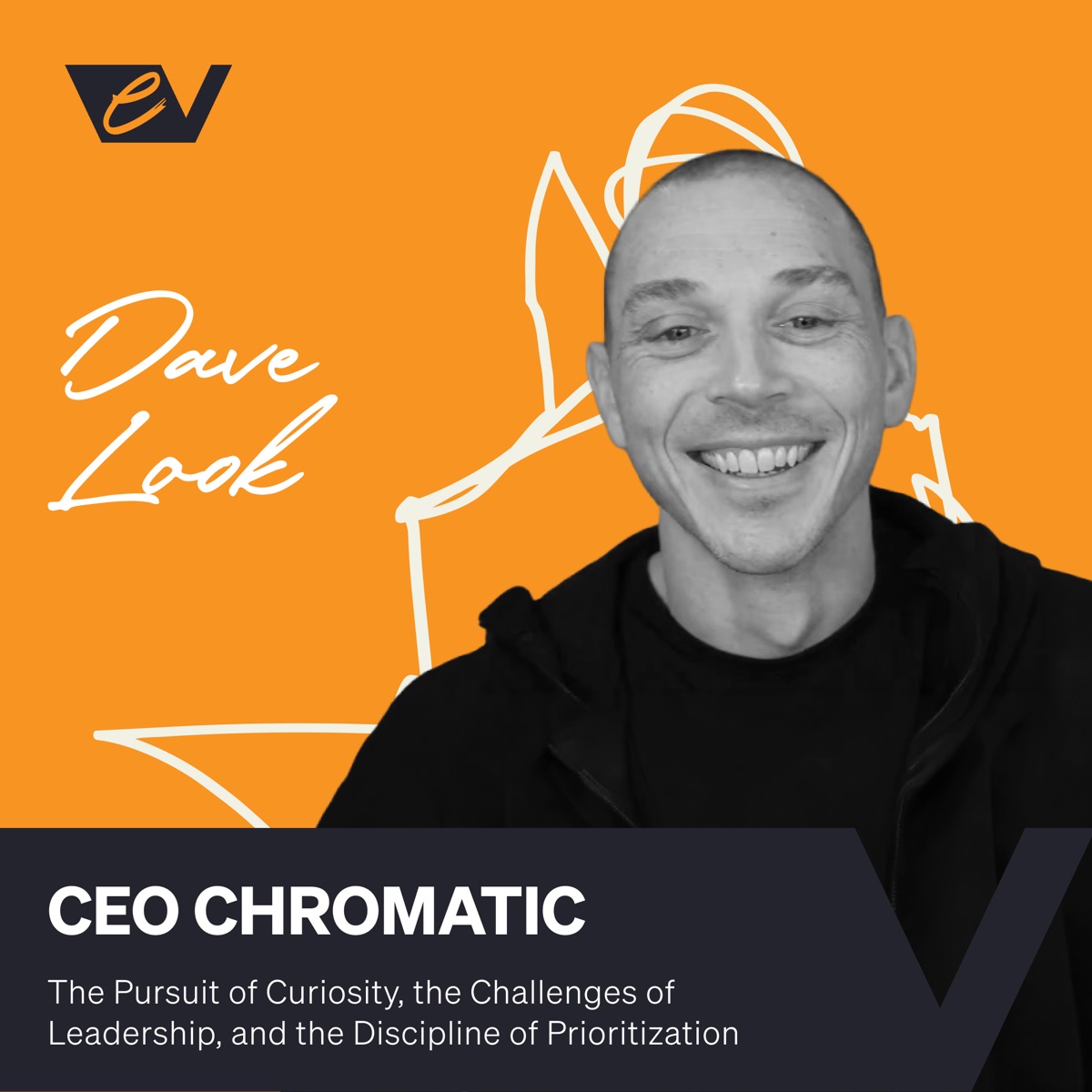
Dave Look: Chromatic
CEO, Chromatic
Watch or listen right here
About this episode
Where it all started: Chromatic CEO Dave Look on Drupal development and why developing diverse skills, from Krav Maga to lockpicking, makes better leaders.
Episode one. Leadership range, technical depth, and the case for being interesting.
Links from this conversation
Episode transcript
Read the full transcript
Transcribed from the episode recording; names and phrasing may contain small transcription errors.
All right, here we are. Dave Look, CEO of Chromatic. Thank you for joining us on Escape Velocity, which is, um yeah, just trying to get this podcast going and have some good conversations around diving into things that we completely don't know anything about in order to make forward progress.
Thanks for having That sounds great. That's another story of life.
pretty much finding out. I keep finding it out over and over again.
Good.
um But it's ah it's great that we're talking because I think you know so many of our conversations just over the years, but especially over the last year, have been, you know we've really reconnected around this notion of you know just
Yeah.
the path right and how we gain wisdom about what we're doing and are always kind of realizing like there's there's always a next level, there's always progress, there's always growth. and you know We spent a lot of time talking about the 4000 Weeks book, which for anyone who hasn't read it, it's called the book's called 4000 Weeks, Time Management for Mere Mortals.
Yeah.
and it Yes, and it starts out with a real, I always warn people, prepare yourself to just be kicked in the face like 10 times in the first few pages.
Oliver Berkman. Yeah.
but
Yeah.
um But it has really been it's framed up this idea of prioritizing your time um and and leaning into the idea that it is limited, it is finite, and you can only really immerse yourself in so many things.
Right.
So that ruthless prioritization and That just makes me think a lot about what do you make sure you keep in that small little list of of necessary ingredients. and you know I'm a painter, um I'm a big believer in that that creative process and nurturing it because I think that it's about you know personal growth in general and it informs a lot of what we do at work and how we work with people and and how we work with our you know ourselves and ah and our families and in our lives and all of that.
Yeah.
So I'd love to dive into that um a little bit more today.
and All right.
Oh, great. um One of the things, you know I've got the ah got the lock pick um set that you that you sent, which I still need to carve out some time to like really dive into, but you are
No.
um You are you know an avid outdoorsman. um I would say you're probably ah youre you're pretty up and up on the survivalist skills. We joke that you would always be the person we would call if we were needing to be broken out of a Mexican prison or really any prison in a foreign country.
Sure.
um I don't want to single out Mexico for this. but ah um And also, you are you've been practicing Krav Maga for many years.
Just just about one year now.
Oh, OK. Well, I would love to. you know I know that it's been a very good practice for you to start getting into. And you also have a.
Yeah.
a little kid, a new member of the family, you know a wife, um extended family. And so I'd love to just kind of start out with like how do you prioritize your your time and why is it important to you to keep some of these other aspects of your your life um in the mix?
Yeah, it's a great question. I ah was pondering it a bit, even just thinking about having this conversation. and Prioritization is really hard for me. I, Shel, my wife used to say my hobby was hobbies and that I just like to try everything. So, you know, the lockpick sets a great example. There was a day I was like, I want to learn how to pick locks. So I ordered a bunch of lockpick stuff and just tried it. And, uh, you know, those things come up over time for me. So prioritization has been something that I continue to work towards. But as you mentioned, the 4000 weeks book that reading that book and a couple others um from strength to strength by Arthur Brooks, um It just helped me try to rethink about my time and the fact that I don't have an unlimited amount of time to do every single thing I want to do. And at some point I have to choose what are the highest priorities to me. And the other thing that it helped me see is that those priorities can shift over time. So like I said, Krav Maga over the last year has been a huge priority for me, but it isn't just about Krav Maga. It's about. my health, it's about my mic. that physical health, mental health, ah longevity, I think about it as something that is a, you know, that's a 40-year thing. It's not just about this last year. It's about how healthy will I be in 40 years as much as it is how healthy will I be this year.
Right.
So that helps me to, as I start to think about my priorities, I try to say, how does this thing that I'm prioritizing have multiple impacts on my life or the life of my family? so
yeah
obviously spending time with my son is both edifying for myself and for him and his future. So ah when I can double up on the value of a priority, that certainly helps. or um um not require i don't I don't know if I'm going to fight a bear.
Yeah Yeah, well, I mean you need you need to be able to to kick some like elk or bare ass in the woods so I can also see why that is a Well, if you if you had to, at least you would have some idea of maybe how to protect yourself.
I don't know. We don't, we don't do a lot of bear fights in class now taking a bat away from somebody or a knife or a gun.
Oh.
Like we do that.
Oh, OK. All right.
There's no, no bear fighting.
well I mean, Bear Maga needs to be a spinoff.
ah
But I wanted to go back to what you said, Shell jokes about that you your hobby is hobbies.
Yeah.
um You know, I think a lot of times we beat ourselves up for having like, you know, hobby addiction or like shiny object syndrome. But I'm curious. I mean, I think there's so much value in taking deep dives into completely new things, even if they have no direct correlation to your work or your personal life.
Yeah.
It's like, yeah, I'm going to become a lock picking.
Right.
amateur expert. um Well, that may come in handy one day, let's hope not. But I think that some aspect of that new process, learning something new, researching something new, doing something new physically especially, um does impact your brain and your neuroplasticity and your ability to make new connections. So I'm curious what your perspective is on that.
Yeah. Well, I think, I don't remember where I read this, but I feel like I read a study several years ago that was talking about sort of technology and the future of work. And it was saying essentially that the people that would be able to thrive in the new world ah with tech. And this was really before like AI became like the buzzword and the the common term where were people that were going to be able to look across multiple domains and connect ideas from them.
Yeah.
And I don't know that that was ever my intention, but when I look back at my life, that has been something that I've been Uh, grateful to have experienced, which is I like to figure out how things work. I like to take things apart. I like to rebuild them. I like to do that in different domains. So whether it's a computer or a car or. you know, whatever that thing might be, I've sort of always had a tinkering mentality. And I think that same thing applies to the way we manage our calendar, the way we run meetings, like, if we're not tinkering, if we're not taking it apart and putting it back together, and we're just doing the same thing over and over and over again, I think we lose some of that spark of creativity that we have as humans, you know, you and I talk about that often, which is,
Yeah.
We are creative beings and we need to be continuing to create. So all that to say, I think getting to start to play with different ideas from different domains, I don't know, there's just a beautiful intersection of that. um simple, great example was there was a ah research paper written, I'm not gonna forget who wrote it, um but it was talking about jazz and improv in jazz and how that applies to leadership. And I think those types of connections to say, look at this Look at music and the way that a jazz ensemble can trade leadership back and forth. And look at how that can apply to an organization or a small team, or in our case, my my team's case, you know we're building complex web applications and products. So how do we trade the lead in the same way a jazz ensemble would? I think those types of connections across different domains is wonderful.
Yeah, and I love that ah love that you brought it back to the notion of leadership, right?
It's super fun to explore.
Because as you're talking, I'm thinking, oh, this is exactly where you know AI is is in the space now, like crushing everyone's creative spirits. Because I just read a study that um I think Ethan Molluck shared it on Twitter, but it was a study about creativity. And it's it showed that chat GPT outperformed um a whole bunch of humans in like a creative writing assignment. And it was the first time that um that I had seen anyone try to put a study to that and that I was you know i was like, God, that's just soul crushing to to think about.
Hmm.
But the thing is, I mean, i I know that AI is only going to be able to pull connections together based on what it has learned from other ah stuff that's been posted on the internet.
Hmm. Right.
And it's it's going to have its own way of combining ingredients that is going to be unique to AI.
Right.
But each human has a unique way of combining those ingredients, too.
right Right.
And at the end of the day, while we all might be conductors of massive AI,
Right.
um you know, armies of of AI bots doing a lot of the manual things.
right
um We still will be conducting and we will still need to be communicating with each other. And when you talk about leading the team at Chromatic, You know, how do you think that that that matters to the team? Like, what if what if it was an AI that was leading them?
Well, I don't know. Maybe there's probably some days it'd be better. You type in a prompt and get what you want back. Um, I, I think. I don't know. I have, my first thought that came to mind when you were talking about the creative writing exercise was how are we failing these people and teaching them to be creative? Because I, I really think that's the more curious angle of it, not whether chat GPT can outperform because it's a computer. It's going to be able to do computational things faster and more like it's just a computer. It's going to be able to do things that we can't do and it will continue to get smarter. but
Yeah.
When you look at the creative process, like what was the time box? What was the constraint? Did they get a year to be able to do their project? No, obviously I didn't read the study, but I know they didn't.
Well, yeah, and think about creative thought in terms of how we valued it over the last 20, 30 years with the explosion of the Internet and all and technology.
So. Exactly. Yeah.
We've really seen that notion of creativity get pushed to the bottom of the value chain.
Exactly. Well, and when you have such a volume of creative work happening when every single person that has an iPhone and Instagram becomes a photographer, Well, we have set the bar at a different level of what these things mean. And I'm not saying everybody needs to be Ansel Adams, but there is a difference when you look at one of his photographs and when you look at one of mine. It just is. And why was that? Because he had time, space, and and dedication to that practice. And so that's where I don't think the computer is going to compete. It can consume all of that time dedication and practice, but it is still designed to spit it out very, very quickly. And it isn't really going through that process of iteration. It isn't getting creative feedback. It isn't getting you know, if you think back to art school, you did critiques all the time. Well, how did those critiques impact you and your creativity over the course of a year or two years or four years?
yeah tremendous
And I don't think, you know, we talk about being creative beings, but we're also communal beings and art doesn't really have meaning without some level of community.
yeah
I can do all sorts of stuff. And if nobody ever sees it, You know, did a tree fall in the forest? Yeah, of course it did, but.
Yeah, no, I think if you if you do art and no one ever sees it then it's like you have a compulsion ah You know and that's okay we all have those but I yeah, I mean it's about the human connection that we're that we're seeking and I I think um AI is just posing as such an and interesting challenge because if you know if you were to be shown an AI generated photo of
you Right. Right. Exactly. Exactly.
of what, and in Ansel Adams' photo. um and you And, you know, like, would you be able to, yeah.
might not be able to tell apart, you know, especially when, when the computer is capable of consuming every single Ansel Adam photo that we have digitized.
Yeah.
And it can say, give me an approximation of this thing, which is actually much easier for the computer to do than it is for me to do.
Yeah, I mean, I think the conversation around art and AI and generative AIs is evolving um and going to be very interesting to see how it how it turns out.
but Yeah.
i I still think there is this this sense of that object in reality. And just you know when you when you go to see art um or experience art in real life, whether it's fine art or dance or performance, that's That's something very tangible. um And there's something about the essence of that. If you if you are to you know buy a piece of art to hang on your wall or you know spend money to go have an experience in real life, um that cannot be replicated by AI.
Right. Yeah, I think the same thing is true to go back to the the start of your question around leadership, which is AI can likely, and you know, we're talking about different things when we say AI, but you know, there's generative AI, there's chat GPT, there is this sort of future utopian state of a more sentient, like actual, you know, replicated intelligence. I'm not sure that we've proven that a computer can have the empathy of a human and that, yeah, we can teach it to recognize emotions on somebody's face and we can teach it to do many things, but ultimately, you can't, I don't know that the computer can like hug someone, not that I can give you a hug over Zoom, but There is a degree of connection that I have simply because I am a human being and you are a human being. And we have experienced life and different trials and tribulations of this life and joys and ups and downs. And that gives us an ability to relate in a way that I'm never going to relate to a computer in that way. At least I don't believe I ever will.
Yeah.
Now, you know who knows how this thing will evolve? But ultimately, if I am relating to a computer in that way, it is the human part of the replication that I'm still relating to.
Yeah, absolutely. I mean, but it'll be a strange day when ah AI can provide the same kind of experience that you know we had tromping around in Santa Fe together or going to Meow Wolf and just being physically together, having a shared experience, talking about it.
Exactly. Yep. Getting at a table, having a meal.
Yeah. Yeah. I mean, I i think that there's so much value in that that we we don't really talk about or explore. And to go back to your idea of like, you know, how are we teaching people to be creative or um nurturing that? How do you, I mean, know you've got a team of developers, so, you know, notoriously joked about as being extremely right brained or left brained individuals, right? Like very literal.
yeah
How important do you think creativity is in the work that they do? And how do you try to kind of infuse that
Yeah.
aspect to help them get through blockers or push to the next level or whatever it might be that you're trying to do.
I think we've been very lucky as an organization over the years. We haven't really had anyone on our team that was in that really hard, hard, like, I just write code and I don't think about anything other than how the code functions.
ah right Leave me alone.
We do have, yeah we have a pretty good split right now of front end team and a backend team. And our front end team does, most of them have some sort of design background. So they're, you know, when we talk about creativity, we think about painting and art and design and all of that.
visual.
But I i do think, and I have said this for years, business is art.
Yeah.
Like it might not be the art that we think about it, the way we think about art when I have a piece of art hanging in my wall or I have a painting or you have a painting behind you like that's what we we have put as the label of art but I think business is in art I think sales is in art I have a great friend that does sales and he's like oh I'm not creative I'm like dude you put together a pitch deck for companies every single week, you are creating something for them every week. It is just not a picture or a painting or a sculpture. So we have minimized it as created creative work.
Yeah, well, i think I think the word art, right, it's like if you take that away, um the the creativity, we are literally when we wake up in the morning to open our eyes, we start creating things.
Right.
um We're creating our reality.
Yeah.
based on how we choose to think about things, um what we influence and don't influence, it's all a creative process.
Yep. Right.
And I think that's something that we don't necessarily talk about or explore with our with our in our work environments.
Exactly. Yeah, so to to answer your question about how do we try to foster that at chromatic, Some of it has just happened naturally. And I think we also try to approach things from a place of curiosity. So how do we come with curiosity? And a lot of times as developers and as an implementation agency, we have people that come to us and say, hey, we have everything planned. We know exactly what we need. We just need you to build it. And then all of a sudden we go, can we just ask a few questions? And all of a sudden we're talking about something very different than what they've asked for. And, uh, one of our developers use this analogy, which I think is great, which is, Hey, somebody, you know, you go to a contractor and say, Hey, I want to put a door in my house. And they're like, of course I can easily put a door in your house. And then you start to put the door in and they're like, oh, but behind the door I wanted a indoor pool and a sauna. And it's like, oh, well, that's not putting a door in. And so that's where I think that curiosity comes into play. And then that that applies to how we implement things as well. um We work a lot in the open source community with Drupal. And so there's a lot of, well, what's the best approach? There's different different ways of approaching it. And I think there are very creative and unique ways to solve the same problem. Sometimes they're better, sometimes they're worse, but being able to just come with curiosity and explore that, I think is is really how we try to nurture it.
So I have a question. When you're meeting with a potential new client, you know this these are partnerships that could and should last ideally a long time. That's the kind of partner I think you and I usually look for with ah when it comes to work. um Do you try to get a sense for their openness to curiosity at the beginning? Because I think it can be like oil and water. If you have a curious nature, culture, team,
yeah
and you like to ask why and you like to dig in and and understand like, where can we have the biggest impact?
Yeah.
What are the root issues at play here?
Yeah.
um And if you've got a client that's like, you know just the facts ma'am, here's the specs, go we'll build it.
Right. Right. Right.
That can be a ah real bummer on the drain on the team.
I think even as you say that, candidly, I could be better about just saying it. And I think I've gotten there more and more over the years where we also try to be extremely honest. And I'm very frank with clients up front about the realities of a project. Sometimes I think the realities are The expectations this are disconnected from reality a lot of times. Hey, we have this huge redesign. We need it done in three months. We need to have a whole new site. We need all this stuff. and It's like, I can give you my whole team and we can do it. And we could, we could deliver it in three months, but you can't, I know you can't.
Right.
I've done this enough times to tell you, you can't do that. So I think we try to be really honest with them. And I think this is a place where I could push into that more, but you and I both know, you know, that person that is like. They aren't creative. they've been Most of the time, it's a person that has been tasked with getting a project done that doesn't have the authority to make any decisions around the project. And that you can just tell organizationally they've been stifled. So someone makes a decision. beyond the room that they want the project done in. And those types of organizations don't have a lot of curiosity and they don't really want to push the envelope. And I think people, I don't know if it's fear, I don't know, um it's probably fear.
Yeah.
They don't want to push it too hard because they don't know what the outcome is going to be.
Yeah, I mean, I get like in these bureaucratic environments, um it's like, don't push me so far that I've got to go, you know, bring a series of questions up to my boss or they suddenly we have this great conversation, but the scope just just doubled.
Right. Right.
um or the timeline just tripled. So I think there's a lot of skepticism that like yeah having those kinds of conversations is going to bite you in the ass, whether it's you know on any of those elements.
Yeah. yeah
So I think that causes us to cut it out um because we're worried that you know it's going to take us down a path we we weren't prepared to go down necessarily or or don't have the resources to go down.
Oh. There's also the internal fears. you you have Not only do you have whatever is happening with a client, but you have a team that is used to doing something one way and they might not want to ask questions or they might not want to approach it another way. You have your your own, my own as a business owner. I have my own. resistance, which is I don't want to rock the boat. They know exactly what they want. Let's give them exactly what they want so we can get paid. And sometimes you make that decision for the wrong reason.
Yeah.
And I've done that. I'm trying really hard to not do that anymore. But we've every business owner has done that. Every creative services agency has done that.
Yeah, I mean, do you think there's a there's a balance that needs to be struck in that kind of like, I've got, you know, two clients that are really up for the the the unknown, right?
You know?
We're like, let's go on this adventure together. And there's trust. And there's mutual understanding and respect around the limitations that still need to be um considered.
Well. Mm-hmm.
And then I think you've got some clients that do just pay the bills and check the boxes.
Yeah.
But yeah,
Of course. And you know hat tip, I feel like every time I'm in a conversation, I got to shout out Joe Rinaldi, because I just can't help myself.
Oh, Joe.
But, you know, sales, sales solves everything. If your pipeline is full, you can be a lot more picky about it. You can, you can say, no, I'm not going to work that way. And we're just going to say no to this project. And we've had times very clearly where we didn't align with a client and we just said that, Hey, we don't align.
Yeah.
We think you'd be better to hire somebody else. And that's okay. Um, but I do think a hundred percent there are. There are always gonna be projects that that pay the bills and those aren't necessarily bad projects. They just might not be the ideal project.
Do you think that um it would be a risky situation to find yourself in if all you had were projects that just paid the bills and you'd lost the thread on those projects or clients or engagements that did open up that room to like flex your creative muscles and do more experimentation. You know like every web agency in the world for a few years there had like their you know their labs section or their R and&D section on their website because
and Yeah.
Partly, you know, their team was probably like, we want to do some cool shit that isn't about client what clients will pay for.
Right.
And we think that's worth showing off.
Right.
But I think that, again, I think people need it. um, in, in creative teams or any, and like you said, everybody's creative. So all teams are creative.
Mm hmm.
We're all this giant collaboration. And I think if it's all just routine process over and over and over again, it can be a real soul sucker.
Yeah, a couple of things coming to mind. Well, one, I think that that risk is there. I would say almost all of these things with a big asterisk next to them.
Yeah.
How long are you in that environment and what are the other things that you're doing in parallel to it? So a few things that that we have been able to do. yeah We have a great client roster right now. um And I'm not just saying that in case any of them are listening, like we really do have a great, great client roster.
Except for that one that sucks real bad, right?
Yeah, except for that one.
Yeah, you mentioned that one.
And you know who you are.
Yeah.
um But we've also been able to say, because we work with Drupal, and because we do a lot of work in the open source space, we do get to add that as a creative element, or I wouldn't call it a labs thing, but we did a big project for the John F.
Yeah.
Kennedy Library last year. And a big part of that was we said, hey, we want to build this part of your project as an open source contribution back to the Drupal community. And um same thing, another current client, we're we're doing that. So I think there are ways you can sneak that in.
Yeah.
And another thing we have done with mixed success over the years, but if we do have bandwidth on our team and we do have a desire for a creative project, you could always do free work. Like do it for your client for free.
Yeah.
Maybe they don't see the value in the thing that you're talking about. Build it for them. Give it to them. I think we get two. Tight fist with some of this stuff sometimes. Now, I'm not advocating doing free work all the time. I'm not advocating spec work. I'm adamantly against those types of things.
Yeah.
I just think it is also okay to have a long running client and to give them something once in a while that is not what they were expecting.
Yeah, and i I think when you were just talking about um the library project and ah and you know contribut and the the ah the act of contributing back to the open source community, I worked with a hospital and and education system, Loma Linda University and hospital system back in the day. And it it wasn't until like, I mean, it was a pretty cut and dry project. But when I really started to think about it and was like, there are people who might be going through the worst day of their life who are going to come to this website.
Hmm.
you know, to because they just got news or they need to get in to see someone or they whatever it might be.
um
And that just come, you know, like, carrying more kind of figuring out what the bigger purpose is to the work really just gave
Yeah. yeah
us all such a different, it gave us all so much extra fuel and empathy and caring and you know to really shift our perspective on what we were doing.
Yeah.
um And I think that you can do that with any project, right? I mean, hopefully it's it's worthy.
Yeah.
But um I do think that doesn't it's not dependent on the client being like, give me your best creative thinking here. um
Right.
And let's see where it takes us. Like, I think that you can absolutely just decide that it's going to make the work better. It's going to be more rewarding for the team to spend their time through that lens.
Mmhmm.
And um yeah, so I think that that is ah a way we can push where maybe it's not necessarily being welcome or invited by the client.
Yeah, we do, especially a lot of the work that we do is unseen. So in your case, you're talking about an end user coming to the ah site, but we we do, there's times where we've done data migrations that take months and no one actually sees any of the work that the site that the data started on and the site that it ended on look identical.
Yeah, you guys are like down in the sewers, like running cable and, you know, keeping the infrastructure going.
so Exactly.
It's like endless.
But we do try to take a lot of care to write clean code and do it the right way and make sure that it's a it's a huge win when nobody notices like so it's it's kind of counterintuitive and like stakeholders are have a hard time with that sometimes they're like i paid how much for what it's like well this is what you wanted consolidation and that's what we got you but um I think there's, there's a beauty in that too, which is a lot of times we inherit a code base and, or we work on a project we do. I used to call him like, or I still kind of do i call him special ops projects. Somebody has the deployment problem.
Yeah.
They have something we parachute in. We, we kind of reset everything and then we get, we hand it back off to their team.
Yeah, that takes a lot of that takes a lot of confidence.
When we do that.
That takes a lot of balls, honestly, to go into other people's code bases and try to try to make it work.
it's ah You know, it, it's interesting we partner with the handful of the the different hosting providers and we do have a ah ah reputation of being willing to do that when others are not willing to do that. So it's.
Special ops Drupal.
Yeah, special ops Drupal. I haven't been really been able to market it, but um all that to say, we, we do care deeply about how do the people that will maintain this code when we aren't the ones maintaining it, how will they use it? How will they experience it? How does this impact their days when they show up? So, uh, I think there's.
Yeah.
you know, Mark Dorsen, our former CTO would be so, I mean, he still is proud of this team. And, you know, a lot of that is he cared deeply about how code was done.
Yeah.
And he cared about our systems and our processes, and he helped us build a beautiful and robust, uh, DevOps practice that actually It's almost impossible for us to work on a project and not leave it better than we found it. And I think that's something we can take great pride in. And I think it is as creative as designing a new logo. It they just doesn't show up the same way.
Yeah. But so I guess a follow on question to that is because it's so hard to explain to people what it is that you're doing and why the craft that you're applying to the work matters. And I think you just articulated it really well, but to a uninformed group of people Don't you think that's one of the challenges around technology or especially code? is is you know I feel like between code and design, and no one ever gets, like why why does it take that long?
Yeah.
um I think we've come up with a lot of very bloated processes to to be the stand-ins for like here's what you're paying for, because we can't figure out how to explain it properly
Oh, yeah. Yeah.
to um Because it's just it's so complex, it's so nuanced, it's so ephemeral. um so you know It's like a great design can happen in an hour, or it could take weeks. um you know So it's like, OK, well, we can we can make this documentation will definitely require amount of time that we can make sure we cover ourselves on the design time for.
Yeah. I think it' ah it is hard. We remember working on a huge software project maybe 10 years ago now. And we advocated and advocated and advocated for better documentation. And ah one of the stakeholders was was always just like, well, that's the next company's problem. i They'll figure it out. and i just that There's a part of me that understood where that person was coming from, and there was a part of me that always bristled against it. ah When I think about trying to write clean code or implement these processes, it's all about, this this gets into that time paradox mentality, which is, yeah, it takes a little bit extra now, and it doesn't actually help us today. but this helps the future product owner, project owner, developer. And that could be my team. Hopefully it's my team. So when we build automated tests, yeah, they didn't help us get that feature out today, but they help us make sure that feature continues to work in perpetuity as we deploy new features. So that's where the real value comes in.
Yeah.
And I think about, it
Yeah, the longevity and the resiliency of the product.
It's risk mitigation. It's insurance.
right
it's ah And it's the right way to do it.
Yeah.
That's the harder sell is to just say it's the right way to do it. But ah you know there's probably very articulate examples where you could show how it has how it impacts a project over time. but The thing I can tell now, especially when you're a service-based business and when we, we're selling hours most of the time. And that's where I feel like the, the real rubber meets the road is this stuff should, should mean less revenue for me. If we do it right, it should mean less revenue in the future. So exactly it, it so it's, I think.
Yeah, it's like buying insurance.
there are a lot of CIOs and CTOs that really get it.
Yeah.
I think there are a lot of other executives, directors, CEOs, that they they're trying really hard to understand technology and dollars and how those things intersect. And unfortunately, there are many people that they're, They're just not gonna get the technical side of it and they're not gonna place value on that. And I don't mean that in a demeaning way. It's just simply they're focused on something different.
Yeah.
And that different thing gives them different data and different outputs. So.
You're making me think, i mean I wish there was a confessional site where all of these executives could confess like the amount of money they wasted on projects that failed.
Yeah.
Because I i think that there's an unspoken but very big reality in our industries, which is that a lot of people are gun shy now. um because they've been bitten by making the bad choice or you know having people leave midway through a project or whatever it might be projects have tanked and that's a lot of money and a lot of time to invest with a lot of people to then have it not reach the finish line and be good to go right for the next however many years that it should be roadworthy
Yeah. Yeah. Yeah. Yes. Yeah. Yeah. Yeah. Yeah.
and sustaining itself. So that's ah I think that's ah something we don't talk about a lot. is
Yeah, we've we've had, I can think of two over the years where um we had a like a pretty strong recommendation for an approach at the beginning of a project and a client said, no, we think we're going to go this other way. It's going to be faster. It's going to be cheaper. I can think of at least two instances where they came back to us and said, hey, that thing kind of blew up in our face. Can you come fix it now? and
And you're like, I don't know.
there's
I don't know if we're available.
No, usually we say yes. um But it's, it I actually, it the the hard part of that is look at what you could have done if you had spent the dollars the right way.
Right.
And we've made those mistakes as an agency. We have we have done those things.
Everybody's made those mistakes.
So i I think that's one of my, you know, going back to the earlier part of this conversation, which is like having knowledge from different domains, that is one of the pieces that Humbly speaking, i believe I believe I bring to the table, which is I have made this decision co-CEO. I have bought the thing the wrong way. Let me tell you why this thing is going to, how this thing's going to play out. Now, whether you believe in my expertise or not is a different thing. And hopefully if I'm sitting down talking to that CEO, he's already he He has some degree of trust in what I'm telling him. But I can see it across the different domains. I run P and&Ls all the time. I understand how this decision impacts this department. i under i I've worked across enough systems that I can see how these pieces interplay with one another. And that's where I can start to talk about both the technology and the value and the impact and the users. And you can start to tie all of those domains together. And that's I think that's where you actually create value as a business. It's not in deploying the code. It's about putting all those pieces together.
Yeah, and even if the the CTO or the whoever is sort of making the decision here, they might have made the decision a few times in the past. And to your point, you've made the decision from your own business perspective, but you've also seen a lot of other CTO make decisions.
Yeah. Yeah.
So your outside perspective within that domain expertise um or that area of specialization and focus, that gives you a lot of insights to guide a client with. And so I do think that's the nice thing about gaining you know traction and and just having the experience under your belt is is that's all information. um
Exactly.
that you can share and and leverage um on behalf of each new client. It just keeps, built it's compounding.
Well, and you do this too, but I talk to other business owners. I talk to other agency directors. I talk to those that are the project managers and producers on the projects and I ask questions. So even those, like a lot of times I try, if we don't get a project, I try to follow up and say, how did it go? What, what, how did that decision go? And it's not because. i'm I'm not even necessarily trying to get my foot back in the door and win new business. I am genuinely curious, how did this thing go?
Yeah. There is.
And I do have a a good friend of mine who has been, he was a CIO of ah a big company that was sold and acquired and now he's a chief digital officer. And I pick his brain all the time. I say, you know, you're sitting in, Yeah, I have a CEO title, but I run a much smaller organization than a VC backed 10,000 person org. What is your board meeting like? tell me Tell me how that conversation is going. And I've been lucky enough to have enough of those types of people in my life that are willing to just give me the download of how some of those decisions are made, how some of those conversations go. And that helps me to think creatively when I go in to have these other conversations, which is how are these conversations happening?
Yeah, it. It boggles my mind that so many people they they stay in a little bubble when the power of sharing those stories. I mean you it's like a book.
Exactly.
You hear a story from someone. That's great. I don't now have to go live your life and and get your job and have the experiences you've just given me the story. ah It's like this little gift of information and perspective from someone who is sitting in a very unique place, dealing with a very you know interesting situation.
Yeah.
And I think that you know I love asking questions from people who do things completely different than what I do. you know ah Because I do think that um that all just starts to feed your, I always call it the ingredients.
Exactly.
you know It's like the spices in your spice drawer.
Yeah.
um you're so that That is completely impacted by the conversations you have and they the things you are you allow yourself to be curious about.
Yep.
And then, you know, who's there two to ask the questions of and to experience something new or hear a new story.
Yeah, I continue to come back to learning from different domains is so important and yeah i i continue to come back to learning from different domains is so important and i Again, I've been lucky to have a lot of friends that own businesses in different industries.
Yeah.
So I had a friend that was a restaurateur and he's owned a restaurant here in Chicago that's been open for over 50 years. Well, his whole business model is very, very different than mine. Even though he runs a service-based business for all intents and purposes, I had a friend that owned a medical billing company and to be able to watch something I learned from him was how to manage cashflow in different ways. So just to be able to glean from those other people. And then the same thing, to share what I've learned, I have people in my life that have called me and been like, hey, I know you've owned a business. Can you tell me about how you started it and this, that, and the other? Oh, you mentioned partnerships. Like, I want to start a partnership. how How would you negotiate a partnership with another organization or I want to start a business with a friend? Like, what would that be like? So the be ability to just sit down and be like, hey, I'm an open book. Take take what you can. I think, you know, that that goes a long way in all these conversations. And that's, I mean, part of why you and I get along because you're the same way. And We both kind of go like, what do I have to lose by sharing this information with somebody? i only I only have something to gain, which is again, a human connection to somebody else that is going through something similar to me.
Yeah. Yeah, yeah i'm I'm so curious to continue having more of these conversations with, you know as diverse a group of people I possibly can, because i'm I'm so curious if one of the common threads in there is that no matter what, you know contracts, logistics, cashflow, all of the mechanisms we we need to kind of learn to, or or even just you know work navigating jobs and and
Hi.
you know relationships and in work and all of that and in life. um I think there are these common threads of like if you're not growing then there is an element of stagnation that I think can set in and I think that humans like you said are I think that we're all naturally creative so how do we kind of avoid that from I think
Yeah.
you just don't want to end up sort of waking up in it one day and realizing, you know, your waist deep in it versus how do I start to construct my life and the way I spend my time so that I'm always trying to kind of dance that that dance.
yeah Yeah. Man,
Well, this has been a fantastic conversation as always. um
that time flew by.
I know. I'm going to just you know thank you again and um stop recording and and then we can talk about picking Lux.
Of course. Okay. Sounds good. Thank you, Tracey. Thanks for having me.
Thanks for being here, Dave.
Of course.