From the Archives · Sep 29, 2026
Marketing Can't Fix the Product
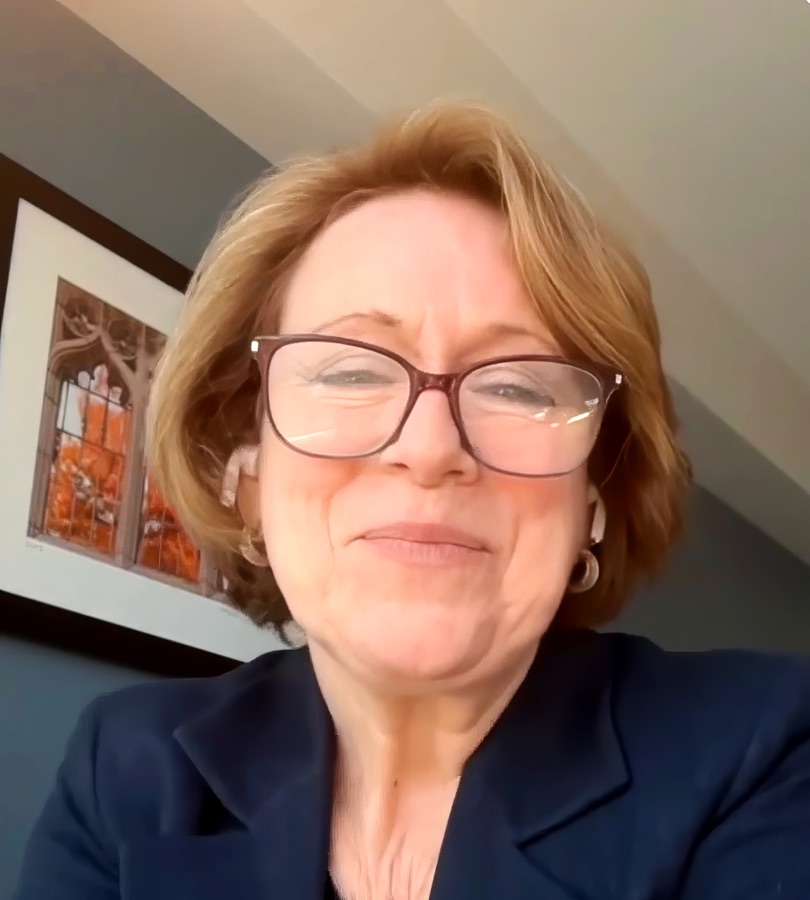
With Carol Keese
VP for University Communications & CMO, University of Oregon
Listen to the highlight
About this highlight
Higher ed keeps asking how to communicate its value. Carol Keese asks whether the product, the price, and the proof need to change too. In this six-minute excerpt, we talk about trust, hidden costs, and why outcomes should shape the message.
From the Archives brings you short highlights from past Escape Velocity conversations. This excerpt is from episode 32, originally released July 23, 2026.
Listen to the full conversation with Carol Keese →
Highlight transcript
Read the transcript
Transcribed from the recording and lightly edited for readability. Some overlapping speech and repeated words have been omitted. Timestamps refer to this excerpt; small transcription errors may remain.
Just a little bit about that article that you wrote for Inside Higher Ed. Was this something that you'd been thinking about for a while? Have you been having conversations internally about, you know, we'll fix it with the marketing, and have you been pushing back on that? How did you lead up to that article?
I think that was really the result of about a year and a half, two years, really since the conversations in higher ed were accelerated by the federal administration coming in, and what we needed to do to regain trust with consumers and with the public. Gallup and Pew and others have been tracking the loss of confidence in all institutions, including higher ed, but higher ed is falling the farthest, the fastest.
And so there's been a lot of well-intentioned and important work, but it has been focused on the messaging. How do we get Americans to understand the value of research institutions? How do we get Americans to understand the value of a degree? But all of those have essentially focused on messaging.
And I was interested in exploring why the messaging hadn't really tracked with the feedback from the market over the last probably 10, 15, 20 years, most aggressively or most clearly in the last 10 years, as consumers became more and more concerned about the price point. And we continued to say things like, you know, it's sort of the old MasterCard: priceless, like it's just priceless. We were talking about a quarter-million-dollar investment.
And we were really struggling, I felt, to justify the cost with language that most people could understand, or to rethink how the product was designed and priced so that it better met what the market was telling us. And instead, what I saw was messaging around how we talk. And unfortunately, when we talk in ways that feel tone deaf, we just sort of exacerbate the idea, or we amplify the idea, that higher ed is out of touch.
And that really concerned me. I've given my career to higher ed in various forms. And so I'm a higher ed advocate. I want to say that as a bit of a caveat, because I am also pretty critical of what we have failed to do in the last couple of decades to be ready for this moment. I think what we're seeing is a confluence of factors, not a single one, for which we were really unprepared. And the fix is not better marketing.
It's not better marketing, but it is better trust. So I was just curious to lean in on that idea of trust. I remember not that long ago where almost every higher ed website would hide tuition. You couldn't even find where the cost information was, or they'd bury it under financial aid.
To this day, yeah.
And if we go to healthcare, where there's also a big issue with trust around cost, and everyone is petrified of the cost and the way insurance works or doesn't work, the cost for insurance. Do you think healthcare is doing things right where higher ed isn't?
Oh my gosh. They're both broken in different ways. I think higher ed needs to look at its product differently and be more responsive to the market. I think that healthcare, we've decided that medicine should be sort of arbitrated by insurance as a society. And that has consequences that are really hitting consumers, and frankly, those who practice medicine in this space.
What I think is different is that in medicine your outcomes are more immediate. You can't prestige signal in the same way that higher ed can, and kind of get away with it, and be divorced from outcomes in the same way because they're so much sooner. So your quality metrics, the number of surgeries that you perform, the success rate of a certain procedure, those are all public and they're all pretty current. And so they inform a population that has a choice about where to direct their care most of the time, even when arbitrated by insurance.
And so that sort of cycle of outcomes to marketing, to positioning, to revenue is pretty tight. In higher education, those lead times are enormous. We're talking about a once-in-a-lifetime purchase. It's somewhere around a couple hundred thousand to a quarter million, depending on where you are going. And that decision is often a two-, three-year lead-up, and the outcomes are a five-year lag. And so I think that provides kind of a buffer for universities to continue to address messaging rather than looking at the product and the outcomes themselves for more concrete proof. And that's what consumers are increasingly asking for.
So outcomes and proof. I know that there's this lag time. There's not always great resources for these schools to stay in touch with their alumni and find out what is actually going on. So how much of it is just lack of research that the schools themselves, whether it's through their own resources or just that they haven't paid close enough attention to tracking the data, to really understand how their alumni have done?
I think that's an important component. So I think that there are challenges with that data. Like the first destination survey is voluntary, right? Could we just make it a requirement of getting your diploma? That would be relatively easy for all of us to do. So I think we do bear some responsibility for making sure that we have access to accurate data about that, because we are being asked by the administration and by parents and students to demonstrate that ROI. So I think that we can't just sit back and say, well, data's messy. Let's fix that.