Episode 07 · Feb 6, 2025
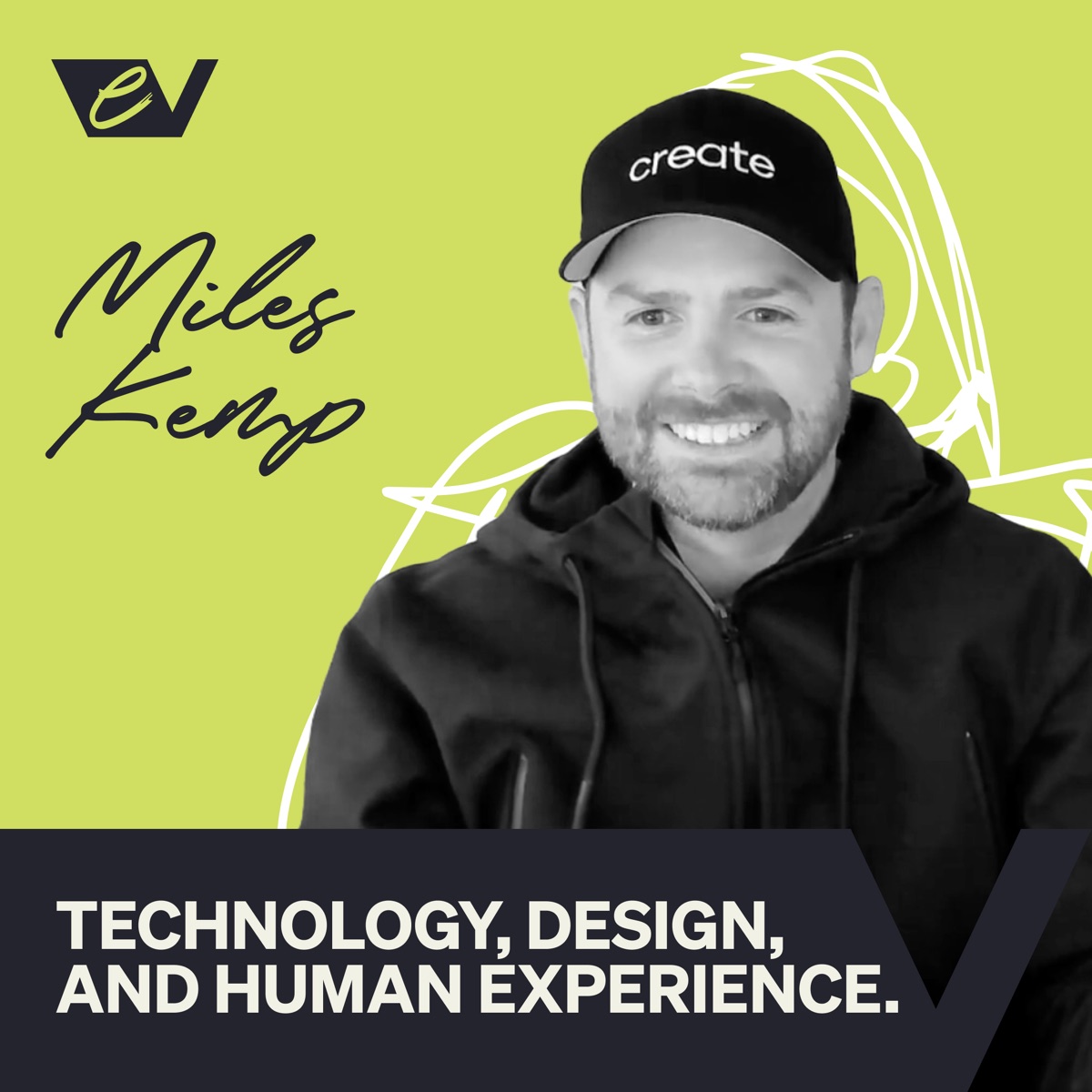
Miles Kemp: CEO at Variate
CEO, Variate
Watch or listen right here
About this episode
From an architecture background to leading digital transformation for brands like Marriott, Carnival, and Macy’s: Miles Kemp on designing at enterprise scale.
What spatial thinking brings to digital products, and how big organizations actually change.
Links from this conversation
Episode transcript
Read the full transcript
Transcribed from the episode recording; names and phrasing may contain small transcription errors.
Thanks for joining us again on Escape Velocity. Today, I'm really excited to welcome Miles to the podcast. Miles Kemp is CEO, design, innovator, and industry leader who runs Variate. He's CEO. um Is it Variate or Variate?
Bury it, yep.
Variate.
right
All right. um Miles has helped companies like marrit Marriott, Carnival, and Macy's. um create cutting edge customer experiences. And he has a background in architecture. And he has made the leap into UX and product design, applying the same level of precision and strategy to digital experiences. He's led large scale transformations, including redesigning Marriott's entire digital ecosystem, which is massive. And his work has impacted over 900 million people worldwide. Beyond his client work, Miles is a mentor to designers and a forward thinking strategist shaping the future of customer experience. Welcome to the show, Miles. And I'm just so excited to dig in today. We've had so many great conversations over the past year. This one we get to share.
Me too. I'm so grateful to know you, Tracey. You inspire me very much on many different levels, and I'm truly grateful to know you.
Well, I am grateful to know you, too. And you know when when we were thinking about this conversation, I was remembering, you know We met years ago um to do a project together. And that was back when you were more in the architecture world. And that was to to work on the ah the the envisioning of the Los Angeles Museum of the Holocaust.
Yeah, yeah.
Out in California together, looking at the construction site and how to build a website for a building that didn't exist yet.
yeah Exactly, yeah, exactly.
Yeah.
it was ah It was a pretty special time. I mean, that was back when we did a lot more experiential work, and it was actually the first version of variant.
yeah
We're at we're on the third version of variant now, which which we'll probably talk about. But yeah, that was a really interesting time. that was I used to be an architect. I lived in lived and worked in that weird world for a long time. And after Psyarc, and I had been working in in that profession for many years, I decided I wanted to transition and work in this new digital field. This was like before UX, UI design was really even a thing, like in the 2000s.
Yeah.
And so it was it was kind of a wild time because there were all these different things that were happening. All these different trends were happening. Architecture was going into a new place. Digital was coming into buildings. and becoming you know, becoming part of buildings and experience was starting to be a thing. and which was a really It was a really interesting time and then we had an opportunity.
Yeah. was york
One of my friends worked at Haggy Bellsberg's office and Haggy's incredible architect. And so he was working on that project and We were always talking about different things and I said, is it possible for me to come in and meet the the the team on the museum side and just talk with them about what the future of the museum could look like? And so I came in and actually I was in a couple of different architecture reviews. And then just at the end of each of the sessions, I i ah kind of brought this to the meetings, but I would come up and and I would say, hey, well, I think the the future looks like this. Here are some different trends that I think are going to affect the museum. And yeah we really need to think ahead. and and And it was kind of crazy, actually, because the building is completely concrete.
Yeah.
It's all made of concrete and you think about technology and how it's gonna fit in and you're like, well, it's not forgiving. There's no flexibility like with this. So it was a kind of really intense time. But anyway, I'm giving you kind of the pre-story. ah ah the The part of us working together.
Yeah.
So I started working with them on the the the plan, the strategy for the interactive exhibits and also all their information design and all of that. And then we were we were thinking about, well, who we we need to find and amazing partners to help us bring it to life. And we were thinking about, well, who could actually build the exhibits? So we found a company to do that. And then we were thinking about who does the absolute best websites in this space. And I had already looked around a lot and I saw your website. And I saw the work that you guys were doing and I knew it was amazing. And the thing that really stood out to me and still stands out to me, and it's still something that I love about you, is the care that you put into the people part of design. And I just, I love that so much about who you are. And it's something that I care deeply about. And I remember that being such a point that really stood out to me about your company. And that was something that I brought to the museum, the board at the museum and everything. And I was like, this is the team. Not only do they do beautiful work, here you go. But they care. They care about the people part. They care about doing things together. They care about collaboration and and and all and everything in between.
ah
And it's just, I appreciate that so much.
Yeah. Well, and I appreciated that that's why, one of the reasons why you reached out and you know, we had such an exciting time. It was such a rare opportunity to work with people so early in the envisioning of this museum and your, you know, having now so you know seen it be built and to see all those visions come to life for the for the exhibits and the experiences when the museum is just, your your vision for it was so forward thinking and exciting. And again, so focused on not only the the people and the experiences that the museum was there to preserve and commemorate and educate around, but the then the visitor's experience coming in.
Okay.
and what that was going to feel like you know for decades into the future. So it was ah it was quite an exciting project. um But then I will jump ahead to when we reconnected a couple of years ago, and we were just talking about, I think, technology evolving. And you said something. I remember telling you you were crazy, but cause this was like four years ago, four or five years ago. and And you said, yeah, pretty soon you're just going to be able to write in words what you want software to do, and you're not going to have to write any code, and it will just build it.
Yeah.
And I was like, but what? No way are we going to get there anytime too soon. And and here we are. um So I'm just curious.
Yeah.
you know I mean, obviously, you you are always looking so far forward. um And so much has happened and changed just in the last couple of years. that i'm I'm just curious what's on your mind right now. and You mentioned the changes your company is going through and where are you where are you looking right now? What's on your horizon?
mean, of course everybody talks about AI. I was at CES a couple of weeks ago. I mean, people ask me, what happened at CES? Well, they had screens and had more screens and even bigger screens.
so
And then AI was written this big, this big, this big, 21 feet tall. it was written It was next to every product. It was in every product. And it's everywhere. But I think for for me, what I see as the future right now is I think that I think people are gonna care about the people part of life and the people part of business a lot more moving forward.
yeah
And I feel like for, and and you can really see it now with the businesses that actually, some businesses really stand out because they have that people part and they create an experience that is just so noticeably different from others. So tech is, everywhere. It's all in all the things we do, but I think what we're really trying to figure out now is what is how what is the role of that tech and how is that tech actually going to augment and enhance the personal experience, the people experience?
Yeah.
And I'll tell you a little story. I i have some health issues, like I have ulcerative colitis and I have psoriasis, autoimmune issues, and I've had them for many years. So I I'm so deep in all the health, everything from getting prescriptions and seeing doctors, blood work, you name it. ah Earlier this week on Tuesday, i went to there's a new company that start out that that came out pretty recently called Prenuvo and they do full body MRIs.
Oh yeah, I've heard of them.
Yeah, so i I've been wanting to do this for a while. and then i did it. So I signed up and I went in on Tuesday and this company was just such a great example of what I'm talking about. It was imagine four seasons and a doctor's office had a baby. That's what it was. I mean, it was amazing. So you walk in the front door. There's a kind of concierge at the front desk. They have a whole so system, a kind of invisible system that's all used. As you go through the whole experience, you don't see any of this, but it's kind of underlying everything that's there. And so the the person at the front desk starts to ask you some questions, like they kind of check you in, but then they start asking you some things that you're kind of like, oh, this is going to be a different kind of experience than what I thought. So for example, he asked me, well, ah what kind of music would you like to listen to when you're in the machine? And I was like, that's very interesting.
have Right.
And then I was thinking to myself, if this was like any other doctor's office, I'd give him an answer and then someone else can to ask me the same question in five minutes. So I'm like, what's going to happen here? Are are they going to deliver on the promise of the experience?
Yeah.
So he asked me, and then I i told him, and then and then he asked me some other questions like, well, what size clothes do you wear with your top and your bottom, and then you have to take off your jewelry and all this stuff. So he asked me this question, and he's like, I'll be right back. He walks in the back, he kind of sets everything up like concierge style, and then he comes out and he's and Okay, and now I'll tell you what ah what I'm seeing while I'm there. So I'm standing in the lobby. The lobby is just beautiful. All the colors, that the brand is on display. It's beautiful. The colors are totally dialed in and relaxing. Soothing music. I walk over and check out the plants. Are they real plants? Are they fake plants? they were I'm like ah you know touching all the plants. real plants fireplace in the corner gourmet like good for you snacks there any kind of water coffee I mean like it it was just dialed in and then he comes out and he says well can you come back with me I'd like to show you the next step and I was like oh yeah of course so I come back I have my own room it's all set up for me it's like
Wow.
I mean, a white glove service for 100% in a really simple thing. I mean, the goal of what I'm doing here is to go and get an MRI and have someone read give a readout and then afterwards to tell me what they find.
Yeah.
That's what I bought.
Which can be a terrifying experience
Yeah, ah totally, totally.
Yeah.
but That's what I bought. But then I went to this this ah this other kind of experience where technology was everywhere. I mean, the the whole thing is built around tech.
Right.
But there was this people layer that they the people systems, the people layer that was ah on top of it. So long story short, I'll just tell you the last couple little things. But anyway, I ah change, I come out of the room. he He explained this to me. I come out of the room and then I put in my the last five numbers of my phone number as my locking code for the door. And I was like, wow, that's interesting because all these systems have to communicate to make that happen. Then I come out and another concierge comes over and she's like, hi. Then she explains like what's going to happen. She's walking me into the back where they have all the different machines. Everything is like a little bit wider than you expect, a little bit more gracious than you expect, like a little bit more just chill, like really chill vibes. And then you walk into the back and then You kind of expect to go in this like outdated whatever, but it's like a spa back there. And then you walk in and there's like a the technician. He comes over and greets you and is like, I'm going to run your and MRI today. and And then he's like, and I know that you want to listen to this type of music.
Styled
And I was like, hey i was like you guys are mailing this.
in.
Yeah. And then he was like, well, what, uh, what do you want to watch on the TV? And I was like on the TV, you know, like, what are you talking about? And he's like, Oh yeah. And he's like, you'll see there's a TV in there. And I was like, I didn't understand this. So I walk in, I lie down on the machine. They put all these things on top of me, but one of the things they put on is this, these like glasses that make it so you could see 90 degrees. So you're lying down and they slide you into the machine and you're going to be in there in an hour and you cannot move.
Right.
You have to do breathing exercises and stuff. But I'm listening to chill music. There's a giant TV in the back that I'm watching. And then as soon as I come up, come get into the machine, he's like, how are you doing? And he's like, what would you like to watch today? You could watch relaxing waterfalls or the sea or whatever, you know, this. And I was like, waterfalls, please, like, absolutely. He put on like the most beautiful waterfalls for like an hour while I was listening to music and chilling. And I was just like, this this is Zen. I mean, when you have kids and you're like working all the time, I was like, I'm at this spa, but yeah, I'm at this spa while I'm getting this MRI.
yeah was sp
Like to me, that is what the people that can nail that, the people layer on top of all this technology, that is the next thing.
Yeah. Yeah. yeah Well, and what, you know, I've heard so many people talk about how scared they are to go get an and MRI because you do have to go into this big clunky, loud, you know, claustrophobia inducing machine and hold very still. And basically spend an hour thinking about what are they going to see, you know, what's going to be revealed. So it's very stressful. And the fact that they addressed all of those things to minimize that stress and anxiety, just ignore, you know, it it does. It just makes the whole experience what it should be, which is it's it's something to help you and to better inform you.
Yeah, and afterwards I said to the guy, you know, you you need more information on the website because I was actually, you may you actually brought up a You said that I might be scared to go in there. And I didn't even know that.
Yeah.
And then I read it on your website. And then I was like, am I scared? I'm not sure if I'm scared. And I was like, you guys need to put like a video on there or something like that to like iron this out. Because if you know it to be an issue, it's still not clear enough on your own website.
How good it is. Yeah.
But the thing that i'm I'm asking myself now is, who designs that? like What is the role?
Right.
all the different roles of designers and people that work in different spaces. There's there's like a ah lot of things need to collapse down to be able to create an experience like that. And and i'm I'm sure we're going to talk about this on the on on this call, but that is so interesting right now because we we have traditionally lived in a very fragmented world.
Yeah.
and businesses are set up in a very fragmented way. So to be able to pull off something like that, you have to work in a different way.
Well, I think it was interesting. I saw something on LinkedIn. I think it was just the other day that a friend of mine shared. It was about the future of what the most valuable job skills were going to be. um you know, in 2025 and beyond. And creativity was right up there. um Designer was low, but creativity as a skill was really high. um Yeah, it was the World Economic Forum last month released their Future of Jobs report for 2025. And it was also um you know, of course, technology is really heavy at the top, but still we're all of those human centered skills, right? Curiosity, empathy, um problem solving. And I do, you know, I just think that we sort of hoped we would find people with those skills along the way, but we really had prioritized these hard skills that allowed people to work the technology, to do the things, to build the systems. And now that we have AI to really amplify a lot of that and make it much more efficient, there does, there leaves this giant gap that I do think, you know, humanity needs to fill. um Because that's what this is all for. Otherwise, it's just humans make or machines making stuff for machines. And that doesn't make any sense. So
Common sense. Hopefully that's on the list.
I don't know about that one well.
it's Common sense. um I love that we're talking about this soft skills.
Yeah.
are so underrated. I mean, it's just, it's everything. Like at variant, that is the way we hire. I mean, certain to me, it's kind of table stakes that you know how to use the tools and that you're at a certain level of using the tools.
i
And yes, we have to find that out. But I think it's the soft skills. And in particular, the soft skills that ladder up to relationship building that I think is the, the really a huge differentiator. All the designers at Variate, they all have a unique background in relationship building. other relationship but Usually, cultivating and maintaining relationships. so like On our team, one of our designers was a barista before, another one was a waiter, another one worked at a ski resort and managed like rentals.
Yeah.
sold shoes, managed sorting like social media talent.
That's my favorite. Yeah.
But all of those things, it's those soft skills that I think really you really can see where people stand out. and like i just we we We're hiring a new brand designer to work on an interesting project in a couple of weeks, and we're kind of going into a space that is new to us. like We know the space, but we haven't really done that space. We've been in CX the whole time. we hired we We interviewed five designers, and one of them had good soft skills. And that designer stood out above and beyond. And it was like it was it was so interesting to yeah to have all of those different conversations. And it was really clear to me that that designer I think would be very would be would be great to work with.
what do you um What do you look for besides just you know your own interactions with someone like that? What are the signals that you look for to to to try to sense if someone has those skills? like Do you see how you know obviously past experience plays into it?
Well, certainly empathy has a lot to do with it. like do Do you have the feeling that they actually are trying to understand and want to be there for someone else and actually experience what it's like? For me, one of the things that I look for is, if is this person interested in actually kind of anticipating the kind of things that could happen and would would would go out of their way to be there for for the other person.
Mm hmm.
and I think that that's something that you can totally see people do. like one We talk about this all the time. I was actually on two calls today where we were talking about, oh, there's some issues that are coming up and some design delivery that we're doing with one of our client partners. and Like we can kind of see the what's happening and then we're already trying to look ahead one step or two steps and figure out, well, where would we like to be so that we could be the best partner?
Yeah.
And I feel like you can kind of hear that in the way that people talk. And if you can be around those people, it's just like this really kind of seamless way of working with each other. And I think it's it's it's unusual, but it's out there But yeah, there's there's like a ah certain level of care.
Yeah, and care. And also I think there's one thing I know I always look for is does this person kind of have that innate desire to like always be trying to make something better, you know, versus expect it to be served up to them so that they can just kind of punch in some things and it's good to go. It's like there's always room for improvement. in everything that we do, you know, i'm I'm, you and I have talked about like just always trying to get better as people. I mean, that's the purpose of life, I think is just growth and evolution and getting better, whatever that means. um But I think when you're, ah when you're working in client services, especially creative work, if if you're not kind of hungry for that, because you know, it's possible, then I think you've got a short, you know, kind of a short runway um as far as like where you, you know, a short trajectory, I guess.
One of the questions I always ask a designer that we're considering is, what passions do you have outside of design, and how does it influence your design?
Oh my gosh, you yeah.
And one of the things that I love to, the reason I ask that question is what I'm really trying to understand is, what's that what is what level of curiosity do they operate at?
Yeah.
I think that's really talking about exactly what you're saying, because it's it's
yeah
Curious mind, there's something about a curious mind. A curious mind is asking a lot of questions.
Yeah.
A curious mind is looking into things and it's through that that process that that things are revealed.
Yeah. I mean, it's but's what got us here is curiosity, you know? I mean, we we could have just all stayed put. um with good enough. And sure, there were natural things that happened and evolutionary things that happened, but it was curiosity that propelled us forward as a species. um i you know I always geek out about like the cave paintings and I'm like, no, but why did they crawl so far back into the caves like on their stomachs with like torches? And there was probably you know big prehistoric bears and stuff back in there. um Why are they so curious to create this experience and leave it for who? And and you could see their curiosity about the the world and the universe and consciousness in those in those depictions. um they weren't They weren't just sort of like, well, you know this is what we do and here we are. um
yeah Yeah, I think some people seek it.
So yeah, I think it's just such a special human trait that everyone has, but a lot of people I don't think value it.
and And it's those seekers. I love being around people who seek it. and its I mean, like this.
Yeah.
The kind of conversations that you have when you're asking questions, asking to understand, asking to learn, asking to try, try out. I think one thing that's happened to me in my career is that i as time has kind of gone on, I've always asked a lot of questions, but I would just say that as time has gone on, it's I don't know, i fall I find myself falling into more and more patterns and and I don't like that. So I'm like trying to stay out of doing that and I'm trying to like stay, I mean, you could say stay hungry, but just, I keep trying to remind myself about the value of all of that. Because I think that, like for for example, like when you talk with managers, A lot of times a manager will have ah kind of an idea in their head or an kind of an expectation that they think is going to come to reality and they talk with someone else and they're talking them into creating that reality. Well, I think the more we could, instead of doing that, define the space where people can operate or where they should operate and let them do their best work, the more opportunity there is for the work to be that much better than what you could have ever expected.
Yeah.
And i just I find over and over, especially lately, the more I can give my team, the more freedom I can give them, but the more I can like so just support them in their effort to to bring greatness forward, the better it is. And I'm always surprised.
Yeah.
I'm like, man, you you crushed this. You did like an amazing job. This is way better than what I ever expected it could it to be. and There's this kind of, I don't know, trust that's involved involved in that and and being there, support. There's a lot of different things that are involved in that, but a big opportunity, I think.
Yeah, you know you just brought up so many things that um that have me like a million more questions. But a lot of what you just touched upon is it's why too much process gets um problematic in creative work especially. But you know as I've been going through the process of like re-envisioning and what it means to be an agency, what it means to partner with clients around this kind of work, whether it's brand or or digital or more traditional marketing, um there has been a sort of, there's been a process established that I started to find was really problematic because if you stick too close to a process, like where do you ever leave room for that growth to happen or for that trust to be extended where you don't say how, you say why?
Mm hmm.
um here's why. But I'm not going to tell you how. And when do you start to break those those processes apart in order? I mean, this is where the whole name escape velocity kind of became fascinating to me, because it's like, you need a certain level of disruption or velocity or um traction, you know, the ingredients need to be just right.
Yeah.
And at what point do you kind of throw the match in and say, well, we're going to see what this turns into instead of like we'll just keep connecting the dots like we always do.
i look Yeah, momentum aspect of it. I mean, we we ah we've been working on this really interesting project, does redesigning the homepage for one of the biggest companies in their industry.
Yeah.
And we've been working on this project for a long time. I mean, every company has their own cadence that they can work.
Yeah.
And some companies is just a lot slower than other companies. So this this project took a long time, but I think what the the way that we were get able to get to that escape velocity had to do with how we worked and how we built trust with the team.
Mm hmm.
And in the end, like I love the name of the podcast and how you talk about escape velocity. I feel like for me, the word that comes to mind for escape velocity is the word trust. Because I think if you if you can build that level of trust, it's enough to break through.
yeah
And in particular, I mean, gosh, there's a lot to talk about with this particular topic, but for us, trust is really kind of a it's a one-on-one thing.
yeah
like You don't come in and you're like, do something and then everybody trusts you. like That's just not how it works. In fact, everybody's kind of everyone has their own unique viewpoint and everybody has their own questions and they're wondering about how this is gonna work and they have you know they all come from different places.
Yeah.
so I'm beyond excited about the homepage. It's the best homepage we've ever done. I'm so excited about it. It's going to be a total game changer for the company. and The reason it is is because they're we brought everybody's viewpoint into the process and we were able to work together with everyone so they all got what they wanted as part of the final outcome.
Yeah.
and I'll say that could sound like, well, if everybody got what they wanted, then you did something kind of mediocre. What ended up actually happening instead was that everybody had a viewpoint in the process and we really listened to everybody's viewpoint. Everyone got what they wanted while also creating this new amazing thing.
something they could never have imagined, right?
and Yeah, and I think that the the escape velocity for us is not only are we going to build it, but everyone's excited about it. And as you know, with content and you know personalization and just what it takes now to create an experience that's magical to each person requires day to day to day changes, updates, so many things, campaigns running through, content running through. smart back end data is knows what you've been shopping for and bringing up the best content for you. There's so many different things that are happening in this incredibly complex, very small amount of space.
Yeah.
And to be able to get to earn the trust with everyone on the team enough that everyone's like, let's do this because I'm and and I can support this. That that was the escape velocity for us, I think.
Wow. Well, first of all, you need to let me know when this is live and what it is when as soon as you can so that we can share.
Later this year. Yeah. Later this year. it's ah I can't wait.
and
I think it's going to be a game changer for the industry that it's in. And i yeah, I'm really excited.
So how, you know, you touched upon it a little bit, but how do you build that trust? I mean, at this point in your career, obviously you have relationships and it's great when you can work with people who already, there's already some trust. Um, you know, people always say like people work with people that they know and trust already. But if you're just starting out or if you're trying to work with a new client or a new team. You know, for me, I, I feel like that's so important too. It's why I always, I always say like, I want to do that in-person discovery phase, not, not because we're going to, you know, because I want to delay things or, or bloat the budget or whatever, but, um, I want to be in the room, having these conversations and hearing from people and asking really good questions and getting everyone like really thinking the way that I i want everyone to be thinking. How do you do do you do that through a lot of initial like conversations, collaboration?
it I say there's some variation in in each company in just the way that they work. And there's a lot of complexity because companies are all structured in very different ways.
Yeah. yeah
But I think for me, the thing that really comes to mind, I have a friend of mine named Asmir that he's a brilliant guy. And he told me about this this thing called Conway's Law, which I think is so amazing. And it's all about how that the the every single system that is created mimics the communication structure of the organization that created it. And if you think about that, that is just so, so interesting.
love Mm hmm.
and we If you look at a product and you're like and and you look at the product and you're like, wow, this even in this one app, it feels like totally different things going on. Well, 100% chance that the organization is structured in that way and they have a group that does this, a group that does this, a group that does this, a group that does this. I mean, all all big organizations are structured in some way like that. I mean, you could call it silos or other things, but there are different groups that are responsible for different things.
Right.
And so I think for us to create these these new type of experiences, we have to figure out a new way of working. And i mean this kind of simple way of saying it, but I like the model i like a federated model where everyone where there are different people who are contributing to something that is like this new thing.
Yeah.
And so what we really try to do with these projects, especially ones that that are like really important for the customer journey is try to figure out how can we create a federated model within the organization that enables people to have a voice, contribute their voice. They don't have to actually be the person that's making things make you know pixels on the screen or whatever, we're going to like do that.
Right.
But how can we cultivate conversations and and ask the right questions so that we can really understand what matters to each person so that we can bring it into this process?
Yeah.
And that's why I've been thinking so much about that place I was talking about, the MRI place, because you have to break down those groups in a different way. You have to work in a different way to create that type of experience that we're talking about.
Yeah, it's it's interesting. um I mean, I still see this today, but I always used to you know have to have the talk with clients that they needed to stop representing their internal organizational structure through their website to the outside world. No one cared what they called their different departments or the fact that you know, this person sat in this department, so you had to go into that section to get that information when that information was actually related to this information from the user's perspective.
Totally.
And so, ah was it Conway's law? Is that Conway's law?
Conway's law, yeah.
It makes, it it's absolutely true that, and the more complex and layered an organization gets, and I would say this was the same in family structures or social networks, The way that everyone communicates in the hierarchy and the divisions of of authority do start to, that's how it's replicated to the outside world. And if you don't have a way of of breaking that apart, kind of um it's like a prism you need to to run everything through. so that what's reflected out is truly what the outside world needs to be engaging around um versus your internal sort of structural makeup.
ah you know and And as an agency, we have a role, because we want to create an an incredible experience. We want to be a credible partner with everybody.
Right?
So how do how could we structure our team so we're not adding to all of that complexity?
Yeah.
you know That we could like weave in. I found that the two best ways to create these cross-team Incredible customer journeys for big enterprises has been around design systems and around loyalty programs. And the two of them have an opportunity, not only do they touch everything, but they have an opportunity to create an incredible federated model within the organization where the teams, like the SMEs of teams, the all the stakeholders can all be part of this kind of through line that can unify all of the different products that you have in the customer journey.
her but Yeah.
So those are opportunities that we look for with the partners that we have. I mean, um' I'm not a big fan of like big announcements, because big announcements are scary. And everybody's like, Oh, no, like, what's gonna happen the way I work? I work in a great way. I've already figured it out. Like, that's what humans are great at doing, you know? but So I don't like big announcements, but I like like little like, hey, what do you think about this? And then lead by example and show things that are really interesting. And then others get curious and then they want to get involved. And like those kind of momentum building exercises, I feel like are always the most effective with those organizations. And there are a couple of different kinds of projects you can piggyback on.
how do Tell me more about both design systems and loyalty programs. how do you How do you get those internal teams and stakeholders involved in kind of participating or taking ownership over those things? um I'm just curious about that. because I think it's there's a lot there.
Well, I feel like one way that's always been really helpful is to have a few individuals that are actually responsible for the day-to-day creation of things. And and that way you you have a kind of engine that you can start building momentum with. and then And then it's all about how can you figure out it within the organization, who are all the different team members that that we think should be part of this kind of movement. and then bring them in. And and i like I like doing it one on one. And I know it sounds like, oh my gosh, that could take a long time in a big organization. It can take a long time in a big organization, but that's how trust is built. i mean it's it's Every time we've done like a big thing and brought out these everyone in at the same time, there's a lot of confusion and a lot of questions. And then some of the questions make other people have ah more questions. So like ah ah design like when when we worked with Marriott for years and years, we worked on create building their new design system for their entire company. And that's exactly what we did. we we There was a one product that we really wanted to redesign, which was the Marriott mobile app. And had a it was ah there was a great opportunity to redesign it. One of the the reasons why it was a good opportunity is that it kind of was a little mini world of everything in their full ecosystem, but in one app. So for example, you had all the key features of being able to book. manage your reservation, see where you are in your loyalty program, all those kind of key features. Then you also had all the pre-booking and in-stay, pretty much the full customer journey. And you were bringing in all 30 plus brands with their loyalty program brand into one single app.
It's gonna do a lot.
Yeah, it's got to do it's gotta to do a lot, but that was such a great opportunity to start building some momentum. That team could have gone off and and design the app, like redesign the app. They could have done that. But instead, we started working on it and we started coming up with some concepts. Of course, we did we we did incredible amount of customer research. We always do that throughout every project. But early on in the project, we actually reached out to that the lead designer on the search team for Global Search, the lead designer on the booking team, lead designer on the payment team, the lead designer on all of these different teams that work in different floors, even.
yeah
And we were like, whoa, we want to make sure that your vision for the future, we we know what it is. like We understand that, and we can bring it in. And everybody was like, hmm.
Mm hmm.
We haven't done this before. Let's try this, you know? and and And it worked. It was awesome. Like we were able to work together. I have some crazy photos of, you know, every screen of the app up on the wall and everybody's there looking at all the screens. all Each person's annotating what they, like, I think the future of this is going to work like this and they're giving their input. And it was a really magical moment there. And we just try to do that like every week. How can we do it every week?
Well, it sounds like you're sort of, no correct me if I'm wrong, but what I'm hearing is that you we almost used the app as the garden, as the soil for the system versus figuring the whole system out first and then applying it to the app. And i if that's true, I'd love for you to talk more about that because that's a very different kind of approach.
i I think, wow, this is really interesting. Because you're talking about like the scale of systems and how the different systems can work with each other. I mean, this is design. I mean, scale, the scale scale has been like such a key key thing that keeps coming ah up over and over and over in my career, having been an architect and then switching into this field.
yeah
and I mean, I, you could see some of the things in my house. I love collecting weird things and in particular things that have scalar issues. Like case in point.
Yeah.
um But I love that kind of stuff and also material issues and stuff like that. But I say, I could think going back to the app, I think you're asking a really interesting question. I think we were really trying to redesign the the system by which we created this app. And I think the because we were able to change the way the system was, the process, I think we were able to create a really cohesive experience. And then once we did that with the app, we tried we did a very similar process at scaling it to other experiences. like We started with the app. After that, we did a couple tests on a few different brands because we needed to make sure that all the brands were going to work together.
Yeah.
Then we we brought all of that and and everyone involved right because everyone's coming into this process. We brought that whole process and the momentum and all of that into redesigning Marriott dot.com, the entire booking engine, which was a much bigger beast and a lot of complexity in there, especially with all the different brands. And then it evolved after that into re-platforming every single hotel property, which was more than 7,000 properties onto a new template structure so that all of the brands could tell their individual stories at their individual locations.
wow
So there's just like, and and then there were a whole bunch of other projects after that. Bonvoy was further along after that with a bunch of different loyalty programs coming together to at one time into this brand new thing. But it was it all started, and it it's kind of crazy thinking back on it, but it all started with just the desire to create one-on-one relationships around and and build trust at that level and get others involved.
Yeah.
And it was a really magical time. I mean, it took it took four years for us to go from personalization strategies to totally connected, experience seamless experience around a new loyalty program. Four years. but at the end and it's kind of crazy because then COVID happened right then and everything changed.
yeah
But but but four years to get there and then in the end, the team was just synergized like in ah in a way, it was amazing. Like the the last project I worked on was Future Vision for these really, really interesting experiences like marketplace and a few other things that Marriott is has brought to life since then.
no
but But it was because the team was just totally working in a different way.
Yeah.
There was a different level of love in the office. There was a different level of care in the office, of curiosity in the office too, you know?
Yeah. Yeah, and probably appreciation, um feeling appreciated, you know feeling like they were part of something instead of you know typical agencies just going to disappear and and take a bunch of money and show up every couple of months with something flashy to show us. um So that collaborative spirit, I think, does really you know it energizes things and in such a magical way. ah I've always loved you know the more the more curiosity, the more creative thinking you can bring into a project, the better. I don't think that that that's a problem where it's designed by committee. it's You're just adding more fuel to those to those rockets that are going to get you you know out of the out of the old and into the new and get you that momentum. But what what you're talking about too is it's i don't I don't know if people realize how much a digital project right or a a brave a design project, in whatever we're calling it, can actually transform a brand. it's it's It works like inverse. um That transformation that can kind of happen through these these projects and these processes I think can really change a company for the better.
I'm going to go back to the next slide. When I talk with with others sometimes and ah they we talk about what we do or whatever, they they ask me, what do you do? And then I talk about it. And people in their mind imagine what it looks like. you know They imagine the interface, they imagine the experience, the app, the website, whatever.
Right.
That's what they think of. But i think but but to make that happen, there's so much people systems that are part of all of this stuff. and and It's so interesting which brands are actually interested in evolving their people systems to create that kind of experience versus the brands that that don't. like I'm not going to name names, but we worked with another big enterprise and they hired a really famous design agency to create their new vision for for a lot of things. and That company has its own process. They have their own office and they only work out of their office and they work in a very particular way. And we were at the time working on some other projects kind of deep inside of the company because that's the way that we always work. But what ended up happening and I've seen this happen over and over and over is the big enterprise. If those companies that don't put the effort in to actually work on the process, the people part of it, it end They end up working on a project, they'll come up with a final design, okay, it will it will look beautiful, but then there'll be this, and then then it's it. That's it. That was their relationship. And then now they have this beautiful thing. They have no idea how to make this thing. There's a giant gap in execution and
Yeah.
They're like, well, what do we do? Who's going to help us? How is this going to work? And I think that's just really selling it all short if we're not going to actually be willing to build the process part of all this stuff as as part of the actual experiences that we design.
Well, again, back to the power of relationships. And once you build that trust, and then you all come together to really create something new, you You're like a group of parents and you do need to like raise it together, ideally, um because you've created it together. And that's why I hate project work. I hate the idea of like of being a vendor um or even just, you know, doing projects. It's like I get invested. I want to see, you know, each one of my clients, I want to see them thrive and succeed and evolve and do great work together.
Okay.
And that just grows as the relationship grows. um And yet there's, you know, I know that it's like people will jump to like the next shiny object or the new hot agency or whatever.
Okay. Okay.
And that kind of trend was common for a long time. But if you go back before that, the way that the old school, you know, greats of of advertising and marketing worked, they would, I mean, clients would stick with them for their entire existence. um Because once you had that knowledge and that trust, um and you knew that that this agency was going to be bringing in you know different ways of thinking and keeping you know new ideas flowing, you didn't need to jump to the next you know shiny object. It just seems like such a waste of investment.
The thing that's been on my mind so much lately, the concept of camaraderie and what it means to actually be on a journey together with other people.
Yeah.
And I'm really asking the question, I mean, we want to work with with people. I mean, you could say brands, you could say companies, but really I want to work with the the leadership team of these brands and companies that actually want to go on a journey together.
Yeah.
and the And the thing I ask myself is, you know, there's kind of this concept, sometimes you hear people say, oh, well, we work together, but we're also friends. And I am really wondering, well, what if we start by being friends, and then we work together? Like, how would that change the relationship?
Yeah.
and how we actually do things, and it it's really on my mind right now.
Yeah, well, especially I think right now, um while we we see this kind of stripping away of humanity, um you know, in in the government systems, or this desire to do so, I just hope and pray and know that for myself, it's all about leaning in even more so to those things, because that's what I mean, otherwise, why bother? Um, you know, why bother like getting up in the morning if it's not for that shared experience with the people that you care about and, you know, they make your rear. That's your reality.
Yeah, boy, I mean, it's okay. ah do we is Is that what we need? More efficiency? Is that is that what we need? like i and I want to feel something.
Yeah.
like that's what i but That's what I need. I want to feel things. like I want to actually feel things. I want to i want to connect with a brand like in a very emotional way. where i I believe in that brand. And that's why I buy their product. like you know it's That's what I want.
Yeah.
like What if they created a ah ah group that created more emotional connection in government and was really serious about actually doing that?
Well, we're gonna have to wait to find out about that.
Well, I know.
after unfortunately
i wait We don't have to get into all that stuff. But it is. it is I think that's what matters. like That is really what matters. like we We need more of that. And we need more people that really care about that. And it it is those brands that stand out.
Yeah.
and and And it is those brands that we think about. And it's getting harder and harder. I ask people this question a lot lately. like What brands really stand out in your mind in in their individual industry? and It's getting harder and harder to have a good answer to that. Like everybody is becoming more and more and more of the same. And we...
Well, that's the yeah, I mean, that's a really interesting topic, right? This, this blending this homogenization, and and AI is only going to make that worse, right, because everything that's going to spit out has been trained only on what's been done before. um But I do, I'm so surprised that everyone there there does seem to be this fear of standing out or of of being different. um
I think part of it is a cultural thing.
Or maybe
I mean, it kind of depends. I remember taking a class many years ago with a really amazing founder on e-commerce and she's from Australia. And i I remember this really standing out in my mind that she was talking about the culture of Australia and how they don't they don't support people standing out. Like they, everyone's kind of like at the same place and they want everyone to be kind of at the same level and like they don't want anyone to, there's a word for it. She said the word. I can't remember it, but it means something like the one flower is up higher than the other. So they cut it off. And I remember her saying that and I was like, gosh, that's so interesting. I feel like the culture that we're in right now, I think that they're really in the United States.
Yeah.
I think right now, I think that there's a huge opportunity for brands to stand out.
Yeah.
And it's so interesting. I mean, you look around at the agencies, agencies I mean, Mischief wins every award every year. Their whole brand is about how they they say the worst thing you can do is be ignored. i mean they They are the company that is creating the buzz, the noise, the spectacle, all this stuff around all these different brands. I don't i just i don't see the equivalent of that in the experience space. like A lot of what they're doing is in the is really in marketing, like deep in marketing and campaigns and other things like that.
that.
but Where's the agency that is really doing that in the in in ah experience space or the agency in the experiential space? like That's what I'm really wondering about because I think that there's a huge opportunity for all of us to to help these brands stand out in so many different ways. And there's so many talented people that can do it.
Yeah, and there are so many, you know, well deserving. You know, I think about the museum. The dog is playing with. I think about museums, right? I think about about the higher eds. I think about community colleges. I think about libraries. I think about spaces where people go to either spend you know an hour or four years of their lives or longer you know that are I think about communities and where you choose to live. And who is really rethinking those things um versus just It just feels so stagnant in a lot of those places. And yeah, it's just marketing and consumer driven, you know, capitalism um that seems to be doing anything different. but it's also just, you know, the attention spans are short and people have a limited shelf life for that kind of standing out. And so I just think it has such a limited impact compared to experiential design and things that, you know, healthcare care the doctor's offices that can just, you know, hospitals are some of the worst places to be.
Oh, horrible.
And it's like, you've got people who, I mean, this, they are going to never forget their time there. And you're having such an impact on so many people's lives. And it's just, you know, concrete halls and, and off green paint and people that are just punching buttons and typing in their notes to their tablets. It's just crazy.
There are some few hospitals that are starting to experiment with things. I know Shady Grove has has this whole cancer building, that oncology building, and they, incredible people are working there and really taking that all kinds of alternative medicines to a whole new place.
Yeah.
The customer experience there is in a different place. A friend of mine works works there and it is Some of them are starting to experiment with that, but there's just such an opportunity for that. I mean, i I'll just say, like you know I've gone to the hospital a few times over the years with all the health issues that I have. so i'm at my I'll seriously be at my house and be like, well, what hospital do I want to go to?
Yeah.
And and and like they are competing with each other.
Yeah.
And I'm like, you know, and then I make a decision. I'm like, well, I'll go to that hospital because that hospital is better than the other hospitals, but it does matter. People are that selective. They, it does matter. And if, if, if the, these companies, these people, these brands are willing to invest in this, I think that there's an incredible opportunity for them. I mean, not only for them financially, but just for the people that they serve.
Yeah, it's just a matter of of understanding that there really is value in that investment. um And that takes you know a human to really realize that at the end of the day, like that's who we're that's who we're serving as other humans and put the value where it needs to be and it'll benefit everyone.
Yeah, the people part of design.
Yeah, people first. Gonna put the people back in it
we're gonna We're doing that. this we're We're on our way, but it matters and we're doing it.
you yeah you guys are Yeah, I know we're trying to do it too. um And it just makes the work so much more fun too.
It is. it's the I've been in design now. I'm like 45. I've been in design since I was a teenager because I worked at building houses with my dad and stuff like that for 30 years. And I think back on my career and it's the people part of design that I love the most. And I see the biggest opportunity because there's so many brilliant people working in the space.
yeah
If we can figure out a way to work together to work on these bigger problems with client partners that are ambitious, that want to go on a journey together, that want to be part of the journey together, I think anything is possible.
Yeah. That is a great spot for us to wrap it up. It's been a great conversation, Miles.
Grateful to be here, Tracey. I appreciate you so much.
I appreciate you too. I'm excited to see new things coming out of variant in the future. And thanks again for a great conversation.
I really appreciate it. Thank you so much.
Sure.